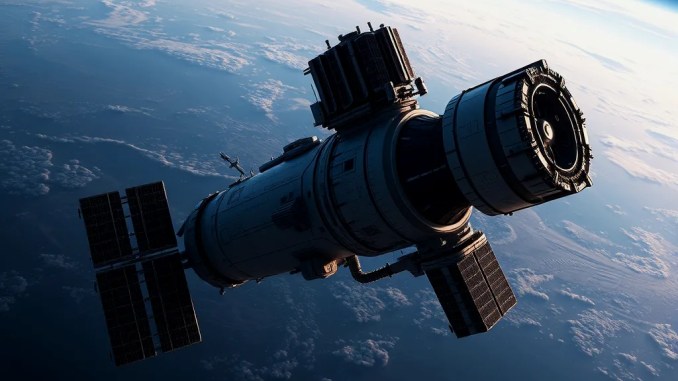
Imagine a world where space stations no longer rely solely on government contracts and outdated infrastructure. Instead, a new era is emerging where private companies harness cutting-edge artificial intelligence and innovative engineering to build the next generation of orbital habitats. This transformation isn’t hypothetical; it’s actively underway, driven by visionary leaders like Jonathan Cirtain of Axiom Space, who articulate a clear blueprint for this seismic shift. As we stand at this pivotal crossroads, understanding the strategic decisions, technological advancements, and collaborative efforts shaping the future of human activity in space becomes essential. This article unpacks how AI’s integration into space operations optimizes efficiency, reduces costs, and opens new frontiers, while examining the rapid development and deployment of commercial space stations. We explore real-world steps to harness these developments, why they matter now more than ever, and how nations and industries can position themselves at the forefront of this cosmic renaissance. ## AI Transforming Space Operations Elevates Efficiency and Safety Artificial intelligence is no longer a secondary tool; it’s the backbone of modern space logistics, mission automation, and data analysis. In the past, space missions depended heavily on slow, manual procedures, often leading to delays, errors, and high costs. Today, AI models, especially hybrid systems combining cloud-based analytics with edge processing, revolutionize how we operate beyond Earth’s atmosphere. * Real-time Autonomy: AI models process telemetry and sensor data instantly, enabling spacecraft and orbital modules to make autonomous decisions without waiting for ground control. For example, collision avoidance maneuvers can be executed within seconds, preventing costly and dangerous incidents. * Smart Data Priority: With bandwidth constraints in space communications, AI filters and compresses data before transmitting it to Earth. Critical information arrives faster, while less urgent data is stored locally or deferred, streamlining scientific research and operational decisions. * Predictive Maintenance: AI detects anomalies early, predicting failures before they happen. This reduces downtime, extends hardware lifespan, and minimizes costly repairs or replacements of expensive equipment. Applying these AI-driven efficiencies reduces mission costs, accelerates timelines, and enhances safety margins, making space exploration more accessible and sustainable. ## Private Space Stations: The New Frontier of Commercialization The International Space Station (ISS) has served as humankind’s orbital laboratory since 1998, but its future continues to look uncertain. As governments evaluate cost and operational effectiveness, private companies like Axiom Space are designing commercial stations that promise to take over and expand human activities in low Earth orbit. * Strategic Launch Timeline: Companies aim to introduce modular, scalable habitats by 2028-2029, with the goal of transitioning commercial and scientific activities away from the aging ISS infrastructure. * Stepwise Development: These plans involve phased testing—initial modules will be launched, linked, and operated in steps, gradually increasing capacity and complexity. * Revenue Streams: By offering services such as research platforms, manufacturing zones, and tourism packages, private stations aim to generate sustainable income. This diversified approach attracts a broader customer base, including biotech firms, educational institutions, and wealthy paying tourists. * Enhanced Scientific Capabilities: Unlike the ISS, these stations prioritize specialized R&D labs, especially for pharmaceuticals and materials science, leveraging microgravity’s unique effects to produce superior products. Launching these stations before the ISP’s decommissioning offers a critical advantage: continuity. Companies can establish operational continuity, secure international contracts, and iterate on station design without the constraints of dependency on government programs. ## How AI and Commercial Space Stations Converge to Accelerate Scientific Discovery Merging AI with commercial space platforms ushers in unprecedented scientific potential. For instance: > – Drug Development: Microgravity enables crystal growth with fewer imperfections. AI-driven analysis accelerates understanding of these processes, leading to faster drug discovery pipelines. > – Materials Innovation: AI models predict how new alloys or polymers behave in space, guiding experiments that could revolutionize manufacturing both in orbit and on Earth. > – Biological Research: Long-term studies on human health in space inform medical treatments and prepare humanity for lunar or Martian colonization. Implementing AI controls on these platforms ensures optimized operation, safety, and data management, maximizing return on investment. ## Ensuring Space Traffic Safety Amid Growing Congestion The burgeoning number of satellites and private space stations raises serious concerns about space debris and collision risks. However, advanced AI tools facilitate proactive traffic management: * Continuous Surveillance: AI processes data from global tracking networks, predicting potential debris collisions. * Autonomous Avoidance: Spacecraft and stations can execute collision-avoidance maneuvers independently, based on AI recommendations. * International Collaboration Protocols: Establishing standardized communication channels and data sharing ensures all stakeholders operate within a unified safety framework. These efforts require collaboration, policy support, and technological innovation to prevent a dangerous congestion of Earth’s orbital environment. ## The Strategic Role of Governments and Industries in This New Space Age While private enterprise leads in hardware and operational models, government agencies remain vital for regulatory frameworks, international agreements, and large-scale funding. Countries recognizing these trends can position themselves as key players by: – Facilitating public-private partnerships that leverage AI innovations. – Updating policies to streamline licensing, safety standards, and cross-border collaboration. – Investing in local research hubs that focus on space AI, robotics, and modular habitat construction. This strategic synergy accelerates technological adoption, reduces bureaucratic delays, and secures national interests in a fiercely competitive arena. ## Practical Steps for Stakeholders to Seize Opportunities Now – For Governments: Implement policies that encourage innovation in space AI and facilitate international cooperation. – For Companies: Invest in R&D for hybrid AI systems tailored for space autonomy and data management. – For Academic Institutions: Develop specialized curricula and research programs focusing on space robotics and AI applications. – For Investors: Target startups and projects that demonstrate scalable, modular space habitation solutions integrated with AI. These actionable steps forge a resilient, innovative ecosystem capable of transforming space from a government playground into a thriving commercial domain. ## Conclusion Amidst an unprecedented wave of technological innovation and private investment, the future of space hinges on how effectively we integrate AI and commercial solutions. Leaders like Jonathan Cirtain emphasize that this isn’t a distant vision but an immediate strategic opportunity. By adopting advanced AI, deploying scalable commercial stations, and fostering international cooperation, humanity can harness space’s full potential—making it safer, more productive, and accessible to more players than ever before.