
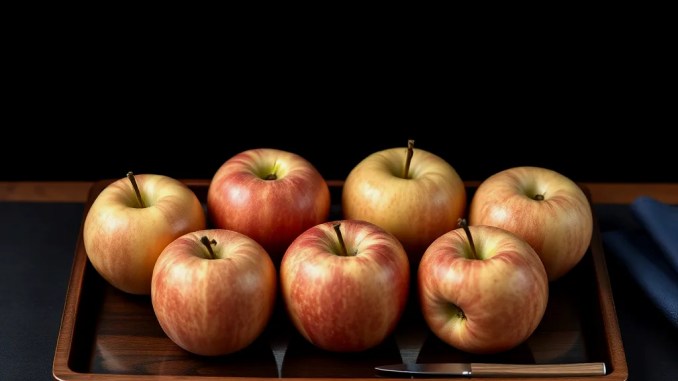
Japan’s Hokkaido prefecture saw a striking start to the fruit auction season when a set of seven premium “Nanamitsuki” apples from Nanae town sold for a combined ¥100,000 (about ₺31,500) at the Hakodate wholesale market. The sale matched last year’s record and highlighted a growing market for luxury, farm-to-auction fruit that blends careful cultivation, aesthetic grading and promotional flair.
Why did these apples command such a high price?
Buyers paid top bids because the fruits combine several premium attributes: exceptional size, uniform shape and blemish-free skin, plus a flavor profile producers describe as intensely sweet and honey-like. The Shinhakodate Agricultural Cooperative confirmed this year’s crop was physically superior to the previous season’s, which suffered damage from typhoons. In auction practice, rarity and presentation matter almost as much as taste—the “Nanamitsuki” brand signals a controlled harvest and selective grading that attract restaurants, specialty grocers and collectors willing to pay premium prices.
How the auction process elevates rare fruit values
At wholesale markets such as Hakodate, auctions follow a predictable sequence that creates competitive tension and public attention: growers submit small lots with official grading; auctioneers spotlight lots using presentation boards and samples; buyers—often wholesalers, high-end retailers and media representatives—bid openly; the highest bid wins and becomes a publicity event. Successful high-price sales are then leveraged as marketing: press releases, branded signage and social media amplify perceived value, sometimes increasing demand for future harvests of the same variety or producer.
What cultivation practices produce these premium apples?
Growers aiming for auction-grade fruit apply a strict regimen across pruning, microclimate control, thinning and hand-harvesting. Typical steps include:
1. Targeted pruning and light management: Pruning opens the canopy so sunlight and air circulate evenly, encouraging uniform coloring and reducing disease.
2. Fruit thinning: Farmers remove excess fruit early in the season so remaining apples grow larger and develop concentrated sugars.
3. Soil and nutrient precision: Balanced fertilization and soil testing optimize sugar-acid ratios that influence flavor intensity.
4. Blemish prevention: Netting, windbreaks and selective pesticide use minimize scarring; hand-sorting at harvest preserves aesthetic quality.
Who buys luxury auction fruit—and why?
Typical buyers include upscale department stores, specialty food importers, luxury restaurants and wealthy private collectors. Motivations vary: some buyers purchase as prestige goods to display and gift, others as ingredient-grade fruit for high-end culinary uses where appearance and flavor justify menu markups. Media attention on record sales also draws speculative buyers who see marketing value in owning headline-grabbing lots.
Does this trend affect ordinary consumers?
Yes, indirectly. Auction pricing establishes benchmarks and drives branding for a producer’s wider output. When a top-tier lot gains publicity, supermarkets and local sellers often market other apples from the same farm at a modest premium. Additionally, growers invest auction revenues into improved practices and branding that can raise quality across larger volumes, improving options for regular shoppers even if they cannot afford auction lots.
Examples and data points from Hokkaido and beyond
Concrete indicators show how auction events interact with regional markets: last season’s typhoon damage reduced supply and likely pushed buyers to prize the current year’s undamaged, larger fruit. Historical auction patterns in Japan reveal recurring peaks—early-season “first-lot” auctions attract higher symbolic bids, while mid-season auctions focus on volume sales. Internationally, similar practices appear in fruit markets for premium melons and grapes, where a small number of headline lots command huge prices while sustainability and scale determine long-term profitability for growers.
How to evaluate a premium fruit lot if you’re a buyer
Assess lots by combining objective grading and sensory checks: inspect uniformity of size and skin, check for any surface defects, ask for sugar content (Brix) readings if available, and taste a sample when permitted. Verify provenance—knowing farm practices and weather conditions from the season helps predict shelf life and flavor. Also consider marketing value: a lot tied to a recognizable brand or with prior media coverage can offer promotional returns beyond the fruit itself.
Takeaways for growers and markets
The Nanae auction demonstrates that disciplined cultivation, strict grading and strategic branding can convert a small number of fruits into high-value headline sales. For growers, investing in quality controls and storytelling around provenance yields both direct revenue and long-term brand equity. For markets, these auctions create newsworthy moments that reinforce consumer interest in artisanal and premium agricultural products.









Be the first to comment