
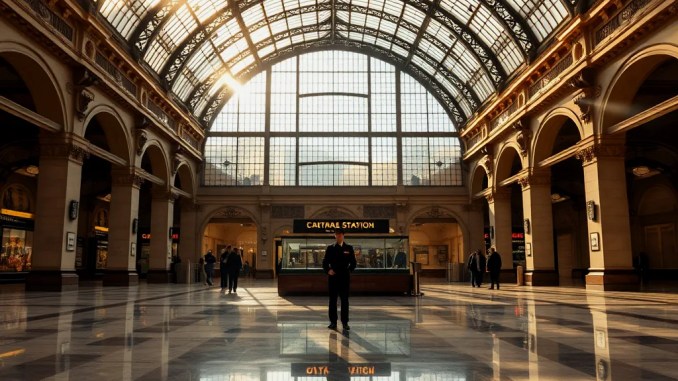
Reopening restores a shorter walking route between platforms and S-Bahn/Stadtbahn
Deutsche Bahn reopened the historic Bonatz Great Ticket Hall on 13 November 2026, shortening pedestrian travel between the Hauptbahnhof cross-platform area and the Klett-Passage S‑Bahn and Stadtbahn platforms by roughly 80 meters. Contractors completed most renovation work after a closure that began in spring 2025. New and refurbished stairs and escalators now connect the main platform concourse with the Klett‑Passage, creating a direct, step‑free route at the primary entrance level.
Temporary closure of the middle stair (Mittelabgang) — what to expect and why it matters
When the Great Ticket Hall reopened, the central stair to the Klett‑Passage remained temporarily closed and is expected to stay out of use through the end of 2027. That closure supports remaining restoration tasks on Bonatz’s Schillerstraße facade, removal of construction zones and final paving of surrounding open spaces. Station operators installed clear wayfinding signs across the facility and deployed daytime floor staff in the first days after reopening to guide passengers along the revised routes.
How the Bonatz building will link the city center directly to the old terminal
Planners intend to establish a direct pedestrian link through the Bonatz building between the city center and the former terminal station by late 2027. That passage will run through the restored structure and continue over the future station roof, creating shorter, more direct transfer. paths Retail and service areas inside Bonatz are scheduled to open in 2028, while the ground floor serves as the principal entrance level offering level access into the platform concourse. Two gallery levels around the new stair/escalator core will house shops and food outlets; the top three floors will host an approximately 150-room, three-storey hotel with meeting and dining facilities. The restoration preserves the historic tower, integrates it into the new platform hall environment and secures architectural elements with a modern supporting structure.
Five phased openings through 2033 — the revised Stuttgart 21 schedule
Deutsche Bahn published a revised commissioning schedule after an internal audit in June 2026. The rollout now consists of five main phases, each unlocking distinct network and passenger benefits:
Phase details and practical impact
• December 2027 — Direct connection via the Bonatz building between the city center and the old terminal station. This phase provides access across the new station roof and opens the route for foot traffic and passenger transfers; nearby retail opens the following year.
• December 2030 — Long‑distance station at Stuttgart Airport enters service, enabling long‑distance connections via the airport and preparing regional links toward Reutlingen, Tübingen and Ulm.
• December 2031 — New Stuttgart Hauptbahnhof opens; most long‑distance and regional trains will use the new underground station layout.
• July 2032 — Digitalized main S‑Bahn trunk line and the Mittnachtstraße/Rosenstein stop enter service, improving reliability and headway control on the S‑Bahn network.
• December 2033 — Pfaffensteig Tunnel opens, linking the Gäubahn via the airport into the Stuttgart 21 network and shortening Stuttgart–Zürich trips by about 15 minutes.
Operationally, the new main station commissioning in December 2031 allows transfer of services (including trains over Bad Cannstatt) into the new system during 2032. The old terminal is slated to continue limited service until mid‑2032.
Cost update and scope: why the estimate rose to €14.5 billion
With the updated schedule Deutsche Bahn raised the project’s cost estimate by about €3 billion to €14.5 billion. The revision reflects phased commissioning, additional technical scope for digitalization of the S‑Bahn trunk, tunnelling complexity for Pfaffensteig, station infrastructure integration and contingency for works that affect the historic Bonatz fabric. The phased approach spreads commissioning risk but requires parallel budgets for temporary interfaces, traffic management and extended construction supervision.
Practical tips for passengers navigating the reopened hall and disrupted stair
Follow newly installed directional signs from platform concourses toward the Bonatz entrance and Klett‑Passage; signs mark step‑free and escalator routes.
• Allow an extra 3–5 minutes for transfers during the initial weeks while staff and signage settle into place.
• If you rely on the Mittelabgang to reach the Klett‑Passage, use the marked alternative stair/escalator routes via the Great Ticket Hall entrance; station personnel can advise on the shortest accessible detour.
• For hotel, retail or conference reservations in the Bonatz building after 2028, check direct access options from the station roof level when they publish opening plans.
What this means for regional travel and future connectivity
Bringing the Bonatz Great Ticket Hall back into service improves daily passenger flows by shortening walking distances and creating direct station‑to‑city center access. Over the next decade, the staged openings will redistribute traffic patterns: airport long‑distance services (2030) and the new Hauptbahnhof (2031) will concentrate through‑traffic into optimized corridors; digitalized S‑Bahn infrastructure (2032) will increase reliability and capacity; the Pfaffensteig Tunnel (2033) will speed key intercity connections. Together, these changes aim to reduce transfer times, increase timetable resilience and unlock commercial opportunities within the restored Bonatz building.




Be the first to comment