
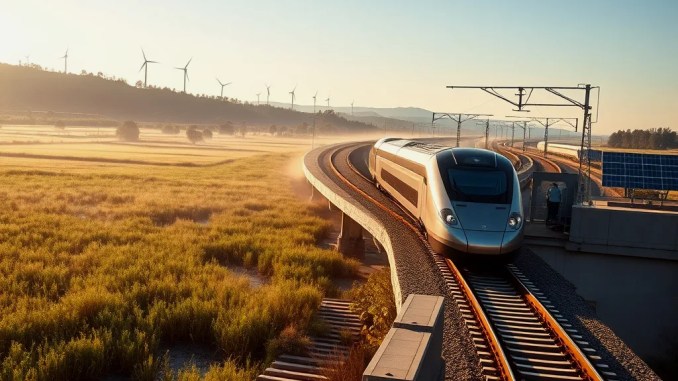
Alstom’s global footprint and economic impact in 2025–2026
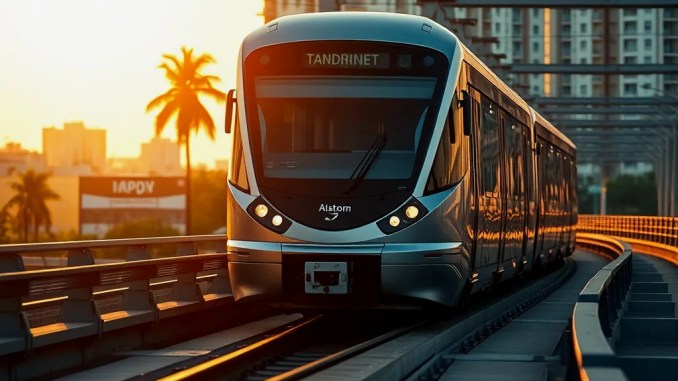
Alstom operates in 61 countries across 207 sites, partnering with more than 300 cities to deliver rail solutions and services. In 2025–2026 the company secured €27.6 billion in orders and recorded €19.2 billion in sales. Everyday mobility for 108 million passengers runs on Alstom trains, and the company’s global activities supported 534,836 jobs. That workforce contribution breaks down into 87,832 direct jobs, 275,229 indirect jobs, and 171,775 jobs arising from induced economic activity. Together those operations generated €28.4 billion in gross value added, including €7.9 billion directly contributing to national GDPs.
Measured emissions reductions: where the numbers come from
Alstom reports 110,900 tonnes CO2e from its own operations and energy use in 2025–2026 — a 52% reduction against the baseline year. Passenger rail carbon intensity fell by 20% to 3.7 g CO2e per passenger-kilometer, while freight intensity decreased 12% to 8.1 g CO2e per tonne-kilometer. Supplier-related emissions intensity also improved, declining 17% from the baseline. These results reflect actions across three levers: switching to renewable electricity across sites, improving vehicle energy efficiency in operations, and working with suppliers to lower upstream emissions.
How Alstom cut emissions — practical steps and examples
Alstom combined operational changes, product design and supplier engagement to achieve reductions. Examples include:
1) Renewable electricity across sites: the company now reports renewable power use for its full operations, removing a large portion of scope 2 emissions.
2) Vehicle energy efficiency: design improvements and regenerative braking increased operational efficiency, lowering g CO2e per passenger-km and per tonne-km.
3) Supplier collaboration: targeted programs with high-spend suppliers reduced upstream carbon intensity by 17% through material choices and logistics optimization. Alstom also provided sustainability training to 633 suppliers to raise capacity on environmental and social practices.
Circular economy performance and material reuse
The company advanced circularity across product design and factory processes. New trains and infrastructure products contain 27.3% recycled materials on average. Waste recycling at Alstom facilities reached 81%, and the reported recyclability of trains and components reached up to 96%. These outcomes resulted from specifying recycled inputs, designing for disassembly, and partnering with end-of-life processors to keep materials in circulation.
Social outcomes: jobs, inclusion and community reach
Alstom’s social metrics highlight direct workforce size and community programs. With 87,832 direct employees worldwide, women held 26.6% of management, engineering and professional roles. The Alstom Foundation and community programs reached 373,794 beneficiaries in 2025–2026. To strengthen social performance across its supply chain, Alstom monitors or assesses 97% of low- and medium-risk suppliers for corporate social responsibility and provides targeted capacity-building where gaps appear.
Independent validation and ratings that matter
Independent raters recognized Alstom’s performance using different methodologies. The company earned an A- from CDP’s 2025 Climate Change program and secured EcoVadis Platinum for the third consecutive assessment. EcoVadis gave Alstom a score of 93/100, placing it within the top 1% of assessed companies globally — a quantitative indicator that its policies and practices performed strongly across environment, labor & human rights, ethics and sustainable procurement pillars.
Concrete benefits for cities and operators
Cities partnering with Alstom gained measurable benefits: lower operational emissions per passenger, greater ridership capacity through modern rolling stock, and local economic stimulus via manufacturing and maintenance contracts. For example, when a city shifts a comparable share of trips from cars to Alstom-operated rail and uses vehicles with regenerative braking and higher seat-km capacity, the combined per-passenger carbon and local congestion benefits scale quickly — demonstrating how rail investments translate into immediate urban advantages.
What this means for future rail projects
Rail planners and procurement teams can derive three clear, implementable takeaways from Alstom’s results: prioritize suppliers with verified emission reductions; require high recycled-content specifications and design-for-repair clauses in contracts; and mandate renewable electricity for depot and manufacturing operations. Following these steps helps replicate Alstom-level outcomes — substantial emissions reductions, strong circularity, and measurable local job creation.




Be the first to comment