
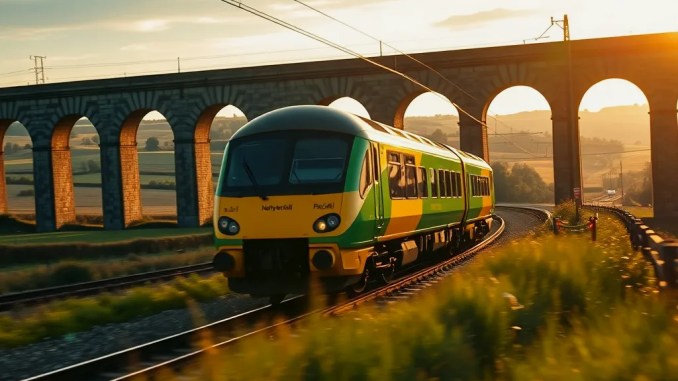
Network Rail’s yellow test train has inspected over two million miles since 2003
Network Rail operates a distinct yellow test train — nicknamed the “Flying Banana” — to inspect the condition of UK railway track and overhead equipment. Running at speeds up to 125 mph (200 km/h) where safe, this converted high-speed train collects high-resolution laser scans, video imagery and telemetry to detect early signs of wear, misalignment and damage. The train’s sensor suite feeds automated analysis systems that flag defects such as clip loss, rail profile changes and drainage blockages so engineers can target maintenance before defects escalate into delays or safety risks.
How the test train inspects tracks: sensors, workflows and decision triggers
The train combines multiple synchronized systems: rail geometry measurement rigs, lidar-based rail scanners, high-resolution cameras, and overhead-line inspection equipment. Each pass generates metric outputs (gauge, cant, twist, vertical and lateral profile) and synchronized visual records. Automation compares live imagery to standard patterns to detect anomalies — for example, missing rail clips or deformed sleepers — and assigns severity scores. When a threshold is exceeded, technicians can immediately issue instructions to suspend traffic on a section or schedule an urgent engineering possession. That rapid feedback loop—measure, analyse, triage, act—reduces both risk and the amount of unplanned maintenance.
Three defect classes the train prioritises and why they matter
The inspection program concentrates on three high-impact defect classes that drive safety-critical decisions:
1) Vertical and lateral bending (warp) — progressive differences in rail height or lateral offset across a length that increase derailment risk. Measured in millimetres per specified metre, these trends trigger speed restrictions or corrective tamping works.
2) Periodic (cyclic) hollows — repeated depressions in the rail head profile that cause wheel unloading and dynamic impacts. These defects accelerate wear on both wheel and rail if left untreated and often require grinding or rail renewal.
3) Track gauge variations — deviations in distance between the two running rails. Excessive narrowness or widening is an immediate safety concern and can lead to emergency possessions to re-tension fastenings or replace components.
Operational tempo, capacity and representative figures
Network Rail publishes reference figures describing the train’s working capability: up to 125 mph maximum inspection speed; about 4,800 miles of coverage every two weeks; single shifts covering up to 1,000 miles; and an annual planning figure close to 115,000 miles. The fleet carries around 14 key sensors and generates large volumes of imagery — roughly 10 TB every ~440 miles. These headline numbers let planners slot inspection windows into timetabled operations while forecasting data storage and analysis needs.
Adapting inspections for autumn and winter hazards
The train supports seasonal resilience planning. During wetter, windier seasons (such as periods influenced by El Niño), the program shifts emphasis toward drainage condition, earthworks stability and vegetation-related risks. Heavy rain exposes blocked culverts that cause washouts; wind affects lineside trees that can fall on infrastructure; and crushed leaves create low-adhesion patches that reduce wheel-rail friction. Inspectors use combined lidar and visual data to map risks along corridors with dense tree cover and known drainage pinch points, which helps prioritise vegetation clearing, drainage repairs and leaf-removal timetable interventions such as rail-head cleaning trains that use high-pressure water jets.
Maintenance trains and large-scale autumn programs
Network Rail deploys a complementary fleet of maintenance trains (67 railhead treatment units in the referenced program) across the network in autumn to remove the polished, slippery layer that crushed leaves cause. These trains apply controlled high-pressure water jets and mechanical cleaning heads to restore rail adhesion. The combined autumn program for these units is expected to exceed one million miles of operation, concentrating resources on routes with the leaf-fall and passenger-impact risk. Teams also inspect and stabilize cuttings, reposition drainage, and monitor embankments for signs of saturation or slippage.
Data, procurement and the future monitoring model
Network Rail has launched a procurement process to renew its fleet monitoring and services. The new model shifts from owning all specialized assets towards a hybrid solution in which suppliers provide monitoring services, operate vehicles and deliver up to 18 separate data streams into Network Rail’s analytics environments. Proposed contract timelines indicate a service start on 1 April 2027, an initial contract term to 31 March 2035, and optional extension to 2043; an estimated contract value (options included) was published at around £1.5bn excluding VAT. The program anticipates integrating measurements from specialist measurement trains, passenger and freight trains fitted with distributed sensors, and non-train inspection methods (drones, wayside detectors) when they are cost-effective.
Practical example: how an inspection run prevents a delay scenario
On a hypothetical busy commuter corridor, lidar identifies a sequence of small vertical offsets increasing over a 200-meter section. Automated analysis rates the defect as ‘escalating’ based on historical progression models. The operations center issues a temporary 10 mph speed restriction for the affected section and schedules a tamping train the next night. The follow-up maintenance restores geometry within tolerance and removes the need for further speed restrictions. Without the early detection, the defect could have progressed to an emergency possession during peak hours, causing extensive passenger disruption and expensive recovery works.
What the figures mean for planners and passengers
For infrastructure planners, the train’s outputs translate into targeted asset renewal plans, optimized maintenance windows and evidence-based risk allocation. For passengers, the benefit appears as fewer unplanned cancellations, a smoother ride and improved safety margins during adverse weather. The test train’s data-driven prioritisation helps direct finite resources (teams, tamping machines, vegetation crews) to the locations that deliver the biggest reductions in risk and delay minutes per pound spent.
Key takeaways for related searches and People Also Ask queries
– How does Network Rail inspect tracks? — They use a high-speed, sensor-equipped test train plus complementary monitoring on revenue services and drones to capture geometry, imagery and overhead-line measurements.
– What defects are most dangerous? — Warp (vertical/lateral bending), cyclic hollows and gauge variations carry the highest immediate safety risk.
– How often does the test train run? — Typical coverage aims for ~4,800 miles every two weeks with single shifts up to 1,000 miles.
– Why is autumn maintenance needed? — Leaves, heavy rain and wind increase low-adhesion, drainage failures and debris-on-line risks, requiring targeted cleaning and vegetation control.
– Will the fleet change? — Yes: procurement plans will move monitoring toward supplier-operated services and integrated data from multiple platforms.
Sources of data and recommended further reading
Aggregate figures and program timelines are drawn from Network Rail reference releases. To investigate specifics (contract awards, exact sensor lists, and live operational bulletins), consult Network Rail’s procurement notices and infrastructure updates that publish technical appendices and data definitions used for contractual deliverables.




Be the first to comment