
Deal overview and delivery plan
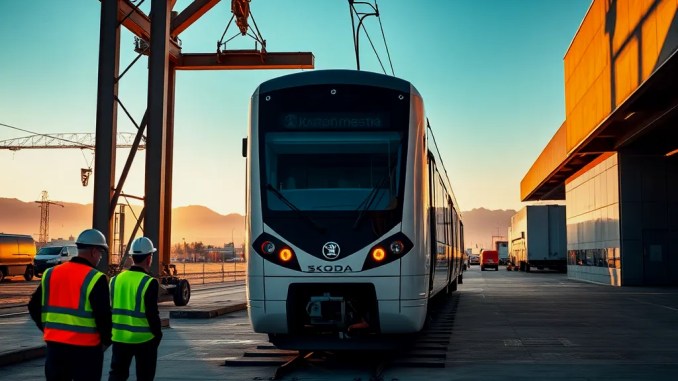
Škoda Group will supply 16 new four‑car metro trainsets to Sofia’s Metropoliten EAD, expanding an existing Škoda fleet already in passenger service. The contract packages include an initial order of eight trainsets plus an exercised option for eight additional sets. Škoda and Metropoliten scheduled full delivery within two years from contract activation, with the first tranche becoming effective in September 2026 and the option exercised in October 2026.
Contract value, price composition and indexation
The two order groups total €148.1 million (VAT excluded), split as €71.3 million for the first eight trains and €76.9 million for the second eight. The price difference reflects indexation tied to producer prices and consumer inflation clauses in the procurement documents. Published figures align closely with Škoda Group’s public statement of approximately €149 million for the full 16‑train supply.
Train design, capacity and operational features
Each trainset will consist of four permanently coupled cars, about 80 meters long, with a design top speed of 90 km/h and a declared passenger capacity of 762 people. Designers incorporated dedicated zones for passengers with reduced mobility, stroller parking and bicycle spaces. Air‑conditioned interiors, regenerative braking that feeds energy back to the network, and automatic speed protection systems are included. Vehicles are adapted to mixed operation that includes significant above‑ground running on parts of Sofia’s metro network, influencing climate sealing, corrosion protection and door vestibule design.
How these trains fit within Sofia’s existing fleet
Once delivered, Škoda‑built trains in Sofia will number 24 in total. Sofia’s operator previously ordered eight Škoda sets in July 2023 to replace aged, energy‑hungry Russian‑made vehicles on lines 1, 2 and 4; those eight are already in service. The new contract augments that fleet and supports a broader program of rolling stock renewal and energy efficiency improvements across the metro network.
European funding and the broader transport project
The EU provided a €282 million grant on 12 November 2026 to support Bulgarian regional development projects that include Sofia’s transport upgrade. That grant contributes to an approximately €800 million comprehensive package covering metro rolling stock procurement (16 trains included), 75 trolleybuses, 50 electric buses, and metro extensions — notably a 6 km eastward extension with six stations on Line 3 and a 1.9 km extension adding two stations on Line 1. The grant agreement does not explicitly earmark which manufacturer will supply the grant‑funded trains.
Practical delivery timeline and key milestones
Chronology and status highlights:
• 13 July 2023: Initial order of eight trains for Lines 1, 2 and 4.
• December 2025: Škoda wins the international tender for an 8+8 trainset package.
• 26 May 2026: Delivery milestone — five of the 2023‑ordered trains delivered and entered service.
• September 2026: Contract for the first eight of the new order goes into effect after financing was secured.
• October 2026: Metropoliten exercises the option for the remaining eight sets.
• 12 November 2026: EU grant signed to support the broader transport program.
• Within two years of contract activation: Škoda plans to complete delivery of all 16 new trainsets.
Operational and financial implications for Sofia
Fleet renewal will reduce energy consumption and operating costs while increasing capacity and accessibility. Replacing older rolling stock typically yields immediate improvements in energy efficiency (regenerative braking plus modern traction drives) and lifecycle maintenance costs. Example: regeneratively equipped trains can return 10–20% of braking energy to the overhead or third‑rail system depending on driving profiles and network receptivity, lowering net traction energy per train‑km. Consolidating procurement with a single supplier for the 16 sets simplifies spare parts logistics and training for depot staff, shortening mean time to repair.
What to expect at stations and on board
Passengers will notice: improved climate control, level boarding or reduced step heights at many platforms, wider gangways for passenger flow, designated accessible areas and clearer passenger information systems. From an operational viewpoint, automatic speed protection will improve timetable adherence and safety margins across mixed underground/overground sections.
Checks, commissioning and acceptance steps
Delivery to revenue service follows a staged process: factory acceptance tests (FAT), shipment, depot integration, static and dynamic tests on the Sofia network, staff training, trial runs with simulated loads, and a formal operational acceptance. Each stage produces documented results: test logs, defect lists, corrective actions and final commercial acceptance certificates that allow commercial operation.
Risks, contingencies and mitigation
Primary risks include supply‑chain delays, testing setbacks and network integration issues. Mitigations include early procurement of long‑lead components, parallel commissioning teams, and staged deliveries so early sets enter service and relieve operational pressure. Financially, indexation clauses in the contract protect the manufacturer from inflation shocks but require transparent formulae and audit access to prevent disputes.
How this contract shapes future procurement choices
This 16‑train order creates a benchmark for cost, capability and delivery speed in the region. The combination of EU co‑funding and a competitive tender outcome strengthens Sofia’s ability to standardize on energy‑efficient, accessible rolling stock. Future tenders will likely reference performance metrics and acceptance criteria established during this program.






Be the first to comment