
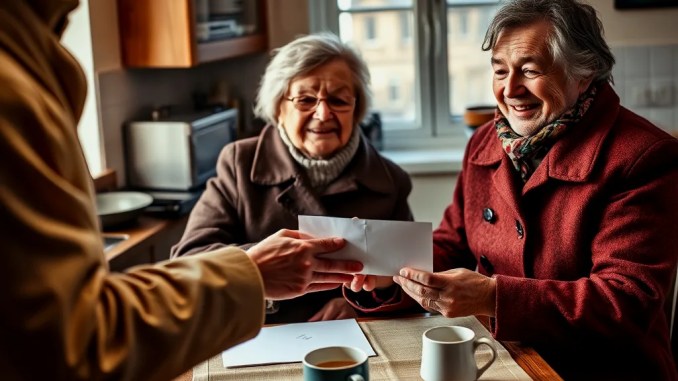
Millions of pensioners across England, Wales and Northern Ireland will receive a Winter Fuel Payment to help cover higher heating and energy costs during the colder months. The scheme delivers a one-off cash payment between £100 and £300 to eligible people, with the amount set by birth date and by how many qualifying adults live in the same household. Payments are usually sent automatically to those who meet the conditions.
Who qualifies for the Winter Fuel Payment?
To qualify, you must have been born on or before 27 June 1960 and normally live in England, Wales or Northern Ireland in the qualifying week. That single rule is supplemented by practical checks the Department for Work and Pensions (DWP) uses to verify residency and entitlement.
Concrete examples: a single pensioner born 20 September 1945 who lived in Northern Ireland in the qualifying week will be eligible for the maximum rate; a person born 1 January 1955 who lives with a partner and neither receives Pension Credit, Universal Credit or income-related ESA may receive a lower individual amount because the payment is adjusted for two qualifying adults in the household.
Exact payment bands and how birth dates affect the amount
Payments are assigned in three practical bands according to birth date and household composition:
Single qualifying pensioners (no other qualifying adult in the household):
– Born before 28 September 1946: receive £300.
– Born between 28 September 1946 and 27 June 1960: receive £200.
Two qualifying adults living together (neither receives Pension Credit, Universal Credit or income-related ESA):
– Both born before 28 September 1946: each receives £150.
– Both born between 28 September 1946 and 27 June 1960: each receives £100.
– Mixed-age couple (one older, one younger): the older qualifying adults the older-person rate (for example £200) and the younger receives the lower rate (for example £100), depending on the exact birth dates.
How payments are calculated when couples have different birth dates
When two qualifying adults live together but are in different age bands, the system treats each person individually: the older partner receives the higher band payment and the younger receives the lower band payment. Example: a couple where one partner was born in 1945 and the other in 1950 would typically get £200 for the older and £100 for the younger (actual payments depend on whether the DWP treats both as eligible adults or whether either receives a means-tested benefit that alters the calculation).
When and how you will receive the money
Most payments are made automatically to bank accounts, building society accounts or by cheque where necessary. The DWP publishes a payment timetable each year; eligible people normally receive funds in a defined payment window during autumn or winter. If you expect a payment and do not receive it, you should contact the DWP with your National Insurance number and proof of residence for the qualifying week.
What affects automatic payments and when you must claim
Automatic payments rely on the DWP holding accurate records of your benefits and residency. You may need to contact them directly if any of the following apply:
– You moved into the UK recently or from another part of the UK and DWP records don’t show your residency in the qualifying week.
– Your partner receives a means-tested benefit that changes household eligibility.
– You want the payment paid to a different bank account or require a cheque.
Examples showing household scenarios and exact payouts
Scenario 1 — Single pensioner, born 10 September 1944: automatic payment of £300.
Scenario 2 — Couple, both born 1 January 1950, neither on Pension Credit: each receives £100, total household payment £200.
Scenario 3 — Couple where one born 1 January 1940 and the other 1 January 1955, neither on Pension Credit: older receives £150 or £200 depending on whether household calculations treat them as the older bracket; younger receives £100, resulting in combined household payment that follows the DWP’s two-person rules.
Step-by-step: check and claim process
1) Confirm your qualifying birth date (on or before 27 June 1960).
2) Check if you live in England, Wales or Northern Ireland in the qualifying week used by DWP that year.
3) Verify whether you or your partner receive Pension Credit, Universal Credit or income-related ESA — that affects per-person amounts for couples.
4) Wait for automatic payment during the published payment window; most eligible people do not need to apply.
5) If no payment arrives, contact the DWP by phone or online with your National Insurance number and residency evidence to request a manual check or claim.
Common questions and quick answers people search for
Q — Do I need to apply? In most cases no; Eligible people usually receive the Winter Fuel Payment automatically. Q — Can a couple get two full single-person payments? Only if the household contains two qualifying adults and the payment rules for couples allow the higher per-person amounts; More commonly the per-person rate is reduced when two qualifying adults live together and neither receives means-tested benefits. Q — Does living in Scotland change anything? Scotland operates different evolved payments; this particular Winter Fuel Payment arrangement applies to England, Wales and Northern Ireland.
Practical tips to maximize support
Keep your contact and bank details up to date with DWP, check whether you or your partner receive relevant means-tested benefits, and retain records of your address in the qualifying week (utility bills or tenancy agreements). If you believe you’re eligible but a payment hasn’t arrived, contact DWP quickly — delays are often resolved by confirming residency and identity.
Final practical note: the payment amounts are fixed for the scheme year and are set by birth date and household composition; they do not depend on how much you spend on energy but are intended to help offset increased winter heating costs.






Be the first to comment