
Overview of the Incident
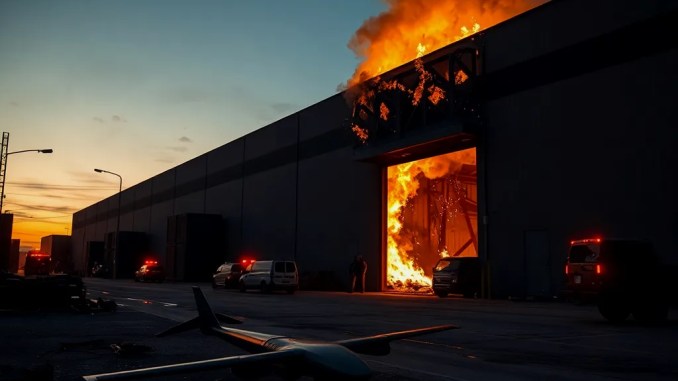
Ozon, one of Russia’s largest e-commerce firms, reported that a logistics center came under an unmanned aerial vehicle (UAV) attack that led to a fire and the full evacuation of staff. Emergency teams responded on site and carried out extinguishing operations; Preliminary checks show no injuries among employees. The facility sustained damage that contributes to a larger tally of losses across similar sites.
What Happened and How Authorities Responded
The attack used an unmanned aerial vehicle to strike the logistics center. Emergency responders secured the area, evacuated personnel, and fought the resulting blaze. Ozon’s internal emergency procedures activated immediately, enabling orderly evacuation and rapid handoff to firefighters and investigative teams. Officials completed initial damage assessments while cordoning the site for forensic and safety inspections.
Extent of Damage and Financial Impact
This incident is part of a series of UAV strikes targeting Russian e-commerce infrastructure. Ozon and other retailers such as Wildberries reported multiple hits this year; combined damage across 11 logistics facilities reached approximately 30.1 billion rubles, roughly equal to $369 million. Damage categories included structural destruction, warehouse inventory loss, damaged handling equipment, and temporary suspension of distribution operations that increased near-term delivery times and costs.
Operational Disruptions and Immediate Mitigation Steps
After the strike, Ozon imposed contingency plans to reroute shipments, redistribute stock to alternate fulfillment centers, and prioritize high-value or time-sensitive orders. The company also increased on-the-ground security and collaborated with municipal emergency services to restore safe operations. For supply-chain continuity, Ozon used inventory mapping to locate replacement stock, employed third-party logistics for urgent deliveries, and temporarily scaled back non-essential shipments to reduce strain on alternate hubs.
Why Logistics Centers Are Vulnerable to UAV Attacks
Logistics hubs concentrate inventory, staff, heavy machinery, and fuel sources, making them high-impact targets: a single successful strike can ignite fires, disable packing lines, destroy months of stock Many facilities sit near industrial zones with limited standoff distance, and standard perimeter defenses often focus on ground threats rather than airborne small drones. The combination of flammable materials, oxygen supply from large open spaces, and automated handling equipment increases the risk that a small incendiary or collision will escalate rapidly.
Practical Hardening Measures for Logistics Facilities
Facility operators and local authorities can reduce future risk through layered defenses. Recommended measures include:
– Technology: Deploy radar or radio-frequency detection systems to identify and track small UAVs, integrate automated alerts with security control rooms, and use electronic countermeasures where legally permitted to disrupt hostile drones.
– Physical hardening: Install fire-resistant storage systems, compartmentalize warehouses to limit spread of blaze, and provide redundant power and communications to keep emergency systems online after damage.
– Procedures and training: Drill rapid evacuation and fire response protocols tailored to drone-origin incidents, maintain up-to-date inventory shadowing for quick rerouting, and coordinate prearranged alternative fulfillment plans with carriers.
Economic and Supply-Chain Consequences: Short and Medium Term
Short-term effects include delayed shipments, increased freight costs as cargo reroutes, and higher operating expenses from temporary staffing. and overtime. In the middle term, companies may face higher insurance premiums and capital expenditures to repair or rebuild hardened facilities. Buyers and third-party sellers using affected marketplaces can experience sales disruption, longer lead times, and sudden inventory shortages that ripple through supplier networks.
Examples and Comparable Incidents
Similar attacks this year targeted multiple e-commerce hubs, producing the 11-site damage estimate. In one documented case, a strike disabled a key sorting line, forcing redistribution of parcels across three neighboring centers and increasing average delivery times by 48–72 hours for impacted regions. Another facility experienced concentrated inventory loss of high-turnover consumer electronics, generating immediate stockouts and price spikes from third-party sellers competing for limited replacement goods.
How Companies Can Communicate to Customers After an Attack
Transparent, specific updates reduce customer confusion and call-center load. Effective communications include clear notices of affected regions and expected delay windows, prioritized recovery timelines for high-value orders, and recommended actions for customers (tracking checks, refund or reroute options). Provide a centralized FAQ that answers “Is my order affected?”, “What are my shipping alternatives?”, and “How will refunds be handled?” to pre-empt common queries.
Next Steps and Ongoing Investigation
Authorities continue forensic analysis to determine the precise UAV type, launch origin, and weaponization method. Ozon and local emergency services will finalize a full damage report and update operational timelines for restoration. Stakeholders expect inspections to inform insurance claims, legal responses, and future investments in drone detection and defensive capabilities.
Key Takeaways
UAV strikes against logistics centers produce outsized disruption relative to their size. Rapid evacuation and established contingency plans prevented casualties in this event; However, financial and operational impacts remain significant. Strengthening detection, physical resilience, and response procedures can reduce future risk and speed recovery when incidents occur.








Be the first to comment