
Overview of the contract and timeline
Northern has awarded a multi-year framework contract to SIM Factor to deliver ETCS cabin and portable simulators and training infrastructure to re-skill roughly 1,800 drivers across northern England. The agreement, advertised in early November, covers an eight-year framework with a notional value of about £100 million (approximately £120 million including VAT). The contracting authority expects the framework to be signed on 1 December 2026 and to remain active until 30 November 2034, subject to the legal standstill period that concludes on 13 November.
What equipment and services are included
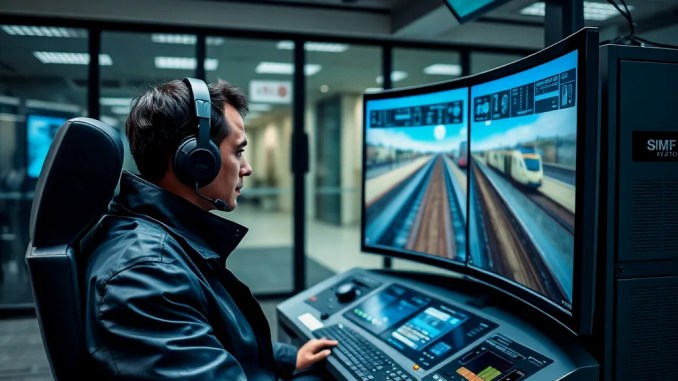
The core supply comprises 48 portable driver simulators (32 for Northern, 16 for TransPennine Trains), 16 simulator control stations (12 Northern / 4 TransPennine), and two management-interface workstations (one per operator). Each portable unit pairs high-resolution displays with driving controls and driver safety-device pedals. The basic package includes spare parts, a 36-month warranty per simulator, and options for extended maintenance and CGI-based route development.
Optional and advanced services list immersive VR headsets for supplementary familiarization, ETCS traffic-simulation workstations for dispatcher-level exercises, and extra CGI route packages billed per-kilometer for bespoke route fidelity. Software will support legacy rolling stock and future fleet types, ensuring simulator relevance as new trains enter service.
Why Northern needs simulator-based retraining now
Northern plans to introduce ETCS (European Train Control System) across its network as part of the Transpennine Route Upgrade and wider digital signaling rollout. ETCS changes in-cab indications, driver workflows and fault-handling; Effective, repeatable hands-on training is essential to reach operational readiness without disrupting passenger services. Simulators let drivers practice normal, degraded and emergency ETCS scenarios safely, control exposure to rare failure modes, and measure competence against consistent standards before drivers return to live lines.
Who will be affected and how the rollout will work
The program will affect six traincrew depots and about 1,800 drivers. Northern anticipates deliveries for its fleet to begin in September 2027; TransPennine deliveries will phase in from January 2031. Portable simulators allow localized classroom- and depot-based training, reducing travel and down-time compared with sending drivers to a single central simulator hub. Control stations enable instructors to instantiate scenarios and monitor trainee performance remotely.
Procurement structure and how other organizations can join
The framework operates as a multi-subscriber arrangement. Besides Northern and TransPennine Trains, other train operators, Network Rail Infrastructure, and holders of passenger or station licenses can place direct task orders under the same framework. Northern retains rights to novate or assign the agreement to other operators or to DfT Operator Limited should corporate structures change. This makes the procurement scalable and attractive to smaller operators seeking ETCS training without running a bespoke procurement.
Selection process and who competed
Northern ran the purchase under the public services provisions of the UK Public Contracts Regulations 2023. Three SME bidders reached the final stage: SIM Factor (Poland), Corys (France) and Lander Simulation & Training Solutions (Spain). The award evaluation allocated 60% weight to technical quality, 30% to price and 10% to social value. SIM Factor won based on the combined scoring matrix and its prior delivery history with Northern.
Evidence of prior delivery by SIM Factor
SIM Factor previously supplied Northern with simulators under a 2023 contract that specified six full-cab units and 24 desktop simulators tailored to CAF Civity Class 195 and Class 331 models. Those full-cab simulators used moving platforms and incorporated 400 miles of recorded line visuals from Northern’s rail network. That prior work de-risks delivery, because the supplier already has tested interfaces for real-route CGI, motion platforms and class-specific controls.
Phased changes to scope and schedule during procurement
Initial plans published in May 2025 envisaged a three-operator buy: Northern, TransPennine Trains and XC Trains, for 56 portable simulators (32 Northern / 16 TransPennine / 8 XC) and a March 2026 framework start. Subsequent market notices removed 1) Reduced live-training mileage: A simulator syllabus can replace dozens of supervised live-training miles per driver by exposing trainees to complex junctions and degraded modes in minutes rather than hours, reducing track possession costs and carbon emissions.
2) Consistent competency assessment: Digital scenario playback and scorecards provide repeatable pass/fail criteria, enabling fair competence comparisons across depots and cohorts.
3) Faster fleet introduction: When new ETCS-fitted units arrive, simulators let drivers familiarize early with in-cab behaviors and route visuals, shortening the time from arrival to revenue service.
What operators and unions should watch during deployment
Key risk areas to monitor during rollout include software validation with real-world signaling cases, maintenance SLA clarity (mean-time-to-repair for portable units), and data ownership for recorded route footage. Unions will focus on training time allocation, pay for training duties away from rostered service, and safeguards that simulator hours equal to competency for license endorsement. Clear acceptance tests, instructor accreditation and a transparent training calendar will reduce industrial friction.
Next steps and recommended implementation sequence
For an efficient, low-disruption deployment implement this sequence:
1. Final acceptance and factory FATs: Complete manufacturer factory acceptance testing for hardware, software and networked instructor stations before shipment.
2. Depot integration pilots: Install pilot portable units at two depots, run representative cohort drivers, and validate scenario fidelity against live-line references.
3. Instructor upskilling and accreditation: Certify instructors on ETCS scenario authoring, assessment rubrics and simulator fault diagnostics.
4. Phased roll-out: Cascade units to remaining depots on a schedule aligned with fleet ETCS fitment and planned changes to signaling commissioning.
5. Continuous improvement: Use logged trainee performance metrics and instructor feedback to iterate scenario sets and route CGI fidelity.
Search-friendly phrases and People Also Ask style answers
How many drivers will be trained? Roughly 1,800 drivers across six depots are in scope.
When will simulators be delivered? Northern deliveries begin September 2027; TransPennine deliveries phase from January 2031.
What does the £100m cover? It covers 48 portable simulators, 16 control stations, two management consoles, warranties, spare parts and route CGI development across the eight-year framework; optional services are extra.
Can other operators buy from the framework? Yes. Other train operators, Network Rail and license-holders can place task orders under the framework.
Data sources, assumptions and limitations
Timings reflect Northern’s procurement notices and projected delivery windows. The estimated contract value and VAT conversion use figures stated in the published tender. Specifics such as exact CGI-kilometer volumes, maintenance rates beyond the first 36 months, and final software feature lists remain supplier-dependent and will be defined in task orders.
Concluding practical takeaway







Be the first to comment