
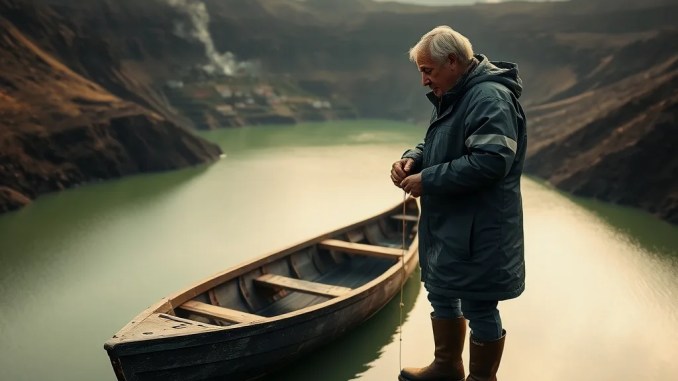
Aogashima’s Unique Double-Crater Geology
Aogashima sits as a nested volcano: a broad caldera carved by past eruptions with a secondary volcanic cone—Maruyama—rising from its floor. The island measures roughly 3.5 km long and 2.5 km wide, ringed by steep cliffs that protect and isolate the inner crater. That inner cone creates a rare, concentric volcanic structure that is visible from the island’s walking routes and the Oyama Observation Park. Scientists monitor the site because the morphology indicates a history of summit collapse, flank eruptions, and renewed central activity; those processes explain why an inner cone formed rather than a simple single-vent shield.
How the Two-Crater Structure Formed — Step by Step
1) Large caldera formation: A major explosive phase removed a central magma chamber roof, producing a wide, bowl-like depression around the summit.
2) Post-caldera eruptions: Magma re-ascended through new conduits in the caldera floor, building the Maruyama cone within the older depression.
3) Continued modification: Erosional processes, repeated small eruptions, and episodic lava flows reshaped the inner cone and the caldera rim, creating the steep cliffs and terraced slopes observed today.
Historic Eruptions and the Half-Century Abandonment
The 1781–1785 eruptive sequence drove a dramatic population shift. Lava flows after 1783 emptied all 63 dwellings, and a major 1785 eruption killed about 140 residents. Survivors evacuated to nearby Hachijojima, leaving Aogashima effectively uninhabited for roughly 50 years. The island’s later resettlement occurred once volcanic activity declined sufficiently for new dwellings to be established. Modern seismometers and periodic volcanic gas measurements now track unrest to provide early warning to the small community.
Population Trends and Community Profile
Population decline quantified: Census counts show a steady decrease: 237 (1995), 203 (2000), 178 (2015), 169 (2020), and 168 (2025 estimate). Roughly 60%–70% of current residents are long-term locals; The remainder are rotating government staff or temporary workers. The small population influences local services, schooling, and emergency planning: medical services and supply logistics rely on scheduled transport windows and contingency plans for cancellation.
Why Aogashima Is Prime for Dark-Sky Observation
Minimal light pollution and clean horizons give observers clear views of the Milky Way on many nights. Observers on clear evenings can spot prominent features such as the Milky Way band, the bright southern star Canopus, and meteor showers like the Perseids with the naked eye. Local conditions that support viewing: low humidity, few artificial lights, and broad, unobstructed horizons above the inner crater rim. Photographers use fixed-tripod, long-exposure techniques from safe viewing points to capture the galactic core and meteor streaks; battery and equipment backups are essential because access to replacement gear is limited.
Access Options: How to Reach Aogashima and Practical Tips
There are two practical routes: (1) Hachijojima transfer then nine-seat helicopter (about 20 minutes), or (2) Hachijojima ferry (about 2.5 hours). Both options depend heavily on weather.
Helicopter specifics: Small passenger capacity means seats sell out early; book weeks in advance when possible. Flights run only on days with safe wind and visibility limits; Alternative return plans are essential.
Ferry specifics: Ferries operate roughly four to five days per week but face frequent cancellations because the island lacks a natural harbor and offshore seas can become rough quickly. Ferries disembark passengers at a challenging landing area; crew and passengers use specific boarding protocols to minimize risk during high swell.
Practical Preparations and Safety Recommendations
Plan for cancellations: Build extra days into itineraries and keep flexible accommodation arrangements on Hachijojima. Carry medical supplies and any prescription medications because on-island medical facilities are limited. Bring cash; Small communities sometimes have limited card acceptance.
Volcanic safety: Register with local authorities on arrival, learn evacuation routes, and hear local alerts. Because Aogashima remains classified as active, follow guidance on gas-smelling episodes, sudden tremors, or official evacuation orders.
Visitor Experience — What to Expect on the Island
Daily rhythms: Life centers on small fishing, some agriculture on terraces, and community services. Trails guide visitors to observation points overlooking the inner cone; local guides explain geology and island history. Limited lodgings and simple cuisine reflect the island’s remoteness: expect fresh fish, seasonal vegetables, and small ryokan or minshuku-style guesthouses.
Data, Examples, and Useful Local Insights
Weather impact example: A scheduled summer helicopter flight often cancels due to sudden southerly squalls; Visitors who booked months in advance should confirm within 48 hours of departure and prepare a ferry contingency. Emergency drill insight: Residents conduct evacuation drills using predesignated muster points on the caldera rim, and visitors may be briefed on assembly areas and shelter locations when checking in at local offices.
Quick-reference Checklist Before Traveling
– Book helicopter early seats; have ferry dates as backup.
– Pack extra days in your itinerary.
– Bring cash, medicines, and spare camera batteries.
– Learn local evacuation routes and register with authorities.





Be the first to comment