
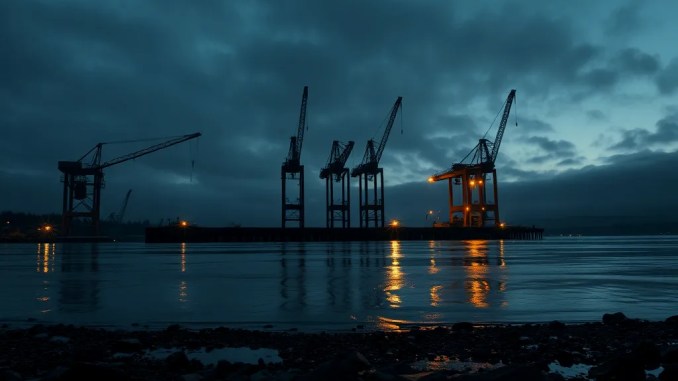
Canada Lists Roberts Bank Terminal 2 as a Nationally Significant Project
On October 30, 2026, the federal government added the Roberts Bank Terminal 2 project to the Canada Infrastructure Act’s Schedule 1, accelerating the planned commercial start from 2039 to 2035 while the final investment decision remains pending. The listing signals that federal processes and timelines will be streamlined: a single Conditions Document, to be prepared by the responsible minister and shaped by additional consultations with Indigenous communities, will replace multiple outstanding federal permits.
What the Project Will Build and Where
The project will expand terminal capacity next to existing Roberts Bank facilities in Delta, British Columbia. Physical works include approximately 120 hectares of terminal area and berth structure, a roughly 3-hectare tug basin enlargement, and about 45 hectares of expanded road and rail approach corridors. Onsite infrastructure will contain container-handling buildings, new rail tracks, and specialized equipment designed to process international import and export flows.
How the Terminal Connects to Canada’s Rail Network
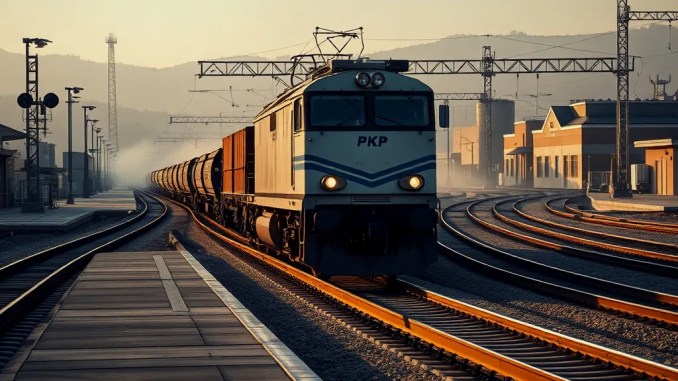
Roberts Bank Terminal 2 explicitly aims to reroute a portion of container traffic to the Roberts Bank area where rail congestion is lower than inner-harbour terminals. The terminal will connect to the lines of the three major railways serving the port, increasing throughput for both import and export trains. By shifting container volume to Roberts Bank, the project expects to free rail capacity that current terminals use to move bulk commodities such as grain and potash, improving modal separation and operational fluidity across the port.
Capacity Targets and Economic Scale
The planned three-berth facility is expected to handle about 2.4 million TEU per year, roughly a 50% increase over current container-handling capacity at the Port of Vancouver. Federal estimates project that the facility could support the movement of goods valued at approximately CAD 100 billion annually when combined with broader supply chain enhancements. Capital cost is estimated at CAD 5.9 billion (not including financing costs).
Why the Project Became a Priority: Demand and Cost Avoidance
Federal analysis finds Vancouver’s seaborne container capacity will approach physical limits in the 2030s. Without new capacity, Canada could face elevated logistics costs: projections indicate that by the early 2030s, constrained port capacity could create additional annual shipping costs in the CAD 800–900 million range. The government links the terminal to a strategy to double non-US market exports by 2035 and forecasts that, together with rail and distribution investments, the terminal could cut container import costs by about 25% and shorten Vancouver–Toronto transit times by around 17%.
Regulatory History and Outstanding Federal Approvals
The federal review process has spanned more than a decade. VFPA submitted the project in September 2013, the federal review panel finished in March 2020, and Ottawa provided conditional approval in April 2023 with binding conditions tied to environmental and species protections. British Columbia issued a provincial certificate on September 28, 2023. Remaining federal authorizations include Fisheries Act authorizations (application filed October 28, 2024) and Marine Ship Act approvals. With the national project listing, particular preconditions for permits identified in Schedule 2 are deemed met and the single Conditions Document will govern remaining federal authorizations.
Environmental and Indigenous Considerations
The federal review panel concluded the project could likely have significant adverse effects on Southern Resident killer whales and Chinook salmon in the southern Salish Sea without mitigation. Ottawa’s conditional approval and the binding conditions reflect measures designed to reduce harm, but additional consultation remains required. VFPA reports 27 mutually beneficial agreements with Indigenous communities; the Conditions Document will incorporate further Indigenous consultation outcomes before replacing remaining permits.
Implementation Timeline and Key Milestones
Key milestones to date and planned next steps provide a clear timeline for permitting and decision points:
Past milestones: VFPA project submission (13 Sep 2013); federal review panel report (Mar 27, 2020); federal conditional approval (19–20 Apr 2023); provincial certificate (28 Sep 2023); Fisheries Act authorization application (28 Oct 2024); referral to Major Projects Management Office (16 Jul 2026); Canada Gazette notice of potential listing (29 Aug 2026); Schedule 1 listing (30 Oct 2026).
Planned near-term steps: publish project record in the Canada Infrastructure Act registry within 30 days of listing; complete additional Indigenous consultations and prepare the Conditions Document; resolve remaining federal authorizations under the Conditions Document; advance commercial and financing due diligence to allow a final investment decision anticipated by mid-2027; target commercial operations in 2035, four years earlier than the prior target.
Chosen Contractor and Commercial Partnerships
Following a competitive procurement, VFPA selected the TerraMarine consortium as preferred construction partner on July 13, 2026. VFPA signed a memorandum of understanding with Global Container Terminals (GCT) in April 2026 to explore a commercial relationship, but that MOU does not constitute GCT operating the terminal. Commercial operating agreements, concession structures, and potential private financing remain subject to negotiation and the final investment decision.
How This Affects Supply Chains, Rail Operators, and Shippers
Shippers should expect a gradual redistribution of container train origins and destinations as Roberts Bank enters service. Rail operators will need to adapt scheduling and yard capacity; Shifting long-haul container moves to Roberts Bank can reduce interference with bulk commodity trains and lower dwell times at inner-harbor terminals. Logistics planners should model scenarios that incorporate a staged ramp-up to 2.4 million TEU, rail path availability changes, and revised drayage flows to evaluate cost and time impacts across intermodal corridors.
Practical Next Steps for Stakeholders
– Indigenous communities: engage with VFPA consultations to ensure Conditions Document reflects community terms and mitigation commitments.
– Rail: coordinate capacity planning with VFPA and federal agencies to secure companies necessary track connections and yard investments.
– Shippers and freight forwarders: update routing models, estimate cost savings from reduced port congestion, and plan for new intermodal transfer points.
– Local governments and regulators: align permitting timelines, traffic impact mitigation plans, and infrastructure investments in road and local rail approaches.
Why the Single Conditions Document Matters
Replacing several outstanding federal permits with a single Conditions Document changes how remaining approvals are administered: it Centralizes obligations, timelines, and monitoring expectations under one instrument and can accelerate decision-making while preserving enforceable conditions. The document will be legally binding and designed to reflect outcomes from continued Indigenous consultations and multi-stakeholder input.





Be the first to comment