
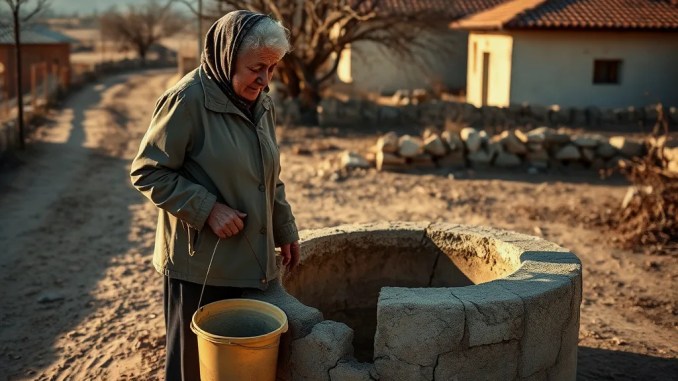
Pridvorica Reservoir Falls to Historic Low; 2,500 Households Lose Tap Water
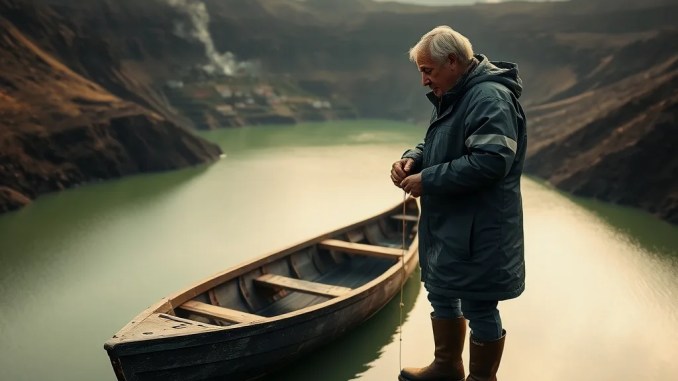
The Pridvorica Reservoir in the Blace municipality has dropped to an unprecedented level, forcing authorities to declare a state of emergency and leaving roughly 2,500 households without municipal drinking water. Long-term drought that began in summer and persisted through autumn drained the reservoir, wide mudflats across areas that were previously submerged and reducing available fresh water to critical levels.
How the Water Shortage Developed: Drought Timeline and Measured Declines
Local personnel with decades of service, residents and regional broadcasters observed that the reservoir’s water volume is lower than any recorded level. Measurements show the water surface sits about 30 meters below its typical elevation; normal level is recorded at 538.4 meters above sea level. That decline unfolded over months as precipitation deficit exceeded regional averages, groundwater recharge failed to replenish the basin, and inflow streams slowed to trickles.
Manganese Contamination Amplifies the Crisis
As water volume shrank, manganese concentrations in the remaining water climbed above safe limits. Elevated manganese rendered the reservoir water unsuitable for potable supply to the Pridvorica distribution network, prompting the immediate cutoff for the approximately 2,500 connected households. Manganese in groundwater and surface waters typically rises when low flows concentrate dissolved metals, and in this case the chemical shift moved the problem from scarcity to contamination.
Which Areas Are Affected and What Alternatives Remain
Most affected locations are villages and settlements served primarily by the Pridvorica system. The municipality has limited supplementary sources: some higher-yield wells exist but serve only about 600 households; those wells cannot scale to cover total demand. The municipality has asked residents to reduce consumption while agencies pursue short-term supply options.
Immediate Response: Pumps, Tankers, and Temporary Storage
The Public Utilities Company director, Zoran Mitrović, reported the emergency measures being implemented: tapping into the regional Toplica public supply where possible, requesting tankers and pumping units from the Regional Emergency Center, and activating a temporary reservoir capable of storing more than 50 cubic meters. That temporary system currently supplies between 20 and 24 liters per second; technicians estimate the minimum needed to meet basic needs for the population served is about 10 liters per second.
Step-by-Step Actions Authorities Are Taking
1) Operational assessment: engineers measured current storage elevation and analyzed manganese levels to decide which network segments could remain in service. 2) Source triage: crews isolated contaminated lines and prioritized distribution to health facilities and highest-need households. 3) Temporary supply: a portable basin and pumping set were deployed to stabilize minimum delivery rates. 4) Supplemental wells: teams evaluated capacity and water quality of higher-yield wells for potential network integration. 5) Logistics: authorities requested tanker deliveries and additional pumps to sustain distribution while longer-term options are developed.
Technical Details: Flow Rates, Storage and Quality Thresholds
The temporary basin supplies 20–24 liters per second (L/s). To put that in context, meeting minimal domestic needs for the affected population requires roughly 10 L/s as a baseline; sustaining any adequate margin above that depends on continuous pumping and low leakage in the distribution system. Manganese guidance thresholds for drinking water often sit at low milligram-per-liter values; as reservoir volume fell, measured concentrations exceeded those standards, forcing closure of the Pridvorica intake until concentrations decline or water is treated.
Why Rainfall Hasn’t Fixed the Problem Yet
Recent rainfall produced runoff but not enough sustained inflow to restore reservoir volume or sufficiently dilute manganese. Rapid evaporation during warm periods and reduced catchment recharge mean that isolated storms have limited immediate impact. Hydrologists emphasize that multiple wet events across weeks are usually necessary to replenish deep storage and reduce contaminant concentrations in stratified basins.
Practical Advice for Affected Households
– Prioritize water for drinking, cooking and basic hygiene while rationing nonessential uses. – Collect and store potable water when tankers or wells provide safe supply; label stored containers and keep them covered. – Use single-use or point-of-use filters only if rated for manganese removal; Many household carbon filters do not remove dissolved manganese effectively. – Boiling does not remove manganese; it can concentrate dissolved metals as water evaporates. – Follow municipal distribution schedules and report leaks promptly to preserve available volume.
Medium-Term Options and Feasibility
Authorities are evaluating three medium-term approaches: (a) connection upgrades to enable greater flow from Toplica regional sources; (b) phased wellfield development and treatment to expand safe groundwater supply; (c) mobile treatment units (ion exchange, oxidation-filtration) to lower manganese to acceptable levels at the distribution point. Each option differs by cost, implementation time and technical complexity: well expansion can take months for drilling, testing and permitting; treatment units can be deployed faster but need power and maintenance; interconnection improvements require civil works and valve modifications.
What Residents Can Expect Next and When Normal Service Might Return
Restoration of normal service depends on three variables: sustained inflow from rainfall, successful reduction of manganese concentrations (naturally or via treatment), and completion of infrastructure interventions (pumps, interconnections, or wells). If several weeks of above-average precipitation occurred, partial recovery could follow within weeks; absent that, rolling emergency measures (tankers, rationing, temporary supply) will remain necessary while medium-term construction proceeds.
Data Points, Examples and Context from Similar Incidents
Comparable cases show that reservoirs experiencing low-volume concentration effects often see manganese spike within months of reduced inflow; Interventions that combined temporary tankering and rapid treatment reduced public-health disruption in past events. For example, a regional reservoir in a neighboring basin regained safe use only after 10 weeks of sustained recharge combined with a portable oxidation-filtration unit that lowered metals to acceptable limits. Those precedents indicate that blending supply and treatment strategies shortens outage duration compared with single-track responses.
Key Takeaways for Decision-Makers
Focus resources on: securing pumping equipment and tanker logistics immediately; deploying portable treatment where feasible to restore limited safe distribution quickly; accelerating well testing and interconnection improvements to diversify supply; and maintaining clear public communication on schedules and water-use priorities to minimize waste and protect vulnerable consumers.






Be the first to comment