
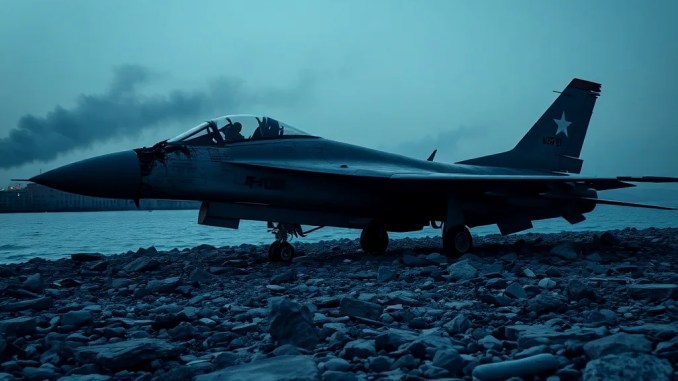
US Conducts Late-Night Strike on Iran’s Qeshm Island as Diplomacy Continues
Late on Monday night, US forces struck missile systems on Qeshm Island, Iran, while diplomatic channels between Washington and Tehran remained active. Iranian state media reported multiple explosions on the island, and international outlets cited unnamed sources saying the targets included ground-to-air missile batteries that US officials believed posed immediate threats to US personnel and assets in the region.
What happened during the strike
According to multiple international news agencies, the operation focused on air-defense systems. Reported sequence of events:
1) Detection and assessment: US intelligence units identified specific missile emplacements on Qeshm thought capable of engaging US aircraft or regional partners.
2) Targeting and authorization: Commanders approved a precision strike designed to neutralize those systems while limiting collateral damage to civilian infrastructure on the island.
3) Execution: The strike occurred in the late evening, producing audible explosions reported by local residents. No immediate CENTCOM confirmation was publicly released.
Why Qeshm was targeted
Qeshm sits at the mouth of the Strait of Hormuz and has featured in past incidents related to commercial shipping security. Military analysts cite three practical reasons for targeting the island:
Strategic location: Control of positions on Qeshm permits influence over maritime traffic and early-warning coverage for the strait.
Operational threat: Ground-to-air systems on the island, if operational, could endanger reconnaissance and strike assets operating in support of US and allied vessels or forces.
Message posture: A limited strike demonstrates capability and resolve while attempting to avoid escalation that broad offensive campaigns bring.
Evidence and reporting challenges
Open-source confirmation remains limited. Iranian local outlets confirmed detonations but did not disclose the full extent of damage or casualties. US authorities declined immediate comment through CENTCOM. In this information environment, analysts rely on a combination of satellite imagery, local eyewitness accounts, and reporting from news agencies to piece together likely damage assessments and timelines.
How the strike fits into a broader campaign pattern
Media reporting framed the Qeshm action as part of a string of recent, lower-profile operations attributed to US forces over weeks. Characteristics of that pattern:
Discrete, time-limited raids: Small number of precision strikes rather than wide-area bombardment.
Operational secrecy: Deliberate low public profile to avoid creating perception of a new large-scale war.
Targeted outcomes: Degrade specific capabilities (eg, air defenses, missile launch sites) that present immediate operational risks.
Diplomacy and timing: Why the strike matters politically
The strike occurred hours before key US midterm voting, complicating a delicate diplomatic backdrop. Senior US officials had signaled ongoing talks with Tehran and described the negotiations as cautiously optimistic. The timing matters for several reasons:
Domestic politics: Military action close to elections can shift voter perceptions of national security competence and decisiveness.
Negotiation leverage: A discrete military blow can alter bargaining chips at the table without ending dialogue.
Risk of derailment: Tehran could interpret the attack as bad faith, pausing or withdrawing from negotiations, or it could respond asymmetrically elsewhere.
Potential follow-up scenarios
Analysts outline several plausible short-term developments:
1) Diplomatic containment: Negotiators on both sides use back channels to prevent escalation, framing the strike as narrowly tactical.
2) Retaliatory strikes: Iran conducts proportionate attacks on regional US assets or proxies, calibrated to avoid full-scale war.
3) Military buildup: Both sides increase force posture in the Gulf, raising risks of miscalculation during subsequent interactions.
Implications for energy markets and elections
Markets reacted to the strike with increased volatility expectations. Qeshm’s proximity to the Strait of Hormuz means any disruption there has outsized effects on global crude transit. Practical effects to watch:
Short-term price sensitivity: Traders price in supply risk when strikes or naval incidents occur near chokepoints.
Voter focus on fuel costs: Rising pump prices can amplify economic concerns among swing voters ahead of elections.
How open-source analysts validate such incidents
Researchers combine multiple methods to corroborate events:
Satellite imagery: Before-and-after high-resolution images can identify damaged installations, vehicle movement, and fire scars.
Signal intelligence and geolocation: Social-media posts with geotags and metadata, when available, support timelines and location claims.
Maritime traffic patterns: AIS data and port notices show shifts in shipping behavior following regional military activity.
What to monitor next
For the coming days, watch these indicators for escalation or de-escalation:
– Official statements from CENTCOM, the US State Department, and Iran’s foreign ministry.
– Satellite imagery updates over Qeshm and nearby installations.
– Changes in commercial shipping routes and insurance premiums for Gulf transits.
– Regional military movements and public claims by Iranian-affiliated groups.
Clear, corroborated information will likely take time to emerge. Expect incremental disclosures from intelligence-aligned media and declassified assessments if political leaders choose to make details public.








Be the first to comment