
Overview of the Contract and Shipbuilders
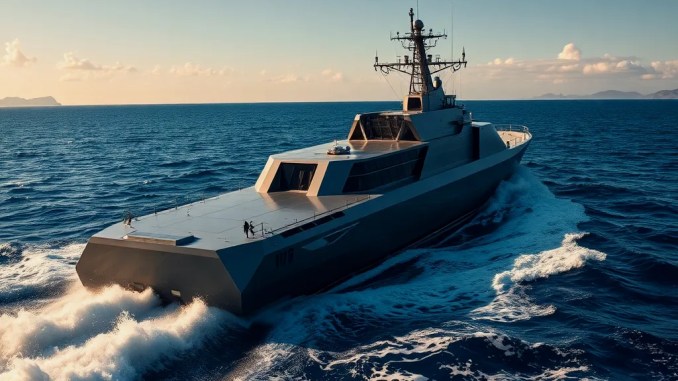
On 2 November 2026, India’s Ministry of Defense signed a $5.7 billion contract to build eight Next-Generation Corvettes (NGC) for the Indian Navy. The build will be split between Garden Reach Shipbuilders & Engineers (GRSE) — awarded five hulls — and Goa Shipyard Limited (GSL), which will construct three. The agreement moves a decade-old procurement program into production after approvals from the Defense Acquisition Council (DAC) and the Security Cabinet Committee.
Why this Corvette Program Matters
These corvettes fill a capability gap between offshore patrol vessels and frigates. Designed for multi-domain operations, they will expand India’s surface strike, anti-submarine warfare (ASW) and area air defense coverage near littoral and blue-water zones. The program also emphasizes indigenous systems and integration of DRDO-developed weapons, reducing dependence on imports and shortening future upgrade cycles.
Weapons and Combat Systems Planned for the NGCs
The NGCs will carry a mixed weapon suite optimized for layered defense and offensive strikes:
Anti-ship strike: NASM-MR turbojet-powered anti-ship missiles, developed by DRDO and first flight-tested in June 2026, provide sustained subsonic cruise performance with long-range sea-skimming profiles.
Area/point air defense: Medium-range surface-to-air missiles (MRSAM) integrated for area air defense and to protect task groups operating with the corvettes.
ASW and torpedoes: Integrated 324 mm torpedo tubes and deployable towed sonar arrays for submarine detection and prosecution.
Guns and CIWS: An OTO Melara 76 mm Super Rapid Gun Module (SRGM) for surface-fire and ballistic intercepts, plus AK-630 CIWS for close-in defense. EO-based Fire Control Systems (EOFCS) and stabilized 12.7 mm remote weapon stations provide precision at short ranges.
Sensors, Aviation Facilities and Mission Systems
Sensors planned for the class include a multi-function AESA surveillance and fire-control radar (MFSTAR) and an Electro-Optical/Infrared Search and Track (EOIRST) suite for passive detection, identification and targeting. Each ship will have a hangar and flight deck sized for either a medium naval helicopter or an unmanned aerial vehicle (UAV), extending ASW, surveillance and targeting reach.
Key Technical Specifications and Performance
The NGC design centers on a balance of endurance, seakeeping and modular payload capacity. Primary specifications declare:
Length: 127.4 metres
Beam: 17.6 metres
Full load displacement: 4,950 tonnes
Top speed: 26 knots
Crew: 11 officers and 139 sailors
The propulsion is a CODAG-CC (Combined Diesel and Gas, Cross-Connect) arrangement driving two controllable-pitch propellers. This configuration gives economical cruising on diesel power and sprint capability from gas turbines while enabling redundancy and fuel-efficiency for long-range patrols.
Construction, Production Schedule and Industrial Roles
GRSE and GSL will split hull production to accelerate delivery and retain industrial knowledge across yards. Typical phased production steps include keel-laying, block integration, outfit and systems installation, harbor trials, weapon and sensor integration, sea trials and final commissioning. Parallel workstreams — hull construction, combat systems integration, and aviation/launch systems — will compress the schedule. Expect initial trials to focus on propulsion and basic seakeeping, followed by incremental weapons and sensor tests.
How NASM-MR Integration Changes Tactical Employment
Integrating NASM-MR on corvettes shifts tactical options by giving relatively small ships long-range, high-persistence strike options. Operational examples:
– In a littoral blockade, NGCs can prosecute high-value surface targets while staying outside coastal air defenses.
– In carrier strike group escort roles, corvettes provide redundant anti-surface punch and layered close-range defense.
– For anti-access/area-denial (A2/AD) posturing, distributed missile shooters like these complicated adversary targeting and force allocation.
Survivability, Modularity and Upgrade Path
Design features emphasize survivability and future-proofing: compartmentalized hull zones, signature-reduction measures, and modular mission bays that accept updated sensors, effectors or unmanned systems. The modular approach allows relatively rapid insertion of new radars, electronic warfare suites, or vertical launch modules as technologies and doctrines evolve.
Operational Use Cases and Examples
Examples of likely mission sets and how the ships will be employed:
1) Coastal ASW patrols: Use hull sonar and towed arrays with embarked helicopter/UAV for persistent submarine tracking and coordinated torpedo engagement.
2) Maritime interdiction and presence missions: Launch boarding teams from RHIBs, use EOFCS and remote weapons for escalatory response while providing credible deterrence with NASM-MR missiles.
3) Task force escort and layered defense: Serve as short-to-medium range air-defense nodes and anti-ship missile platforms within a multi-ship formation.
What This Means for India’s Naval Balance
Addition of eight NGCs increases distributed lethality and redundancy in the surface fleet. Smaller than frigates but heavily armed, these corvettes multiply the number of missile-capable hulls without the cost and manning burden of larger combatants. Strategically, they strengthen patrol coverage around critical sea lines of communication and augment anti-submarine warfare posture in the Indian Ocean Region.
Potential Risks and Program Challenges
Risks that could affect schedule and operational readiness include supply-chain bottlenecks for complex electronics and gas-turbine spares, integration issues between indigenous and foreign subsystems, and workforce scaling across yards. Mitigations involve staggered deliveries, pre-integration testbeds, and prioritized logistic pipelines for high-failure-rate components.
Timeline to Full Operational Capability
Based on the contract signature and conventional shipbuilding timelines, expect block construction to begin immediately with first hull outfitting within 18–24 months. Sea trials and weapon integration for the lead ship typically take 12–18 months after launch, so initial operational deployments could start roughly 3–4 years from the contract date, with the full eight-ship squadron achieving maturity within 6–8 years, depending on test results and incremental upgrades.
Summary: Capabilities Delivered by the NGC Program
The Next-Generation Corvette program delivers medium-displacement combatants equipped with modern anti-ship missiles (NASM-MR), medium-range SAMs, ASW fit including 324 mm torpedoes and towed sonar, SRGM main gun, CIWS, EOIRST and an AESA multifunction radar. These ships combine modularity, aviation capability and CODAG-CC propulsion to provide versatile, cost-effective force multiplication across coastal and blue-water operations.







Be the first to comment