
CV90 Fleet Expansion and How It Will Change Dutch Armored Infantry
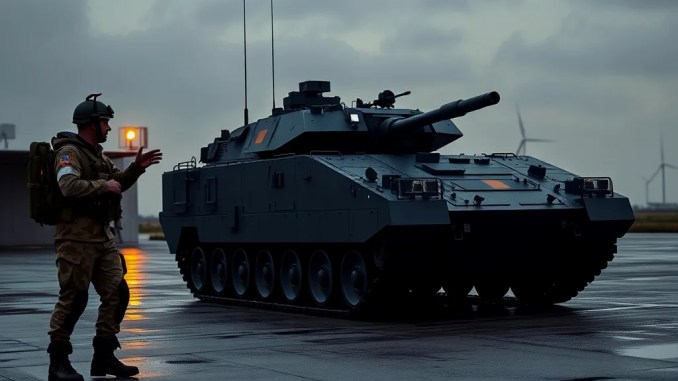
The Netherlands will add CV90 infantry fighting vehicles to form a new armored infantry battalion, basing it at Nassau-Dietz Barracks in Budel. The procurement joins a multinational BAE Systems Hägglunds-led acquisition with Estonia, Finland, Lithuania and Norway. Currently fielding 122 CV90s, the Dutch Army is modernizing that fleet under a roughly $500 million mid-life upgrade program; additional hulls will increase mechanized maneuver density, improve distributed anti-armor and infantry protection, and allow more persistent patrol rotations without stressing fleet availability.
Operationally, adding CV90s will enable Dutch doctrine to shift from light mechanized formations toward heavier, combined-arms battlegroups able to sustain higher-intensity operations. Example capability gains include longer-range lethal engagement (upgraded fire control and ammunition types), enhanced sensor fusion for faster target acquisition, and improved turret survivability. Practically, a single additional company of CV90s provides the battalion with organic direct-fire punch, enabling deeper reconnaissance-in-force and more robust defenses against near-peer armored threats.
Deployment and logistics considerations: CV90 procurement will require expanded training cadre, simulator and live-fire ranges, and spares pipelines aligned with Swedish production. Expect phased deliveries so modernization of existing hulls and induction of new vehicles overlap—this reduces capability gaps but increases simultaneous sustainment demands.
Replacing Kodiak Engineer Vehicles: Requirements and Options
The Kodiak engineering vehicle built on the Leopard 2 chassis no longer meets reliability and protection demands, prompting a full replacement effort. Dutch authorities cite frequent breakdowns, age-related maintenance burdens, and insufficient protection against contemporary battlefield threats. The new engineer vehicle must perform rapid obstacle breaching, minefield reduction, and emplacement of assault lanes while protecting crew, exploiting improved powertrains and modular mission kits.
Key functional requirements that will drive procurement decisions:
– Breach and clear: mechanical mine-clearing, explosive lane creation, and scalable mine roller or plow modules.
– Mobility and protection: Leopard-level mobility with add-on composite/steel applique and signature management to resist shaped charges and IEDs.
– Force-multiplication: integrated combat engineering suites (robotic tool exchange, remote initiation for demolitions) to minimize crew exposure.
– Transportability and sustainment: standardized interfaces to reduce lifecycle cost and allow component-level swaps in field workshops.
Procurement approach: the ministry may join an existing German contract for foldable bridgelayer tanks to secure economy-of-scale discounts and fast-track fielding. Examples of engineered capabilities to expect are modular mine-clearing line charges integrated with remote handling and hydraulic excavation booms capable of removing anti-tank obstacles in under 30 minutes for a company-level breach.
Armoured Combat Support Vehicles (ACSV): Roles, Variants, and Force Effects
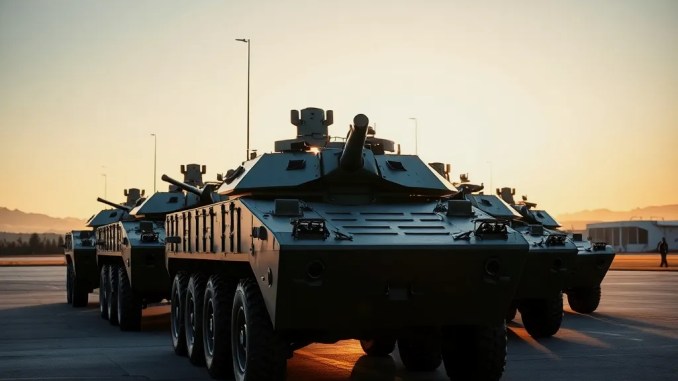
FFG’s ACSV family will give Dutch armored brigades adaptable tracked support platforms for medical evacuation, command and control, and specialist engineering tasks. Procuring a common tracked chassis that accepts role-specific kits reduces the logistics footprint while delivering tailored mission modules: ambulance, command post, mine-layer, recovery training, and electronic support variants.
How modular ACSVs improve operations:
– Medical: protected casualty evacuation under armor with integrated life-support and casualty triage stations increases survival on high-threat routes.
– Command: mobile HQs with datalinks and extended battery or hybrid power allow sustained decentralized command nodes close to front-line maneuver units.
– Specialist tasks: quick reconfiguration from logistics to engineering or CBRN support in theater increases responsiveness to unfolding tactical needs.
Example logistics impact: using a single spare-part pool for drivetrain, tracks, and electronics across ACSV variants reduces inventory complexity by an estimated 20–30% compared with unique-platform procurement. Training synergies also shorten course loads for maintainers and drivers.
Wisent 2 Armored Recovery Vehicles: Why They Matter
The Wisent 2 recovery vehicle on a Leopard 2 chassis restores disabled heavy armor quickly and securely. Replacing a fleet of 25 aging Bergepanzer 3 vehicles, Wisent 2 offers higher lifting and winching capacity, remote-operated recovery tools, and improved mine/IED protection to operate inside contested areas. Rapid recovery keeps main battle tanks and IFVs in the fight by reducing time-to-repair and tow distances back to field workshops.
Operational example: in a hypothetical armored advance where a Leopard 2A8 becomes immobilized by track damage and partial hull damage, a Wisent 2 can remotely anchor, lift the damaged powerpack, and tow the vehicle to a maintenance protected node within hours—rather than requiring a lengthy theater-level recovery or risking additional losses.
Industrial Participation: How Dutch Firms Fit Into Sustainment and Sovereignty Goals
Domestic industry involvement will secure sustainment, industrial capacity, and sovereign repair capability. Van Halteren Technologies will assemble and maintain ACSV and Wisent 2 vehicles locally, creating national depot-level maintenance and shortening mean time to repair. KONI Nederland and Neways Electronics will supply chassis components and electronic subsystems, while Avient Protective Materials will provide high-strength fibers for ballistic protection kits.
Benefits to the defense ecosystem include retained IP for vehicle upgrade paths, local jobs in high-skill manufacturing and engineering, and faster in-country modification cycles to respond to lessons from training or operations. A staged industrial transition—initial foreign manufacture followed by Dutch final assembly and full local maintenance—balances speed to fielding with long-term sovereignty.
Program Risks, Timelines and What to Watch Next
Key risks include schedule slips from multinational coordination, supply-chain bottlenecks for specialized components (eg, turret servos, composite armor materials), and training throughput constraints. Budget transparency remains limited; the ministry has not released total program cost or delivery schedules, so oversight should focus on milestone-based contracting with clear performance metrics.
Watch for four indicators that reveal program health:
1. Contract signatures and schedule windows—formalization with BAE, FFG and German bridge contractors will set lead times.
2. Industrial ramp-up—Van Halteren and subcontractor hiring, facility upgrades and tooling procurement signal real progress.
3. Initial Operational Capability (IOC) declarations—IOC for CV90 expansions or ACSV variants will indicate field readiness levels.
4. Spare-parts pipeline transparency—published sustainment contracts and depot capacities show long-term viability.
When executed well, the package of CV90s, new engineer vehicles, ACSVs and Wisent 2 recoveries will increase Dutch armored formations’ endurance, reduce downtime, and improve tactical flexibility against higher-end threats.




Be the first to comment