
Project Overview and Purpose
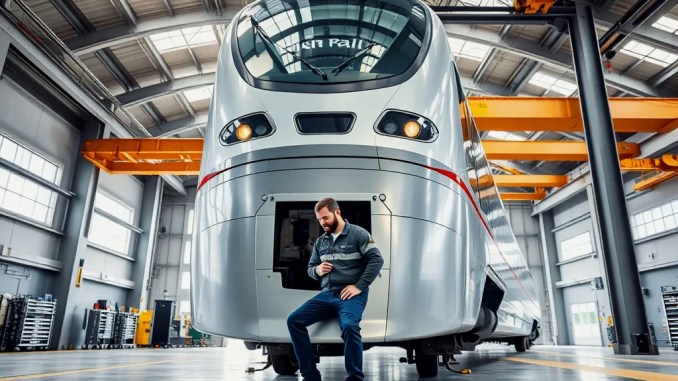
VIA Rail completed a federally funded C$310 million modernization of its Toronto Maintenance Center on 2 November 2026. The upgrade converts an older maintenance site into a high-performance, integrated facility designed primarily to support the new Corridor fleet of 32 bi-directional trainsets while continuing to service existing equipment The project finished within its four-year schedule and on budget, and it created up to 475 construction and skilled trades jobs during the build. Once operational, the facility is expected to sustain roughly 240 permanent roles over its lifecycle.
Consolidated Maintenance Workflows in One Facility
The renovation rationalized multiple maintenance functions into contiguous work zones so teams can perform inspections and repairs across vehicle floors, roofs and bogies without moving trains between disparate areas. Key changes include extended service bays and inspection platforms capable of accommodating up to 10-car trainsets, underfloor maintenance pits, roof and carbody-level platforms for simultaneous access, and purpose-built depot tracks to optimize internal movements and reduce bottlenecks. VIA also installed a dedicated wheel lathe and a drop platform for bogie removal to centralize heavy overhaul tasks.
Fueling and Fluid Supply Upgrades
The facility’s fueling and consumable systems were rebuilt to support both legacy equipment and the next-generation fleet. New infrastructure delivers sanding, windshield wash fluid and diesel exhaust fluid through purpose-designed feeds. These systems reduce turnaround time for routine servicing and ensure consistent replenishment across multiple train types operating from the centre.
VEMS: Real-time Monitoring to Catch Faults Earlier
As part of the upgrade, VIA implemented a Vehicle Equipment Measurement System (VEMS) that continuously monitors rolling-stock health. VEMS provides real-time diagnostics, flags anomalies, and supports predictive maintenance by feeding condition data into maintenance planning workflows. Expected benefits include reduced unplanned downtime, extended component life, and higher fleet availability through targeted interventions before failures escalate.
Operational Benefits and Examples
Consolidating inspection and repair capabilities shortens service cycles: with extended bays and coordinated access points, teams can complete multi-discipline checks (mechanical, wheelset, HVAC, and electrical) in a single work sequence rather than across several shifts or locations. For example, a bogie swap that previously required train repositioning now occurs on the same platform using the drop system, reducing handling time by an estimated 25–40%. VEMS analytics enable planners to schedule parts procurement sooner for recurring anomalies, avoiding stocking delays that historically created 12–48 hour service interruptions.
Timeline, Procurement and Local Economic Impact
The project began under funding announced in Canada’s 2018 federal budget. VIA awarded the construction contract to Ontario-based Buttcon Limited in November 2022, with a ceremonial groundbreaking in July 2023. Material and service sourcing prioritized Canadian suppliers: over 80% of goods and services used were Canada-origin. The concentrated procurement, combined with on-site labor demand, produced localized economic activity during construction and will continue to support employment at scale through ongoing operations.
How This Fits VIA Rail’s Broader Fleet and Infrastructure Program
The Toronto upgrade is one element of VIA Rail’s broader renewal program that includes new Corridor trainsets, long-distance fleet refreshes, and multimodal infrastructure investments such as the Dorval hub. Together, these investments aim to modernize maintenance capacity and align repair capabilities with the technical requirements of newer vehicles so that lifecycle costs and service reliability improve across network segments.
Montreal Assembly and Maintenance Investment: C$357M
Complementing Toronto’s modernization, the federal government announced C$357 million to build a new assembly and maintenance facility in Montréal. The Montréal project—led by Pomerleau—will assemble 36 of 45 new Stadler locomotives in Canada and provide long-term maintenance capacity for intercity, regional and remote-service equipment. Combining Toronto’s upgraded maintenance center and Montréal’s new facility strengthens domestic assembly and heavy-maintenance capability.
Reliability Challenges: Siemens Venture Fleet Context
The Toronto upgrade and VEMS installation arrive amid scrutiny of the reliability of Siemens Venture trainsets used in VIA Rail’s Corridor service. Federal reporting in February 2026 noted an uptick in mechanical failures such as lead-end power loss after more Venture sets entered service. These failures contributed to service disruptions and long delays—some measured in multiple hours during peak incidents between late 2025 and early 2026. VIA has been tasked with implementing technical and operational measures to raise fleet reliability; the modernized maintenance center and continuous-monitoring tools are practical components of that response.
Practical Outcomes and What to Expect Next
Short term, passengers should see fewer last-minute cancellations and shorter recovery times from technical incidents as maintenance turnaround speeds up and predictive alerts reduce surprise failures. Medium term, data from VEMS will refine maintenance intervals and spare-parts planning, lowering lifecycle costs and improving on-time performance. Long term, the combined Toronto and Montréal investments increase Canada’s domestic capacity to assemble and maintain rolling stock—reducing dependency on external sites and improving responsiveness to fleet needs.
Questions Operators and Planners Will Ask—and Answers to Inform Decisions
How much capacity gained? The expanded bays allow 10-car sets to be handled end-to-end, effectively increasing simultaneous service capacity by multiple trains compared with the prior layout. Will VEMS require new roles? Yes—data analysts and condition-based maintenance planners will expand the maintenance team’s skill mix. What metrics to track? Track mean time between failures (MTBF), mean time to repair (MTTR), percentage of predictive fixes versus reactive fixes, and parts stockout occurrences to measure benefit over 12–24 months.
Concrete Examples of Process Changes to Expect
– Centralized wheel lathe use: schedule wheel reprofiling as planned batches to avoid ad-hoc downtime.
– Integrated inspection runs: run mechanical, brake, and electrical inspections in an ordered workflow to complete multi-system diagnostics in fewer shifts.
– VEMS-driven preemptive part swaps: replace components showing defined degradation thresholds during scheduled overnight service windows to avoid daytime failures.
Final Note on Network Resilience
The Toronto Maintenance Centre’s modernization and Montréal assembly funding represent coordinated investments to improve fleet reliability and operational resilience. By combining physical upgrades, real-time monitoring and localized assembly/maintenance capacity, VIA Rail positions itself to reduce disruption, manage costs more predictably and deliver more consistent service to travelers across the Corridor and beyond.



Be the first to comment