
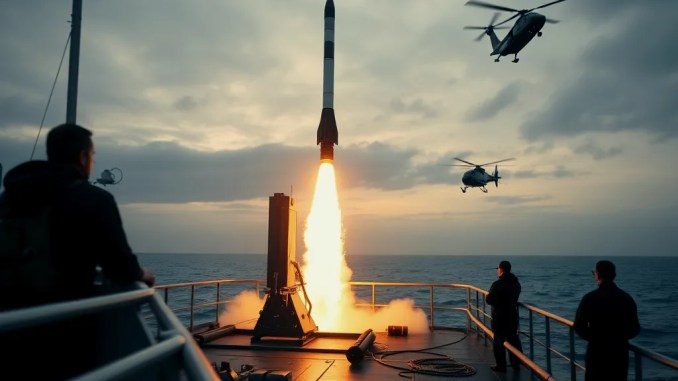
Sea-Based Chunmoo Test Program and Purpose
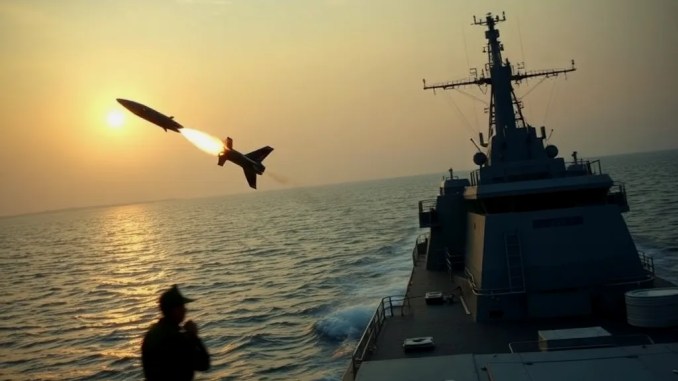
Hanwha Aerospace will perform live-fire tests from a maritime platform off the southern US coast to validate a containerized Chunmoo launcher’s readiness for shipboard deployment. The November 2026 trials will measure missile launch stability, container thermal and shock performance, and software integration with shipboard combat systems. Engineers will collect telemetry on launch signatures, blast overpressure, deck vibration, and container cooling under repeated launches to determine necessary modifications for sustained naval operations.
How the Containerized Launcher Converts a Land System for Ships
Converting Chunmoo’s land launcher into a sea-capable module involves four concrete engineering steps: assess and redesign mounting points to distribute launch loads across deck structure; isolate the launcher with shock mounts and dumping to survive ship motion and slamming; add seawater-tolerant corrosion protection and sealed interfaces to prevent salt intrusion; and integrate command, control, and power using Navy-standard protocols and marine UPS systems. During the planned tests, Hanwha and partners will validate each step by monitoring structural stresses, connector integrity, and C2 latency between the shipborne control station and the launcher.
Partnerships and Industrial Moves Enabling Naval Integration
HDUSA’s collaboration with Magnet Defense formalized development of a containerized Chunmoo launcher for the H38 medium unmanned surface vessel (MUSV). That agreement leverages Magnet’s naval integration experience and HDUSA’s systems know-how to accelerate fielding. Parallel corporate activity — reported negotiations to acquire Austal USA and a $269 million contract with TOTE Services to build a medium landing ship — signals Hanwha’s strategic shift from supplying ground systems to becoming an integrated maritime solutions provider. Those business actions shorten supply chains for hull modifications, container production, and after-sales support needed for adoption.
Chunmoo Variant Details and Naval fleet fleet Implications
The K239 Chunmoo launcher supports pods carrying different rocket calibers. In naval use, configuration choice balances payload count, magazine depth, and mission range: 130 mm unguided rockets (20 per pod, ~36 km) maximize salvo density for saturation strikes; 227 mm unguided rockets (6 per pod, ~80 km) offer deeper standoff; and 239 mm guided rockets (6 per pod, ~160 km) provide precision and reduced collateral effects. At sea, guided 239 mm rockets can extend a surface vessel’s strike envelope to support sea denial, littoral suppression, and precision land-attack while conserving logistics by using mixed pod loads tailored to mission profiles.
What the Planned Tests Will Measure — Metrics and Pass Criteria
Test engineers will collect objective metrics and apply clear pass/fail criteria: successful remote initiation and telemetry handshake (command round-trip <100). ms), launcher alignment and deployment repeatability (azimuth/elevation error <0.5°), structural survivability (no permanent deck deformation after three salvo patterns), thermal control (container internal temperature remains within operational limits for five consecutive firings), and electromagnetic compatibility (no interference with shipboard radars above baseline thresholds). These measurable criteria determine retrofit needs and certification pathways for naval use.
Operational Use Cases for Sea-Launched Chunmoo
Surface vessels and unmanned surface vessels (USVs) can employ Chunmoo in several distinct roles: strike-on-demand against high-value coastal targets using 239 mm guided rockets; area denial and saturation attacks with 130 mm salvos to suppress enemy littoral forces; stand-off interdiction using 227 mm rockets against incoming amphibious elements; and distributed lethality by dispersing containerized launchers across a mixed fleet to complicate enemy targeting. The modularity of containerized launchers allows rapid re-rolling between missions and ashore-to-ship logistics commonality.
Integration Challenges and Practical Mitigations
Naval adaptation faces predictable hurdles: corrosive salt environment shortens maintenance intervals; rolling and pitching require stabilization or software compensation for accurate ballistic solutions; limited deck space and weight constraints demand compact container footprints and optimized weight distribution; and rules of engagement and ship survivability doctrine require launcher hardening and safe stowage procedures. Mitigations include MIL-S-901 shock-certification for mounts, conformal corrosion-resistant coatings, automated recoil compensation algorithms, and mission planning tools that account for ship motion in real time.
Data and Examples from Analog Programs
Lessons from containerized missile projects such as Sea Wolf/SeaRAM conversions and containerized anti-ship missile demonstrations show that performance hinges on rigorous environmental testing and C4 integration. For example, past maritime container launches required reinforcement of local deck structure and thermal venting upgrades after initial trials revealed excessive heat transfer to adjacent compartments. Applying those lessons, Hanwha’s test plan emphasizes repeated-cycle firing and thermal mapping to preempt similar retrofit needs.
Next Steps After Testing and Fielding Pathway
Following successful firings, Hanwha will iterate launcher hardware and software to remediate any failures, complete naval certification tests, and pursue limited operational evaluations aboard MUSVs and crewed ships. Procurement steps normally follow: prototype evaluation by partner navies, endurance trials during multi-month deployments, and finally production contracts for containerized units combined with logistics and training packages. If trials validate performance, navies can deploy Chunmoo as an easily transported, modular strike asset that expands distributed lethality concepts without permanent hull modifications.




Be the first to comment