
Hanford Viaduct Completed: Key Facts and Strategic Role
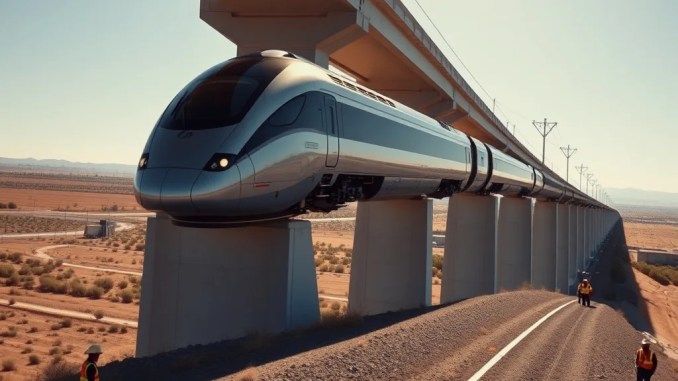
California High-Speed Rail Authority completed the Hanford Viaduct in Kings County, a structure that stretches more than one mile and marks the largest single structure within the initial 119-mile construction segment. Dragados-Flatiron Joint Venture constructed the viaduct east of Hanford and State Route 43, between Grangeville Boulevard and Hanford-Armona Road. The viaduct will carry the future high-speed rail alignment over the San Joaquin Valley Railroad and State Route 198, and it forms part of the planned Kings/Tulare multi-modal station complex that aims to support regional economic development.
Construction crews set 978 precast concrete girders on the roughly 6,330-foot superstructure beginning in August 2022. Foundation work required more than 7,000 driven piles, according to the project update published in 2020. The Authority’s interim CEO Joe Stephenshaw stated that completing the viaduct signals a shift from large civil works toward track installation, trainsets and station development across the Central Valley.
Five Additional Structures Open in Fresno, Kings and Tulare Counties
Alongside the Hanford Viaduct, the Authority announced completion of five other large civil structures across Fresno, Kings and Tulare counties. Each structure supports the future high-speed corridor and demonstrates a mix of bridge types and construction techniques:
Conejo Viaduct (Fresno County): A combined viaduct and pergola spanning more than 2,200 feet over Conejo Street and the BNSF freight tracks. The assembly used a mix of 248 precast concrete girders, 18 precast tube girders, more than 4 million pounds of structural steel and roughly 34,000 cubic yards of cast-in-place concrete.
Cole Slough Bridge (Fresno County): A short crossing just over 317 feet long located south of Davis Street and east of State Route 43. The bridge uses 6 prefabricated California Wide Flange girders, about 1,251,632 pounds of steel and approximately 3,060 cubic yards of concrete.
Dutch John Cut Bridge (Kings County): A 669-foot structure that allows trains to cross the Dutch John Cut waterway. Its construction included 20 precast concrete girders, 2,623,520 pounds of steel and about 4,695 cubic yards of concrete.
Houston Avenue Overcrossing (Kings County): A 450-foot overpass south of the Hanford Viaduct that opens a future roadway crossing above the rail corridor; The Authority has not published aggregate material totals for this overcrossing.
Deer Creek Viaduct (Tulare County): A long viaduct exceeding 3,000 feet utilizing more than 264 precast concrete girders, roughly 14,703,238 pounds of steel and 13,558 cubic yards of concrete.
At-a-Glance: Six Completed Structures (as of November 12, 2026)
These structures vary by function and scale, but together they represent a concentrated push to finish heavy civil infrastructure early so subsequent rail and systems work can progress:
Hanford Viaduct (Kings) — ~6,330 feet; 978 precast girders; >7,000 piles.
Conejo Viaduct (Fresno) — >2,200 feet; 248 precast girders; 18 tube girders; >4Mlb steel; 34k cu yd concrete.
Cole Slough Bridge (Fresno) — >317 feet; 6 wide-flange girders; ~1.25M lb steel; ~3,060 cu yd concrete.
Dutch John Cut Bridge (Kings) — 669 feet; 20 precast girders; ~2.62M lb steel; ~4,695 cu yd concrete.
Houston Avenue Overcrossing (Kings) — 450 feet; materials not disclosed.
Deer Creek Viaduct (Tulare) — >3,000 feet; >264 precast girders; ~14.7M lb steel; ~13,558 cu yd concrete.
How These Completions Affect Regional Mobility and Safety
Kings County Supervisor Doug Verboon emphasized that the Hanford Viaduct and Houston Avenue overcrossing will increase safety and traffic efficiency by separating highway and local streets from the rail corridor. The finished bridges reduce potential conflict points with freight and passenger movements while enabling planned station access. By building long elevated sections now, the program minimizes later disruptions during track and systems installation and creates predictable civil constraints for station designers and systems engineers.
Central Valley Progress: Track, Labor and Economic Impact
Across the Central Valley the program has completed more than 90 miles of trackbed and corridor work. Project teams finished over 70 major structures while 22 remain under construction in Madera, Fresno, Kings and Tulare counties. Merced-to-Bakersfield and adjacent segments continue design and construction activity. Sites employ up to 1,700 workers daily and the program reports creating 21,063 construction job assignments to date, with a large share filled by Central Valley residents under the Community Benefits Agreement. The Authority estimates the program’s statewide economic output and growth contribution at about $27 billion.
Contracts for Track and Systems on the 119-Mile Section
On June 1, 2026, the Authority’s Board approved the HSR25-89 contract for track and systems with a Kiewit, Stacy & Witbeck, and Herzog joint venture, capped at $3.5 billion. The Board also authorized notice-to-proceed actions for two initial packages. Package 1B — covering systems equipment procurement, design refinement, pre-construction and program management — received an authorization of $118.1 million as a time-and-materials contract with a not-to-exceed value. Package 2 — a fixed-price contract covering civil work, track installation and the overhead contact system for Construction Package 4 — carries a contract value of $260.8 million.
Planned sequence and milestones published in the Board memo include a November 30, 2026 start for heavy track installation, track completion by June 14, 2027 and overhead contact system completion by October 18, 2027, for the Package 2 scope. Package 3 and Package 4 remain unauthorised; Package 3 would include Hanford Viaduct area track and systems and may be split into north and south subpackages pending future Board approvals.
What Questions People Also Ask — and Clear Answers
What does the Hanford Viaduct do? It carries the future high-speed alignment over existing freight rail and State Route 198, creating a grade-separated corridor and enabling the Kings/Tulare station approach.
How long is the Hanford Viaduct? Approximately one mile, or roughly 6,330 feet.
What comes next after completing these bridges? The program moves into track laying, overhead contact system installation, systems integration and station finishes. Packages 1B and 2 already have authorizations; track and systems in the Hanford area await Package 3 approval.
How many workers are on the project? Up to about 1,700 workers operate daily across Central Valley sites, with more than 21,000 construction job assignments created to date.
Implementation Steps and Timelines for Track & Systems (119-mile segment)
Step-by-step timeline reflected in Board authorizations and memos:
1. Issue notice-to-proceed for Package 1B and Package 2 (completed June 2026).
2. Mobilized track crews and materials for Package 2; commence heavy track installation (planned start: November 30, 2026).
3. Complete tracklaying and ballast/tie works (target completion: June 14, 2027).
4. Install overhead contact system and test electrical continuity (target completion: October 18, 2027).
5. Sequence systems provider contracts and station-level integration (Package 1B milestones through mid-2027).
6. Authorize and award Package 3 to bring track and systems through areas built under Construction Packages 2-3 (timing dependent on future Board decisions).
Unique Details, Data Points and Construction Examples
Using precast girders enabled rapid superstructure placement: crews set nearly 1,000 units on the Hanford Viaduct alone. Precasting allows factory-quality control, faster installation with crane lifts, and reduced site formwork and curing time. For the Conejo Viaduct, designers combined tube girders and wide flange elements to span over active freight tracks while meeting clearance and dynamic load requirements. On short crossings such as Cole Slough, minimization of in-water work and use of wide-flange proprietary sections reduced environmental footprint and schedule risk.
How This Shapes the Next Phase for the Central Valley
Completing major structures converts early long stretches of civil works into predictable constraints for systems designers and helps contractors stage rail, power and signaling installations more efficiently. When boards approve remaining track-and-systems packages for the Hanford area, crews will have fewer civil interruptions to coordinate around, shortening the path to revenue service prerequisites such as systems testing, vehicle acceptance and station commissioning.
Sources and Data Reliability
All material quantities and schedules referenced reflect the Authority’s November 12 announcement and project-specific pages for the Hanford Viaduct and associated structures. Contract values and Board actions come from the June 1, 2026 Board memorandum and public resolutions. Site-level material totals for the Houston Avenue overcrossing were not published in the released materials.








Be the first to comment