

Aydın’s railway history began in the Ottoman Empire and became one of the defining chapters in Türkiye’s transport development. The İzmir–Aydın railway, whose concession was granted in 1856, marked the start of railway construction within the borders of present-day Türkiye. Built to connect the Aegean port of İzmir with the fertile hinterland of western Anatolia, it helped reshape agricultural trade, regional mobility and the relationship between inland towns and the coast.
A Railway Born from Ottoman Reform and British Investment
On 23 September 1856, the Ottoman government granted British entrepreneurs the concession for a railway between İzmir, then widely known internationally as Smyrna, and Aydın. The project emerged amid nineteenth-century reform and expanding European commercial activity in the eastern Mediterranean. British merchants sought a more dependable route for agricultural goods moving from the Büyük Menderes valley to İzmir’s port.
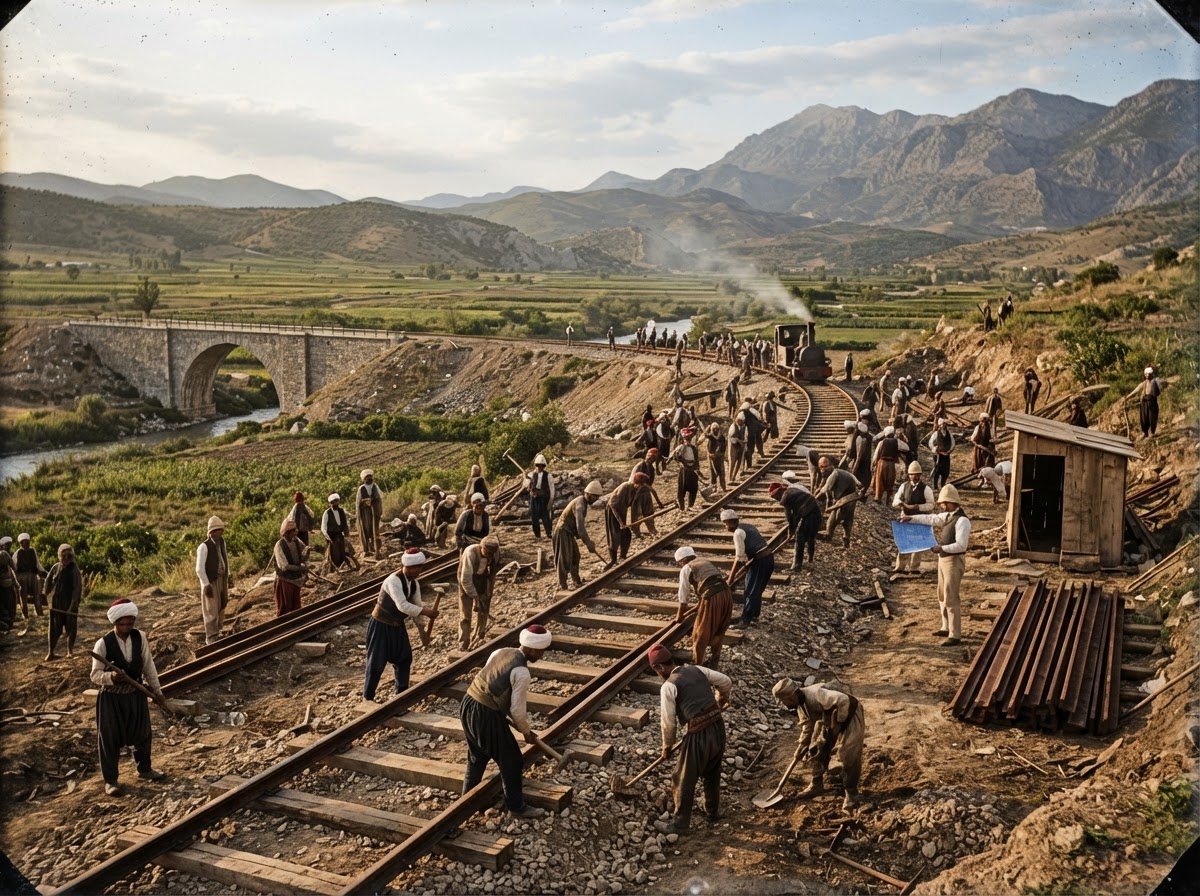
A concession did not mean that trains began running immediately. Financing difficulties, difficult terrain and construction challenges delayed progress. Work began in 1857, and the railway reached Selçuk in 1862. The approximately 130-kilometre main line was completed in 1866, establishing one of the Ottoman Empire’s most consequential early railway corridors.
How the Railway Transformed the Aydın Economy
Before the railway, merchants depended extensively on caravans and roads that made the movement of heavy agricultural cargo slow and expensive. The railway reduced the obstacles between inland producers and coastal markets. Figs, cotton, cereals and other agricultural products could reach export channels more efficiently, while imported goods and manufactured products travelled in the opposite direction.
This transformation had a wider social impact. Railway stations became focal points for commerce, employment and settlement. The line encouraged the development of transport services, storage facilities and new business connections. It also reflected the uneven balance of nineteenth-century investment: foreign capital supplied infrastructure and expertise, while commercial priorities heavily shaped where railways were built.
From a Single Line to a Regional Network
The original İzmir–Aydın route eventually became the foundation of a much wider network. Branches and extensions connected additional agricultural districts and communities, including directions toward Söke, Tire, Ödemiş and Denizli. These connections reinforced the role of the railway as a regional transport system rather than simply a point-to-point route.
Railways also changed everyday life. Passenger services expanded opportunities for travel and made certain journeys more predictable. Across western Anatolia, the stations and engineering works that accompanied railway construction became visible signs of a new transport age.
The Republican Era and Nationalization in 1935
Following the establishment of the Republic of Türkiye in 1923, railway policy increasingly emphasized state ownership, national integration and public control over strategic transport links. The new republic inherited a network developed under different concessions, operators and economic priorities. Integrating those lines into a coordinated system became a major government objective.
The İzmir–Aydın network remained under its earlier ownership for more than a decade after the Republic was founded. Negotiations resulted in a purchase agreement in May 1935. Under Law No. 2745, dated 30 May 1935, the network was transferred to the state railway system with effect from 1 June 1935. This was a turning point in the corridor’s history: a railway developed through a nineteenth-century foreign concession became part of the Republic’s national transport infrastructure.

Aydın’s Railway Heritage Today
Aydın’s railway history is more than a chronology of locomotives, stations and ownership changes. The original corridor illustrates how transport infrastructure can transform a region’s economic geography. What began as a commercial link between İzmir and the Büyük Menderes basin became an enduring part of western Anatolia’s mobility network.
Its legacy also survives in the region’s railway architecture and collective memory. Historic stations, route alignments and railway-related buildings provide tangible connections to the Ottoman and Republican periods. Preserving and interpreting this heritage can help future generations understand the role rail transport played in the development of modern Türkiye.
From the Ottoman concession of 1856 to Republican nationalization in 1935, Aydın’s railway tells a larger story about trade, modernization and the evolving relationship between public infrastructure and national development.









Be the first to comment