
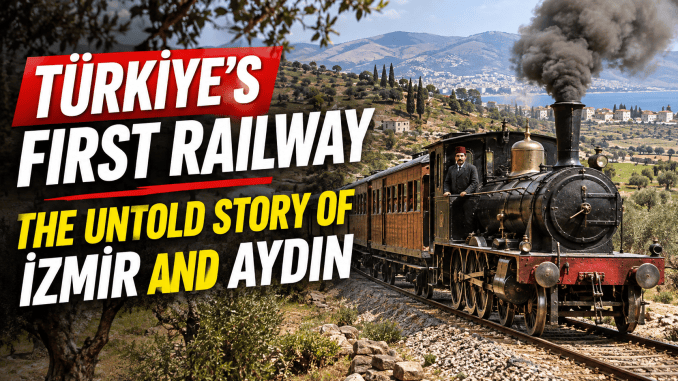
The railway between İzmir and Aydın was more than a transport project. It launched the railway age in present-day Türkiye, linked the fertile Aegean interior to global trade routes, and helped reshape the economy of western Anatolia.
When people discuss railway history in Türkiye, attention often turns to the major construction programmes of the Republican era. Yet the story began decades earlier. In the nineteenth century, under Ottoman rule, a line connecting İzmir with Aydın became the first railway constructed in the territory of modern Türkiye. Its history reveals the intersection of commerce, foreign investment, technology and political change.
A Historic Beginning in the Ottoman Era
The origins of the İzmir–Aydın railway date to 23 September 1856, when the Ottoman government granted a concession to British entrepreneurs for a railway connecting İzmir—known internationally at the time as Smyrna—with the agriculturally productive Aydın region. The proposed route was approximately 130 kilometres long.
For British merchants and investors, the project offered a way to move agricultural goods from the interior to the bustling port of İzmir. Western Anatolia produced figs, cotton and other commodities with strong overseas demand, but carrying them by road and animal transport was slow and costly.
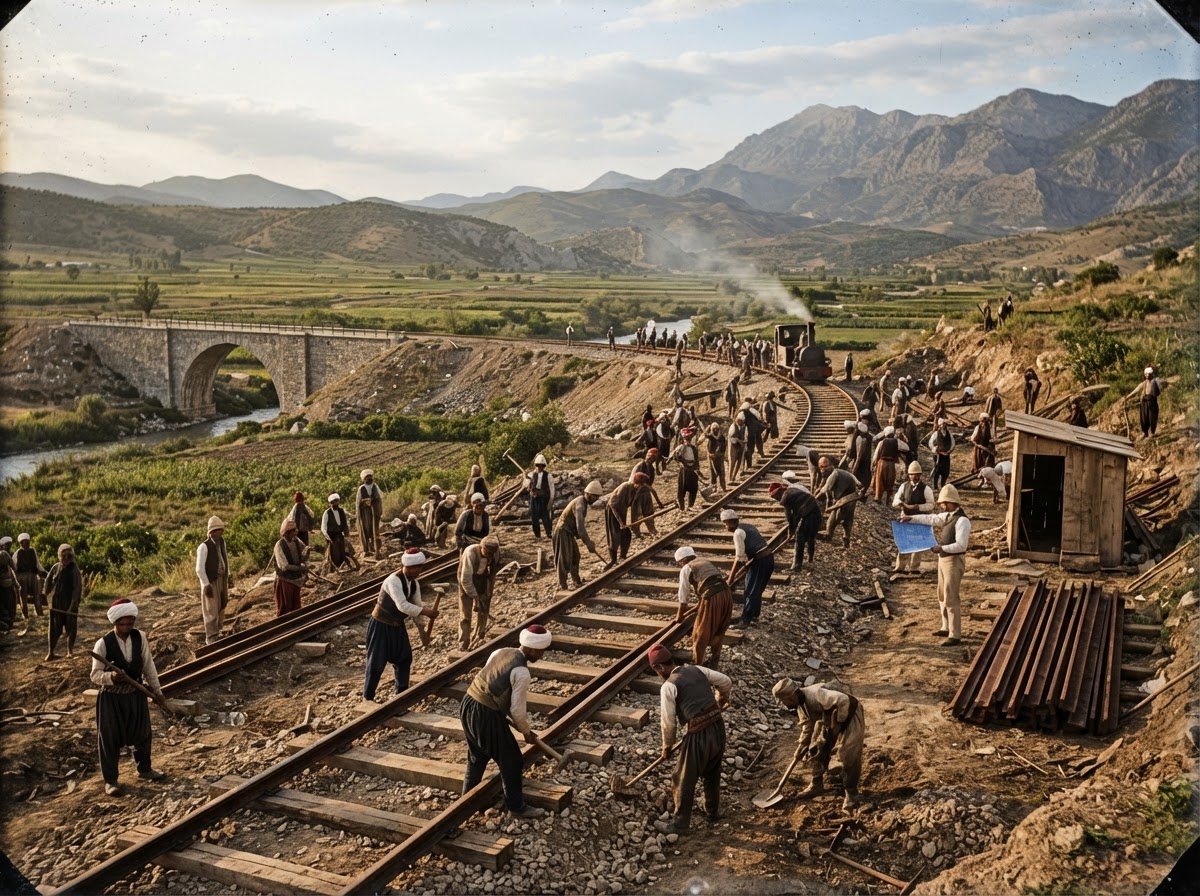
Construction began in 1857. The railway progressed in stages, reached the Selçuk area in 1862 and was completed to Aydın in 1866. The line is widely regarded as the starting point of railway history within the borders of present-day Türkiye.
Why the İzmir–Aydın Railway Mattered
The railway transformed the commercial geography of the Büyük Menderes basin. Producers gained faster access to İzmir’s port, where regional products could be transferred to vessels bound for Mediterranean and European markets. More dependable transport also made it easier for traders to plan shipments and expand business relationships.
Stations developed into focal points of commerce and employment. Railway operations created demand for workers, maintenance, supplies and services, while improved passenger travel connected towns that had previously depended on far slower journeys. The benefits were not distributed evenly, but the new infrastructure fundamentally altered how the region moved goods and people.
British Capital and Ottoman Modernization
The İzmir–Aydın project also illustrates a defining feature of nineteenth-century Ottoman infrastructure: the substantial involvement of European investors. Foreign capital supplied financing and expertise at a time when railway construction required considerable resources.
The commercial logic of the concession shaped the route. Rather than serving only the needs of internal passenger travel, the railway provided a direct connection between productive agricultural districts and an export-oriented seaport. As a result, it can be understood both as a landmark of modernization and as evidence of the economic influence foreign commercial interests exercised in the late Ottoman period.
From One Railway to a Regional Network
As additional sections and branch lines were developed, the original corridor became part of a broader railway network in western Anatolia. Connections to more settlements improved the movement of produce, people and information.
Railways also changed the experience of distance. Train timetables made journeys more predictable, station buildings became recognizable public landmarks, and the rhythm of daily life increasingly reflected the arrival and departure of scheduled services. In this way, the railway left a cultural legacy alongside its economic one.
The Republic and the Nationalization of the Line
The founding of the Republic of Türkiye in 1923 introduced a new railway strategy. The Republican government saw rail transport as essential to economic development, administrative unity and national sovereignty. Over time, it moved to bring privately operated and foreign-controlled lines into a state-directed railway system.
The İzmir–Aydın line was nationalized in 1935, with the transfer to state control taking effect on 1 June that year. The change marked a major institutional turning point for a railway that had begun as a British-financed Ottoman concession nearly eight decades earlier.

A Railway Legacy That Still Matters
The İzmir–Aydın railway occupies a special place in Türkiye’s industrial and transport heritage. It demonstrated the possibilities of rail technology, strengthened commercial links between the Aegean hinterland and İzmir, and influenced the development of settlements along its route.
Its story also shows how infrastructure can outlive the political and economic systems that created it. A railway conceived under the Ottoman Empire as a commercial connection became part of the national network of the Republic. Historical stations and surviving elements of the corridor continue to evoke that transformation.
The İzmir–Aydın line was not simply Türkiye’s first railway: it was a turning point in how western Anatolia connected with the wider world.
Related reading: Railway History of Aydın: From the Ottoman Empire to the Republic of Türkiye.








Be the first to comment