
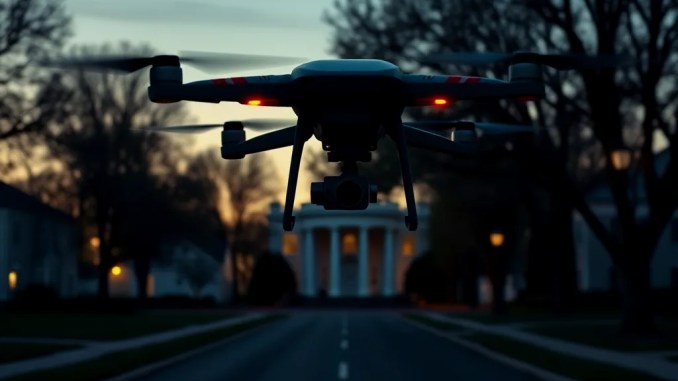
Israeli reports say Mossad shared intelligence with CIA on Iranian drone attack plans
Israeli media reported that Mossad passed intelligence to the CIA indicating Iran considered using explosive-laden unmanned aerial vehicles (UAVs) to target senior US officials, including President Donald Trump. Israeli Hayom cited unnamed senior Israeli and US sources and claimed that another Western intelligence service corroborated key elements of the reporting. Sources described details of the alleged plan and its operational challenges, and they emphasized how the information changed US security posture within days.
Why US-Iran diplomatic prospects reportedly cooled after the intelligence sharing
Sources quoted by the media linked the intelligence briefing to an observable decline in near-term prospects for a negotiated US-Iran understanding. Their reasoning combined three points: the intelligence suggested a credible, specific threat vector (explosive-carrying UAVs), the threat implied an increased willingness by Iran to pursue deniable, asymmetric tactics, and the US response to such a tactical threat constrained diplomatic flexibility. In practice, when a receiving government must rapidly harden protections for senior officials, it narrows opportunities for parallel diplomatic engagement.
Which officials reportedly altered their routines or moved to secure facilities?
According to the reporting, several senior US figures reduced public appearances and moved temporarily to secure locations. Names mentioned included Treasury official Scott Bessent, who oversaw Iran sanctions work; Senator Marco Rubio, described in the piece as opposing accommodation with Tehran; and Defense official Pete Hegseth. The article claimed these individuals minimized open-air events and used secured sites to reduce exposure to small aerial threats. While public schedules became more guarded, the report also noted that not all travel was canceled—some events were relocated indoors or equipped with counter-drone measures.
What protective measures were reportedly adopted for President Trump’s events?
Reported measures included limiting outdoor events, adding counter-UAV systems at venues, and tightening perimeters to detect and defeat small drones before they could approach dignitaries. Officials cited detection specialist arrays (radar, RF and acoustic sensors) integrated with jamming and soft-kill hardening—temporary shielding, exclusion zones, and additional screening of approach corridors. Sources emphasized tactical layering: early detection, rapid neutralization, and secured fallback locations to preserve both continuity and public-facing schedules during key political moments such as the midterm campaign period.
How plausible are explosive-UAV threat scenarios and what complicates defenses?
Small armed drones represent a distinct challenge: they are inexpensive, can be deployed with short notice, and can exploit gaps in crowd protection. Practical examples from recent conflicts show nonstate and state actors adapting commercial drones to carry grenades or shaped charges. Defenders must solve three technical problems simultaneously—detection among clutter, reliable attribution at distance, and safe neutralization in populated environments. Countermeasures trade off between false positives that disrupt events and false negatives that miss threats. Effective defenses combine layered sensors, trained, and prepared evacuation or shielding procedures tailored to event venues.
What operational steps improve protection against small-drone threats?
Practical, step-by-step measures that agencies and event planners can adopt include: 1) Conduct a drone-threat risk assessment for each venue, mapping approach corridors and likely launch points; 2) Install overlapping detection sensors (radar for range, RF for controller signatures, acoustic for close-in detection); 3) Preposition jamming or directional RF defeat systems where legal and safe; 4) Define layered exclusion zones and rapid-mitigation roles for security teams; 5) Rehearse evacuation and secure-move protocols under realistic timelines; 6) Coordinate with civil aviation authorities to restrict local airspace on notice; 7) Implement physical shielding for VIP positions and fallback secure enclosures. Combining these steps reduces vulnerability and preserves the ability to hold public events with acceptable risk profiles.
What does the Mossad director’s Washington visit signify?
Mossad Director Roman Gofman traveled to Washington to brief senior US officials on potential threats, according to the report. Such direct, high-level exchanges typically aim to synchronize intelligence assessments, calibrate protective measures, and, where necessary, seek policy alignment or operational cooperation. Observers noted the visit occurred amid reports of Israeli pressure on the US to consider renewed action against Iranian targets—context that makes intelligence sharing as much about urgent risk mitigation as it is about broader strategic signaling.
How should readers interpret media claims about intelligence and protective actions?
Open-source reporting on intelligence sharing often reflects a mix of verified facts, official denials, and cautious attribution to unnamed sources. For consumers of such reports, useful filters include: cross-checking multiple reputable outlets, distinguishing tactical security changes (which are often visible) from classified operational claims, and recognizing that named individuals’ schedules are typically sensitive and only partially disclosed. The concrete consequence reported here—heightened security posture and reduced public events—is consistent with standard responses to specific threat intelligence.
Key takeaways and practical implications
1) Credible reports of explosive-UAV plots prompt rapid, visible security adjustments for senior officials. 2) Small-drone threats compress both operational and diplomatic space: they drive protective hardening that can constrain public engagement and negotiations. 3) Mitigating risk requires layered technical and procedural defenses tailored to venue and threat profile. 4) High-level intelligence exchanges, such as the claimed Mossad-CIA briefings, serve to align threat assessments quickly and translate them into operational actions.







Be the first to comment