
Overview of the Incident and Immediate Impact
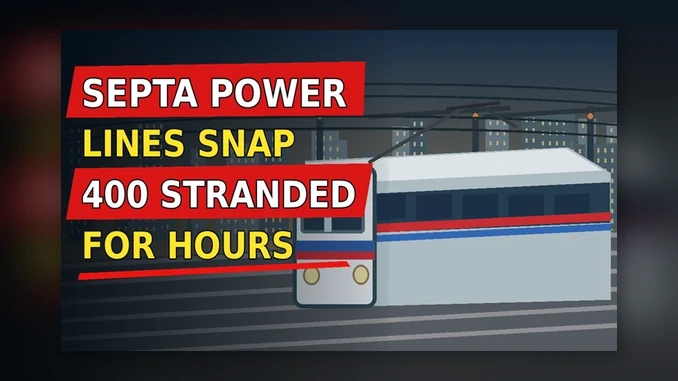
On November 12, about 400 passengers aboard two SEPTA Paoli/Thorndale trains became trapped when Amtrak overhead catenary wires broke and fell onto train 5292 just west of 30th Street Station. SEPTA halted service on the affected line while crews worked with Amtrak teams to make the energized wires safe. Because the downed catenary remains electrically live until de-energized and grounded, operators delayed evacuations until Amtrak’s electrical crew confirmed the system was safe. The two trains involved — 5292 and 5294 — could not continue under power, so passengers waited on board for rescue operations that required inter-agency coordination and specialized diesel rescue equipment.
Step-by-Step Rescue and Evacuation Timeline
This timeline reconstructs the rescue sequence and highlights decision points that govern passenger safety and operational constraints.
17:15 — Initial event and response activation. An Amtrak catenary wire fell onto train 5292, triggering immediate suspension of line operations and dispatch of SEPTA and Amtrak electrical/mechanical crews, plus SEPTA Transit Police.
19:30 — SEPTA diesel rescue train arrives but awaits clearance. A diesel-powered SEPTA rescue locomotive capable of towing or transferring passengers to safety reached the scene, but personnel could not proceed until Amtrak gave authority to enter the energized catenary area.
19:52 — Amtrak rescue train arrives. Amtrak dispatched its own rescue train to reach stranded passengers after assessing that removal of the hazard could take longer than initially estimated.
20:19 — De-energization and grounding confirmed. Amtrak electrical crews isolated and grounded the fallen wires, eliminating risk of residual voltage and allowing safe operations around the rolling stock.
20:25 — Passenger transfer begins. With the catenary grounded, crews coordinated the transfer of passengers between trains and rescue equipment using planned procedures to minimize risk and maintain order.
20:43 — Evacuation complete. All passengers from both trains had been safely evacuated, marking approximately 3 hours 28 minutes from the initial wire failure to full clearance. Incident commanders documented the sequence and provided passenger notifications about next steps and customer service contact points.
Why the Evacuation Took Several Hours — Technical and Safety Reasons
Modern overhead electrification carries high-voltage power that can remain hazardous unless properly isolated and grounded. Key reasons for the extended response time:
Energy isolation protocols: Trains and track sections require positive confirmation of de-energization, often through lockout-tagout procedures and grounding, before personnel approach.
Inter-agency authority and jurisdiction: Amtrak owns the Northeast Corridor infrastructure and holds primary authority over electrification systems there; SEPTA must coordinate with Amtrak for any work that involves catenary systems.
Specialized equipment and safety posture: Diesel rescue locomotives, transfer platforms, and trained crews must be staged and inspected. Teams also implement passenger management procedures to prevent panic and secondary injuries during transfers.
Operational Roles: Who Decides What and Why
Understanding responsibilities clarifies why each step followed the sequence it did:
Amtrak electrical crews: Responsible for confirming safe electrical conditions, performing de-energization, and grounding of catenary lines.
SEPTA operations and transit police: Manage passenger safety, crowd control, and coordination of rescue train movements. SEPTA also provides customer service follow-up for affected riders.
Incident command coordination: Both agencies used joint on-scene coordination to synchronize rescue-train movement, crew assignments, and passenger transfer logistics while keeping regulators and dispatch centers informed.
Passenger Experience and Available Remedies
Passengers received direct communications about the delay and post-incident options:
Customer service channels: SEPTA asked riders with feedback to call 215-580-7800; Travel Wallet users were directed to Key Contact Center at 1-855-567-3782 for fare-credit claims.
Onboard communication and care: During the event, crews provided updates and coordinated orderly transfers when safe. SEPTA managers planned to board affected trains later the same evening to speak with impacted riders and collect firsthand information for the after-action review.
Short-Term Safety Measures and Immediate Engineering Actions
After the rescue, both agencies initiated steps to investigate root cause and reduce near-term recurrence risk:
Site inspection and evidence preservation: Crews secured the area to preserve physical evidence from the break, documenting wire condition, support hardware, and environmental factors.
Component testing and preliminary fault analysis: Technicians tested insulators, pantographs, and support structures for signs of wear, corrosion, or mechanical fatigue.
Communication to stakeholders: Operators notified regional transit authorities and released formal statements to affected riders summarizing what occurred and how they can request credits or provide feedback.
Planned Infrastructure Renewals That Relate to the Fault
The incident refocused attention on planned catenary renewal projects in the 30th Street Station corridor and along sections of the Zoo–Paoli/Harrisburg line. Key program elements include:
SEPTA catenary replacement (30th Street Station to Mantua Ave and 37th St, lines 1–4): SEPTA schedules construction to begin April 2027 with an internal target completion in May 2035. The scope covers replacement of contact wire, supports, hangers, and targeted substructure work to modernize the corridor used by Paoli/Thorndale, Cynwyd, Chestnut Hill West, and Trenton services.
Amtrak Zoo–Paoli electrical improvement program: Amtrak identifies century-old support structures in the Zoo–Paoli corridor as candidates for replacement. Segment schedules published by the agency call for Bryn Mawr–Zoo construction to begin in 2029 and finish by 2035; the broader program’s construction phase could extend to 2040 according to the Northeast Corridor Commission’s capital plan.
Who benefits and what changes: Replacing aged catenary hardware reduces risk of mechanical failures, improves reliability, and simplifies maintenance. Modern materials, improved tensioning systems, and advanced monitoring can detect anomalous wear early and enable preemptive repairs.
Project Timeline Snapshot and Comparisons
This concise snapshot lists key project dates and responsible parties so planners and riders can compare schedules and impacts at a glance.
SEPTA — 30th Street Station to Mantua Ave/37th St (Lines 1–4)
Planned start: April 2027 — SEPTA’s internal schedule. Planned end: May 2035 (SEPTA); Commission plan lists completion as September 2038.
Amtrak — Bryn Mawr Traction Substation
Start: April 2024. Expected finish: Winter 2027.
Amtrak — Paoli–Bryn Mawr
Start: 2025. Expected finish: 2030.
Amtrak — Bryn Mawr–Zoo
Start: 2029. Expected finish: 2035.
Amtrak — Zoo–Paoli full program construction
Start (construction phase): April 2024. Expected finish: April 2040 (per Commission plan).
Lessons from the Event and Practical Recommendations
Operational and engineering lessons point to measurable actions agencies can take now to reduce similar disruptions:
1) Prioritize targeted early replacement of known high-risk supports. Use age, inspection history, and load-cycle data to select hardware for intervention ahead of full program rollouts.
2) Increase predictive monitoring. Deploy simple vibration, tension, and temperature sensors on critical spans to flag abnormal behavior between scheduled inspections.
3) Streamline inter-agency emergency protocols. Pre-authorized zones and “fast-track” procedural agreements can let rescue trains operate safely sooner under clearly defined technical conditions.
4) Improve passenger notification and care procedures. Equip trains with standardized information scripts, basic comfort supplies, and contingency plans for extended on-board waits.
What Passengers Should Know Going Forward
Riders should register contact information with transit accounts, keep fare receipts where possible to request credits, and follow operator guidance during incidents. For those in the affected November 12 incident, SEPTA’s customer service numbers remain the official channels for refunds, credits, or feedback: SEPTA customer service at 215-580-7800; Travel Wallet/Key Contact Center at 1-855-567-3782.
Concluding Operational Summary
Because Amtrak retained authority over the energized catenary, the rescue required methodical de-energization and grounding before transfers could proceed. The combined actions of SEPTA and Amtrak personnel — staging rescue trains, confirming electrical safety, and executing passenger transfers — resolved the situation without injuries and highlighted urgency for targeted infrastructure renewal. Ongoing project timelines through the 2030s aim to modernize catenary systems, reduce mechanical failures, and shorten future disruptions.