
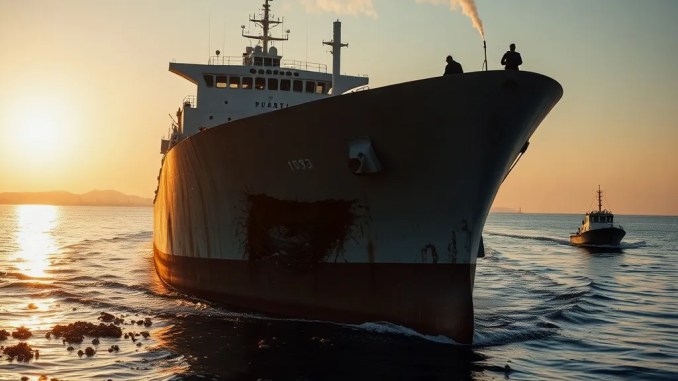
Iran’s Islamic Revolutionary Guard Corps (IRGC) reported that two oil tankers passing through the Strait of Hormuz struck mines, triggering fires aboard both vessels. According to the IRGC, one tanker was located east of the strait and the other within the strait when crews turned off navigation and tracking systems and attempted transit. The IRGC said the ships made contact with mines while operating without active position signals, and that fires broke out aboard both tankers and remained burning as of the announcement.
Details of the Incident and Vessel Behavior
The IRGC statement emphasizes the sequence: tankers deactivated Automatic Identification System (AIS) and other tracking tools, proceeded through the strait, then encountered mines. Turning off electronic tracking is consistent with attempts to minimize detection, but it also complicates immediate identification and rescue coordination. In this case, the combination of mine contact and disabled tracking raised response times and likely delayed external assistance. No detailed cargo manifests or owner identities were released with the initial report, and the IRGC has not published images or precise damage assessments.
What the Explosions Near Qeshm Island Suggest
Iranian media reported two explosion sounds near Qeshm Island shortly before the public IRGC notice. An unnamed Iranian official connected those blasts to developments in the strait, while state television suggested the noises could stem from warning shots fired at ships in the area. That timeline—explosion sounds followed by an official claim of mined contacts—suggests either pre-existing mines detonating as vessels transited or active interdiction measures intended to deter specific traffic. Without independent verification, both interpretations remain plausible.
Security Risks for Ships Transiting the Strait
The IRGC warned that passage through mined zones could repeat if vessels, it alleges, are pressured by the United States to transit dangerous areas. The strait is one of the world’s busiest chokepoints for oil and liquefied natural gas exports; A single disruption can have outsized effects on regional shipping patterns and global energy markets. Shipping companies typically manage such risk through route adjustments, increased escorting and naval cooperation, and temporary suspension of transits in high-threat periods.
Immediate Operational and Safety Implications for Shipping
When a tanker strikes a mine and catches fire, several operational steps become urgent and standard:
1) Immediate crew response: implement fire suppression, assess hull breach, prepare lifeboats and emergency communications. Tanker crews train regularly for controlled release, inerting of tanks, and separation of heat sources to prevent secondary explosions.
2) Contact maritime authorities and owners: centralized notifications to flag state, classification society, and charterers prompt assistance from nearby commercial vessels and naval assets.
3) Environmental containment: deploy skimmers, booms and remote monitoring if oil discharge occurs; Prioritize preventing shoreline impact and identify sensitive ecological areas down-current.
4) Salvage and investigation: once fires are controlled, salvage teams assess structural integrity, remove pollution, and coordinate mine-clearing operations; parallel investigations determine mine origin and liability.
Open Questions and Information Gaps
Key unknowns that affect regional risk assessments include the following: whether mines were laid recently or date from prior conflicts; the ownership and identity of the two tankers; the size and type of mines involved; exact damage to hulls and cargo; human casualties or crew evacuations; and independent confirmation by third-party maritime monitors or naval forces. Those details shape both immediate rescue efforts and longer-term liability, insurance claims, and route planning.
How Governments and Shipping Firms Typically Respond
Governments and commercial operators generally pursue a layered response: deploy naval patrols and mine countermeasure vessels, publish navigational warnings (NAVAREA warnings), coordinate convoy passages, and offer escorts. Insurers and charterers may issue advisories and suspend transits through specified coordinates until clearance is verified. Major carriers often reroute around high-risk areas—transit delays add fuel and time costs but reduce exposure to mines and hostilities.
Potential Broader Impacts on Energy Markets and Trade
Disruptions in the Strait of Hormuz historically send ripples through commodities markets because roughly a fifth of global seaborne crude passes the strait. Even localized incidents prompt immediate market sensitivity: short-term price spikes, re-routing that increases shipping times and costs, and temporary insurance premium hikes for tankers operating near perceived hot spots. Energy importers may accelerate strategic stockpile releases or seek alternative supply corridors to stabilize markets.
What Independent Observers Will Look For Next
Neutral verification matters. Independent sources will seek AIS traces prior to the incident, satellite imagery of the vessel positions and plume signatures, maritime traffic overlays showing route deviations, and official reports from nearby navies or international maritime organizations. Evidence of mine type—anchored versus drifting, contact versus influence mines—will guide both attribution and remediation methods. Clear casualty and pollution reports will determine humanitarian and environmental response priorities.








Be the first to comment