Long before high-speed trains crossed Anatolia, the sound of steam locomotives defined the rhythm of travel, trade and industrial development across the lands of the Ottoman Empire and the Turkish Republic. From early British-built engines on the İzmir–Aydın line to powerful German-designed freight locomotives operated by Turkish State Railways (TCDD), steam traction played a central role in connecting ports, agricultural regions, industrial centres and distant cities. The story is not simply one of machines: it is also a history of engineering, foreign investment, nationalisation, railway workshops and the transformation of a transport network.
The Ottoman railway era: The first lines and the arrival of steam
The history of railways in the territories of the Ottoman Empire began before the railway network within the borders of modern Türkiye took shape. The concession for the 211-kilometre Alexandria–Cairo railway in Egypt was granted in 1851. Within today’s Turkish borders, a defining milestone came on 23 September 1856, when the concession for the 130-kilometre İzmir–Aydın railway was granted. Construction began under British interests, and the line opened in stages, linking the Aegean port of İzmir with agricultural and commercial districts inland.
Steam locomotives were essential to this early railway economy. They moved agricultural products, minerals, passengers and imported goods between the hinterland and coastal ports. Railway development was not organised as one unified national system: different companies held concessions and operated lines with their own technical standards, rolling stock and commercial priorities. British, French and German manufacturers supplied locomotives, while the geography of western Anatolia, the Balkans and the empire’s eastern provinces demanded machines suited to very different gradients, track conditions and traffic patterns.

Ottoman Railway Company locomotives: Built for demanding Anatolian routes
The Ottoman Railway Company (ORC), which operated the Smyrna–Aydın network, used a varied fleet shaped by the line’s commercial needs and challenging terrain. One particularly telling example is the group of 0-8-0 tender locomotives numbered 80 to 83. Built by Robert Stephenson & Co. in 1907, these eight-coupled engines were designed to provide strong adhesion for goods traffic. Their arrangement, with four coupled driving axles and no leading or trailing carrying wheels, prioritised the ability to haul heavy loads rather than high speed.
When the ORC was nationalised in 1935, these locomotives passed into Turkish State Railway service. They were initially renumbered 44.111–44.114 and later became 44.091–44.094. Their transfer illustrates how the Republic inherited not only railway routes and stations from the Ottoman period, but also locomotives, workshops, operating practices and technical expertise. Some of the engines that had served a privately operated Ottoman-era company continued under a new state railway identity.

Other Ottoman-era locomotive groups also left a lasting mark on the future TCDD fleet. The 1906-built ORC 80–83 class was not the only example of British engineering on Anatolian rails; German manufacturers such as Borsig, Henschel, Krauss and Jung also supplied engines to Ottoman railway companies and strategic projects. The Baghdad Railway, in particular, became associated with the movement of heavy engineering equipment, locomotives and construction materials across long distances. The surviving photographs and locomotive records reveal a diverse fleet rather than a single standardised Ottoman locomotive type.
The Hejaz Railway and narrow-gauge steam power
The Hejaz Railway added another distinctive chapter to Ottoman steam history. Built to connect Damascus with Medina, it used a narrow gauge of 1,050 millimetres, requiring locomotives designed for a different track environment from the standard-gauge lines in western Anatolia. German builders Krauss and Jung supplied 2-8-0 tender locomotives between 1903 and 1911. These engines were intended to handle freight and mixed traffic over long stretches where water supply, gradients and the availability of maintenance facilities were important operational considerations.
The Hejaz fleet demonstrates how Ottoman railway engineering adapted to regional requirements. Narrow-gauge locomotives had to balance weight, traction and fuel and water capacity. Their story also underlines that the Ottoman railway system was geographically extensive and technically varied, extending beyond the lines that later formed the core of the Turkish national network.
1920s and 1930s: Nationalisation and the formation of a state railway fleet
Following the establishment of the Republic in 1923, railway policy increasingly focused on bringing strategic routes under state control and extending the network to connect inland cities. The early institutional steps included the creation of the Anadolu-Bağdat Railways Directorate in 1924 and a reorganisation in 1927 as the State Railways and Ports Administration. The nationalisation process brought former concessionary lines and their locomotives into a growing state-operated system. In 1953, the organisation became the Republic of Türkiye State Railways Enterprise, known as TCDD.
Nationalisation was not merely an administrative change. It meant that locomotives from different companies, countries and technical traditions had to be integrated into one operating network. Renumbering, standardised maintenance practices, spare-parts management and workshop capacity became increasingly important. The railway workshops inherited from the Ottoman period and expanded during the Republic helped keep a mixed fleet in service while new locomotives were ordered for the growing network.
TCDD Class 46: Powerful Mikado locomotives for main-line duties
Among the notable steam types in the TCDD fleet were the 2-8-2 locomotives, commonly known as the Mikado wheel arrangement. The Class 46.051 group, built by Henschel, was used on demanding main-line work, including services between Ankara and Haydarpaşa. Historical locomotive records describe these engines hauling trains weighing approximately 400 to 500 tonnes. Their eight coupled driving wheels provided adhesion for heavy trains, while the leading and trailing carrying wheels helped support the boiler and running gear.
The Class 46.101 locomotives had a different origin: they were built for the Ottoman Railway Company to work the Smyrna–Aydın route. Delivered in batches in 1929 and 1932, the six engines incorporated features such as a Belpaire firebox, superheaters and piston valves. Their subsequent place in the Turkish railway story is a good example of how equipment ordered by a pre-Republican railway company could continue to serve after the network was absorbed into the state system.
Class 56: The heavy freight locomotives of the Republic
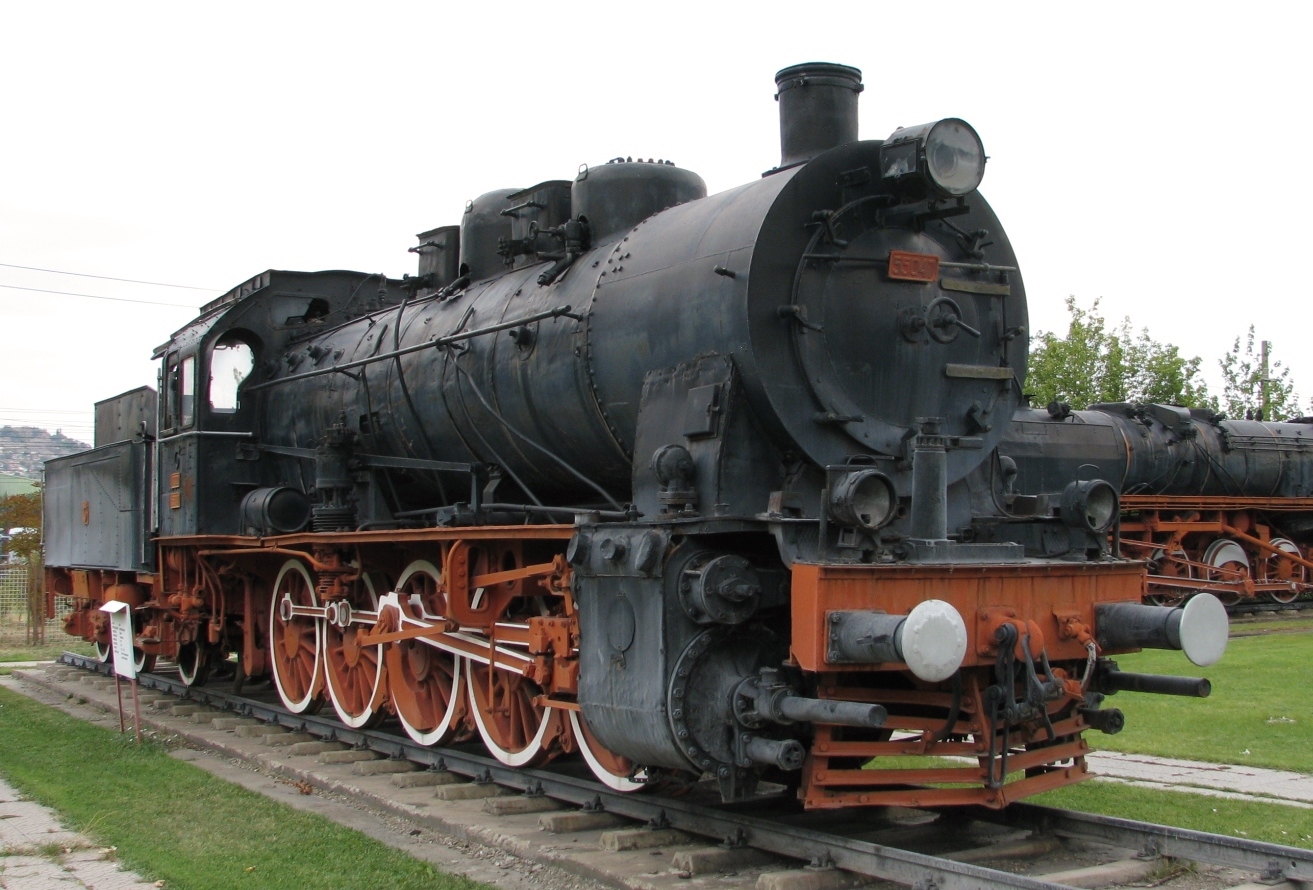
One of the most recognisable heavy freight locomotive families in Turkish railway history was the TCDD Class 56, numbered 56001 to 56166. These 2-10-0 locomotives, known internationally as Decapods, were designed around a five-axle coupled driving group. The arrangement distributed the locomotive’s weight across more axles and provided the tractive effort needed for heavy freight trains. The class was ordered during the 1930s and became one of the defining steam types of the Republican railway era.
The first batches were built by German manufacturers, with the design sharing several characteristics with contemporary German standard locomotive practice. Deliveries continued through the late 1930s and early 1940s. After the Second World War, further locomotives arrived from British builders, including Beyer, Peacock and Vulcan Foundry, followed by additional engines from Czechoslovak manufacturers Škoda and ČKD. The result was a substantial class whose members worked across the Turkish network and became closely associated with heavy freight operations.
The Class 56 story also reflects the international character of Turkish railway procurement. German, British and Czechoslovak factories contributed to a fleet operated under one national railway administration. Locomotive standardisation, workshop maintenance and the availability of replacement components were crucial to keeping these large engines productive over many years.
Steam locomotive workshops: The industrial backbone of railway operations
Steam locomotives demanded a large industrial support system. Boilers needed regular inspection, tubes and fireboxes required maintenance, running gear had to be repaired, and wheels, bearings and valve equipment needed specialist attention. Coal and water facilities were essential along the routes, while depots and turntables supported locomotive servicing and train formation. The development of railway workshops was therefore as important as the purchase of locomotives themselves.
Eskişehir became one of the most important centres in this industrial story. A locomotive and wagon maintenance workshop established by the Ottoman Anatolian Railway Company in the 1890s formed part of the technical foundation later developed by the Republic. Over time, railway workshops in Eskişehir and other cities gained greater responsibilities for repair, overhaul and the production of railway components. The later evolution of the Eskişehir facilities into a major railway-industry centre connects the steam era with Türkiye’s modern locomotive and rolling-stock manufacturing history.
From steam to diesel and electric traction
The transition away from steam was gradual rather than instantaneous. Diesel locomotives reduced the need for frequent water stops and intensive boiler maintenance, while electrification offered further operating advantages on busy corridors. As diesel and electric traction expanded, steam locomotives were progressively reassigned, withdrawn or preserved. The pace of change differed by route and region, and steam-hauled services remained part of the railway landscape long after the first modern locomotives entered service.
Steam traction continued to appear on some Turkish main lines into the late twentieth century. Railway histories and photographic records show steam-hauled passenger trains still operating on parts of the network as late as 1989. This long transition helps explain why the steam locomotive remains a powerful part of public memory: generations of passengers, railway workers and communities experienced the same technology across a period of major political, economic and technological change.
Preserving the steam heritage: Museums and surviving locomotives
Today, preserved locomotives provide a tangible link to the Ottoman and Republican railway eras. The TCDD Eskişehir Museum displays railway equipment, locomotive and wagon models, historic communications devices, photographs and documents, including material connected with the construction of the Anatolian–Baghdad Railway. Its collection helps explain the wider railway environment in which steam locomotives operated: stations, signalling, workshops, telegraph systems and the people who maintained the network.
Open-air collections and railway museums also preserve examples of the heavy engines that once hauled passenger and freight trains across Anatolia. Locomotive numbers, builders’ plates and surviving components help researchers identify individual machines and trace their service histories. Photographs from the Ottoman Railway Company and TCDD collections are equally important, documenting locomotive designs that no longer survive in working condition.
A century of steam that shaped Türkiye’s railway identity
The history of steam locomotives in Türkiye is a story of continuity as much as change. Engines first ordered by Ottoman railway companies continued into the Republican period; new TCDD classes were procured from manufacturers across Europe; and domestic workshops developed the skills needed to maintain a complex national fleet. From the early İzmir–Aydın line to the heavy Class 56 freight locomotives, steam power helped connect the country’s regions and supported the growth of trade, industry and mobility.
Although high-speed trains, electric locomotives and modern freight operations now define the railway network, the steam era remains an essential part of its heritage. The locomotives preserved in museums and the original photographs held in archives are more than nostalgic reminders: they are records of the engineering, labour and public investment that helped build Türkiye’s railway system.