
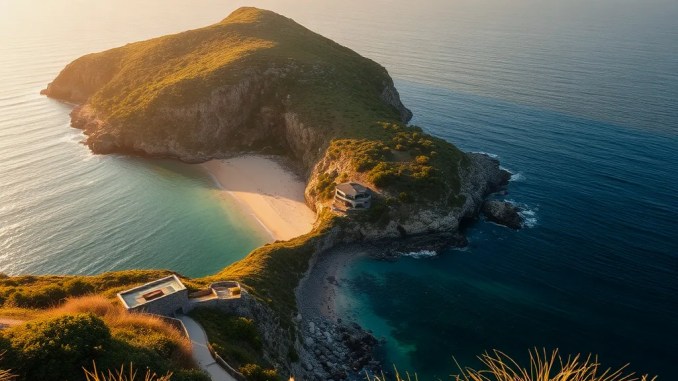
Overview of the Island and Location
A 40-hectare river island within the Vila Nova de Cerveira municipality in northern Portugal is listed for sale through Private Island Online. The property spans roughly 400 acres and sits in a quiet stretch of Europe’s inland waterways, surrounded by dense native vegetation and uninterrupted river frontage. Its isolation from road networks creates a private setting ideal for bespoke development or conservation.
Access and Transport Options
Access is exclusively by water or air. Owners and visitors can reach the island by boat from the nearby village of Gondarém, using existing moorings or building small private docks where permitted. The island also contains a level area suitable for a helipad, enabling rapid transfers from Porto or other regional airports. Practical considerations include seasonal river levels, docking infrastructure costs, and obtaining the necessary permits for a helipad or permanent jetty.
Permitted Ownership and Legal Framework
Portuguese law allows foreign ownership without special restrictions for this category of private property. Buyers receive full title subject to national planning and environmental regulations. Typical due diligence steps include a land registry search, confirmation of riparian rights, an environmental impact pre-check, and review of municipal zoning. Engaging a local notary, an English-speaking real estate attorney, and a civil engineer familiar with fluvial projects reduces legal and procedural risk.
Potential Uses: Luxury Residence, Retreat, or Eco-Tourism
Multiple viable development paths exist. Examples:
Private luxury estate: Construct a main residence, guest pavilions, and service buildings clustered to preserve surrounding woodlands. Phased infrastructure would typically start with water, power (hybrid solar/diesel or grid extension if feasible), septic or micro-treatment plants, and secure docking.
Wellness or creative retreat: Convert remnant structures or build low-impact lodges and studios for short-stay programs. A retreat model benefits from curated transportation (scheduled boats/heli shuttles), on-site catering, and partnerships with Porto-based tour operators.
Small-scale eco-tourism: Develop a capacity-limited lodge and guided nature trails emphasizing riverine ecology and birdwatching. Operate under a sustainable tourism plan: controlled visitor numbers, local staffing, and revenues reinvested into habitat restoration.
Conservation Option and Rewilding Potential
Conservation-focused ownership is a legitimate alternative. An owner can designate the island as a private nature reserve or collaborate with Portuguese NGOs to implement rewilding measures—native species planting, wetland restoration, and long-term biodiversity monitoring. Funding models include conservation easements, carbon-offset projects tied to afforestation, or grants from EU rural development programs.
Infrastructure Considerations and Estimated Costs
Key cost categories: dock construction, renewable power systems, freshwater supply (borehole or rain capture), wastewater treatment, helipad construction, internal tracks and bridges, and basic security. Ballpark figures (highly variable by scope): small dock €30–70k; private micro-grid with batteries €100–300k; helipad site preparation €20–60k; wastewater systems €30–150k. A comprehensive feasibility study and site survey will produce accurate budget estimates tailored to soil, access, and permitting conditions.
Environmental and Planning Steps (Step-by-step)
Recommended sequential actions:
1. Secure a conditional purchase agreement with due diligence period.
2. Commission a topographic survey and soil/hydrogeomorphology report to assess flood risk and foundation conditions.
3. Obtain an environmental pre-assessment to identify protected habitats and species.
4. Consult the Vila Nova de Cerveira municipal planning office for zoning constraints and required permits.
5. Prepare a phased master plan prioritizing low-impact infrastructure and scalable construction.
6. Apply for construction and operational permits; include public consultation if projects affect river use or protected zones.
7. Implement habitat mitigation and monitoring protocols before and during construction.
Market Positioning and Revenue Scenarios
Positioning strategies depend on chosen use:
– High-end private sale: market to UHNW individuals seeking exclusive European river properties; highlight privacy, proximity to Porto, and turnkey development options.
– Hospitality model: target niche luxury retreat operators and bespoke tour agents; forecast seasonal occupancy, average daily rates, and ancillary revenue from activities (guided tours, water sports, gastronomy).
– Conservation financed model: combine limited eco-lodge income with conservation grants and carbon credits; Emphasize measurable ecological outcomes to attract impact investors.
Examples and Analogues
Comparative cases help shape expectations. Nearby Portuguese river-island projects that shifted from entertainment concepts to sustainable lodging indicate market demand for low-density, experience-driven stays. Internationally, small private islands converted into wellness retreats or conservation reserves demonstrate revenue diversification through memberships, events, and premium access packages.
Why This Island Appeals to International Buyers
Key selling points: unrestricted foreign ownership, large contiguous acreage, dual access by boat and helicopter, proximity to established transport hubs, and flexible zoning possibilities within municipal and environmental constraints. Together these factors create a rare European opportunity for bespoke development or long-term ecological stewardship.





Be the first to comment