
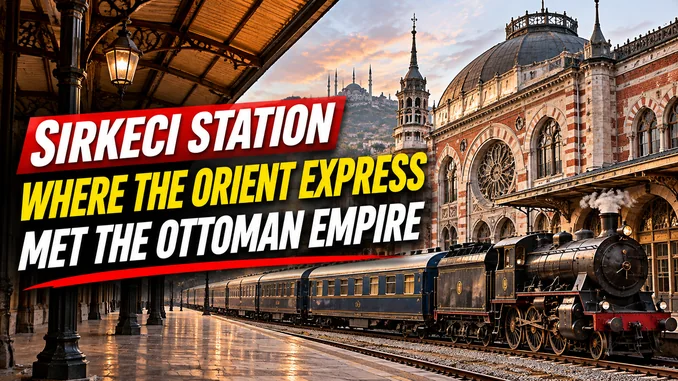
At the edge of Istanbul’s historic peninsula, Sirkeci Station became one of the world’s most evocative railway gateways. Built during the final decades of the Ottoman Empire, the terminal brought European rail travel to the shores of the Bosphorus and secured a legendary place in the story of the Orient Express.
For generations of travellers, a train arriving in Istanbul meant more than reaching the end of a railway line. It marked the meeting of two continents, two transport networks and a multitude of cultures. Sirkeci Station, with its distinctive brick-and-stone façades and grand railway heritage, became a theatrical setting for that encounter.
Yet behind the romance of luxurious sleeping cars and famous passengers is an important chapter in Ottoman modernization: the building of a European railway connection to the imperial capital, and the creation of a terminal designed to represent Istanbul to an international audience.
A Railway Gateway to the Ottoman Capital
During the nineteenth century, railways were transforming Europe. Expanding networks connected capitals, industrial centres and ports at a speed that would have seemed extraordinary only a few decades earlier. The Ottoman Empire also sought the economic, strategic and social benefits of the new transport technology.
Railway connections developed across Ottoman territory in stages. In Istanbul, early facilities on the European side were relatively modest. The completion of links through the Balkans in the late 1880s helped create a more direct rail connection between the Ottoman capital and major European cities.
Sirkeci’s importance lay in its position at the western edge of the city’s historic core, close to the Golden Horn, the waterfront and the commercial heart of Istanbul. Passengers arriving by train could quickly enter a metropolis that was simultaneously an imperial capital, a regional trading hub and a major crossroads between Europe and Asia.
How Sirkeci Station Was Built
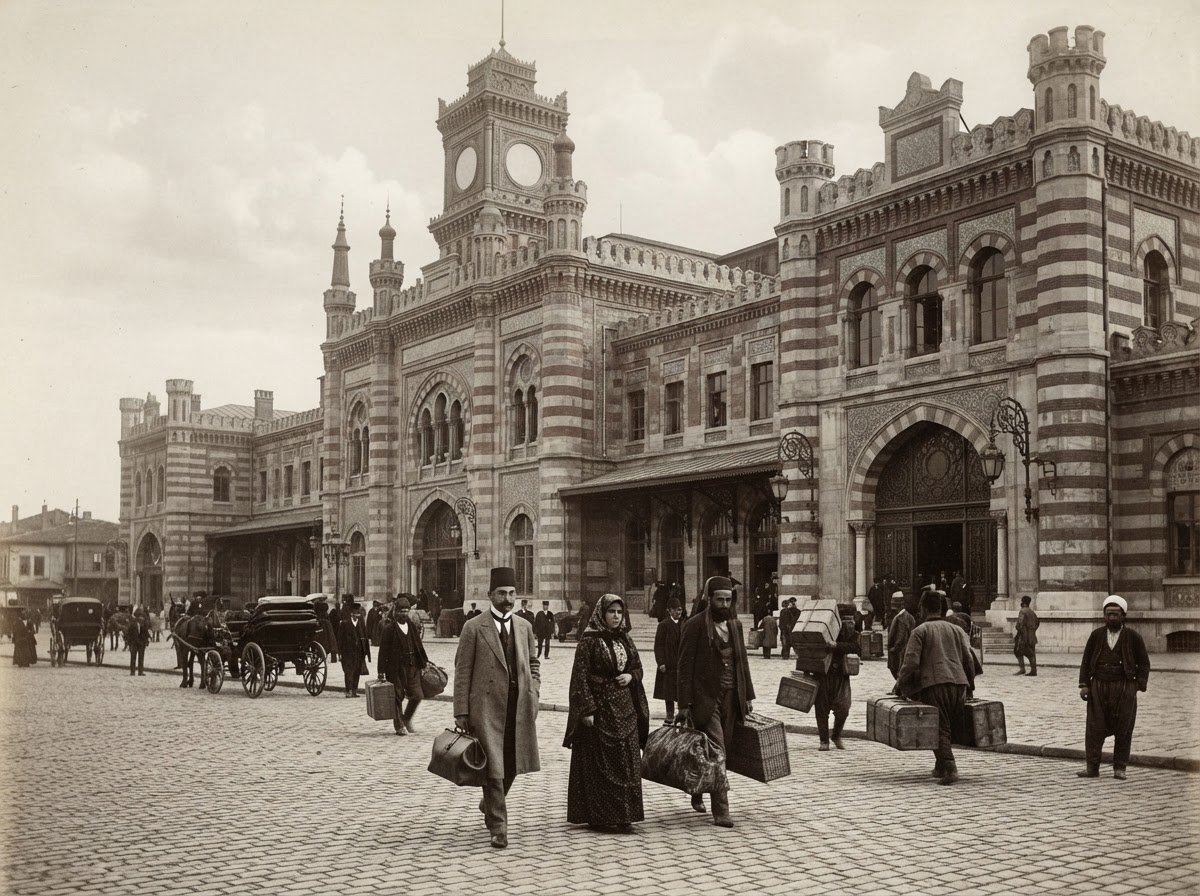
The foundation stone of the present historic station building was laid on 11 February 1888, during the reign of Sultan Abdülhamid II. The station was designed by August Jasmund, a German architect who studied architectural traditions in Istanbul and sought to give the terminal a character appropriate to its location.
The building opened on 3 November 1890. Its architecture combined elements of European station design with motifs associated with Ottoman and regional traditions. Banded masonry, pointed arches, decorative windows and a prominent entrance created a façade that was meant to be both functional and memorable.
This was no ordinary utilitarian transport building. Sirkeci was a statement about the city and about the ambitions of railway travel. Contemporary facilities, including gas lighting and heating, helped make the station a modern point of arrival for an international clientele.
Where the Orient Express Reached Istanbul
The Orient Express, introduced in 1883, quickly became one of the most recognizable names in long-distance European rail travel. Its evolving routes and connections brought travellers towards Constantinople, as Istanbul was widely known in European timetables and travel writing.
In the train’s earliest years, reaching the Ottoman capital could involve a combination of railway and connecting steamship services. Improved railway links across the Balkans later strengthened the overland connection, and Sirkeci became closely identified with the celebrated service’s eastern terminus.
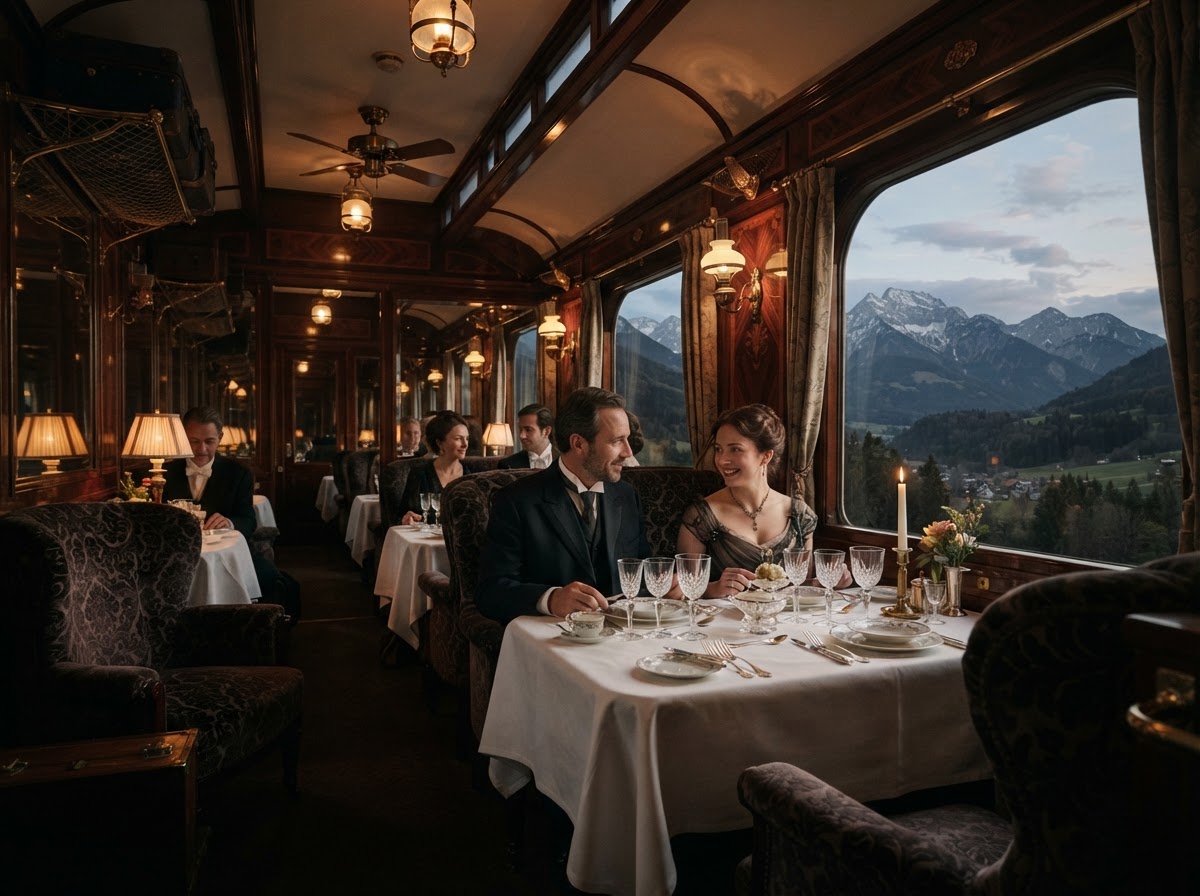
For wealthy tourists, diplomats, businesspeople and other international travellers, the journey offered a mixture of practical transport and remarkable spectacle. From the polished fittings of luxury railway carriages, passengers could emerge into the vivid streets and waterfront of Ottoman Istanbul.
Although the Orient Express name has been used for different routes and services over time, its association with Sirkeci remains a defining part of the station’s identity. That distinction matters: the station’s legend grew from decades of railway history, not from a single unchanged train operating in exactly the same form.
Luxury, Literature and the Railway Imagination
Long-distance railway travel helped change how Europeans imagined Istanbul. Guidebooks, newspapers and travel memoirs presented the city as both a recognizable stop on a modern transport network and a destination of exceptional cultural and historical interest.
The Orient Express was particularly successful at combining comfort with the allure of distance. Sleeping cars, attentive service and elegant dining turned movement itself into a fashionable experience. Its reputation later inspired countless stories, most famously Agatha Christie’s Murder on the Orient Express, first published in 1934.
Sirkeci benefited from this mythology. The name of the station came to evoke grand departures, emotional arrivals and the promise of a journey across borders. But the trains and their passengers were only one part of a much broader station life involving railway employees, porters, merchants and ordinary travellers.
The Architecture of East and West
Sirkeci’s design remains especially compelling because it resists a simple division between ‘European’ and ‘Ottoman’ architecture. Jasmund adopted features of a modern European railway terminal while incorporating decorative forms intended to acknowledge the city’s architectural context.
The resulting building became one of the notable examples of late nineteenth-century eclecticism in Istanbul. Its red-and-light masonry bands, arched openings and carefully composed entrance still provide a powerful visual connection to the Ottoman period.
The station also occupied a changing urban landscape. In its early years, the waterfront lay closer to the building than it does in many modern views. As the city developed, roads, public transport and commercial activity changed the surrounding district, but the historic terminal retained its identity as an important railway landmark.
From the Ottoman Empire to the Republic of Türkiye
The First World War and the end of the Ottoman Empire fundamentally changed the political framework within which Sirkeci had been built. Following the establishment of the Republic of Türkiye in 1923, railways became a central focus of transport and development policy.
Sirkeci continued to symbolize Istanbul’s connection with Europe while the national railway system changed around it. New transport technologies, evolving international services and the expansion of metropolitan travel gradually reshaped its role.
The station’s history therefore spans several distinct eras: the late Ottoman drive for modernization, the international prestige of the classic luxury train age, the Republic’s railway policies and the evolution of Istanbul into a contemporary global city.
Sirkeci’s Living Railway Heritage
Today, the historic station remains one of Istanbul’s most recognizable transport monuments. Its significance extends beyond the famous Orient Express name: it preserves evidence of railway engineering, architectural exchange and the ways international mobility transformed the city.
The Istanbul Railway Museum, associated with the historic station, has presented railway artefacts, documents and equipment that illuminate this heritage. The district also remains a major part of Istanbul’s wider transport landscape, even as the functions of historic railway terminals have changed.
For historians and railway enthusiasts, Sirkeci demonstrates how a station can be more than a place where trains stop. It can be a cultural threshold, an architectural landmark and a repository of collective memory.
When the Orient Express became synonymous with the journey to Constantinople, Sirkeci Station became the place where the story acquired its most memorable final scene.
Related railway heritage feature: Railway History of Aydın: From the Ottoman Empire to the Republic of Türkiye.






Be the first to comment