
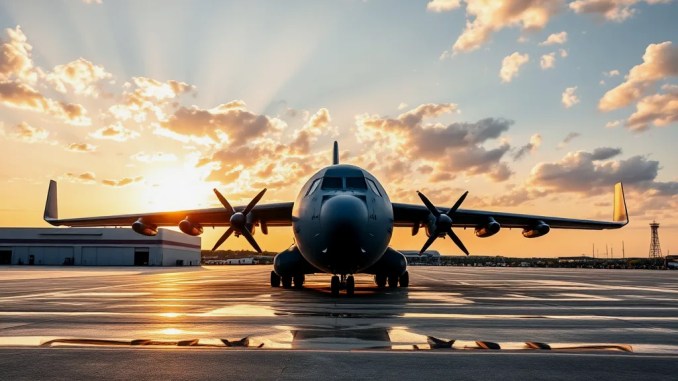
Germany to Buy 16 More A400Ms to Sustain Production and Boost Airlift
Germany’s Defense Ministry announced a decision to purchase 16 additional Airbus A400M tactical transport aircraft. The order aims to preserve the A400M production line by increasing workload and to raise the Bundeswehr’s strategic and tactical airlift capacity. The Bundestag Budget Committee approved the 2027 defense budget that includes funding measures enabling this procurement.
How This Purchase Expands Germany’s Fleet and Capabilities
Germany already operates the world’s largest A400M fleet. With 53 aircraft currently in service, adding 16 will bring the total to 69. The initial deliveries, which began in December 2014, equipped aircraft in pure logistical configuration for cargo and troop movements between bases. Later deliveries added tactical mission kits — air-to-air refueling receptacles, defensive aids suites, and parachute-delivery configurations — transforming some airframes into multi-role platforms.
Why the New A400Ms Matter for Operations and Readiness
The additional airframes will provide three immediate operational advantages: increased sortie generation for sustained deployments, dedicated tactical-configured platforms for airdrop and special operations, and growth margin for surge operations such as humanitarian response or NATO collective tasks. Practically, fleets with 60+ airframes reduce maintenance-induced capability gaps because spares and rotating aircraft can be distributed to sustain continuous tasking.
Production Context: Airbus Has 39 A400Ms Left to Deliver
Airbus’s order book for the A400M stood at 178 units across 10 customer nations; 139 have been delivered, leaving 39 pending as of March. To keep the Seville final assembly line viable, Airbus targets a steady annual output near eight aircraft. Germany’s 16-aircraft plan represents almost two years’ worth of production at that cadence and therefore materially helps maintain industrial throughput and supplier stability.
Program Origins, Challenges, and Timeline
The A400M program launched in 2003 as a multinational European initiative (Germany, France, the UK, Spain, Turkey, Belgium and Luxembourg). Development met delays and cost growth, but the type entered service in 2013. Over the past decade manufacturers and customers have iteratively added tactical kits and avionics upgrades to extend mission flexibility. The German decision leverages that maturation by expanding a proven fleet rather than starting a new procurement.
Budgetary Frame: Where Funding Comes From and What’s Known
The planned procurement falls within Germany’s 2027 defense envelope, projected to exceed €139 billion in total defense spending and roughly €110 billion in core defense funds. The ministry has not yet published a per-unit price or delivery schedule for the 16 aircraft. Historically, A400M procurement prices have varied by configuration, included sustainment packages, and dependent on offset and industrial participation agreements.
Operational Examples and Use Cases for Additional A400Ms
Concrete missions that will benefit include: rapid strategic lift for rotating brigade elements, long-range aeromedical evacuation with modular medical interiors, NATO reinforcement missions requiring simultaneous cross-border moves, and large-area humanitarian airdrops where multiple aircraft must operate in quick succession. For example, during large humanitarian relief operations a fleet of 60+ A400Ms can stage continuous 24-hour rotations by pairing mission-ready aircraft with dedicated maintenance slots, reducing turnaround from days to hours.
Industrial Impact and Supplier Chain Considerations
Maintaining output at the Seville final assembly line sustains jobs across Airbus and Tier‑1/Tier‑2 suppliers in Europe. A production gap would risk supplier attrition and capability loss for subassemblies unique to the A400M (eg, composite wing components and military avionics). Germany’s order therefore supports broader industrial continuity, helping keep specialist workshares viable and preserving future upgrade and sustainment options.
What to Watch Next: Price, Delivery Timeline, and Fleet Mix Decisions
Key upcoming items to monitor are the contract price per airframe including mission kits, the delivery cadence tied to the Seville assembly schedule, and whether Germany converts some logistical-configured aircraft into tactical variants. The Defense Ministry’s internal planning signals interest in swapping logistics-configured units for tactical-capable airframes to increase operational versatility.
Bottom Line: Strategic Lift Strengthened and Production Stabilized
Adding 16 A400Ms strengthens Germany’s strategic- and tactical-lift posture while providing Airbus with critical production volume. The purchase supports operational resilience for the Bundeswehr and helps ensure the industrial base underpinning the A400M remains active through upcoming production years.








Be the first to comment