
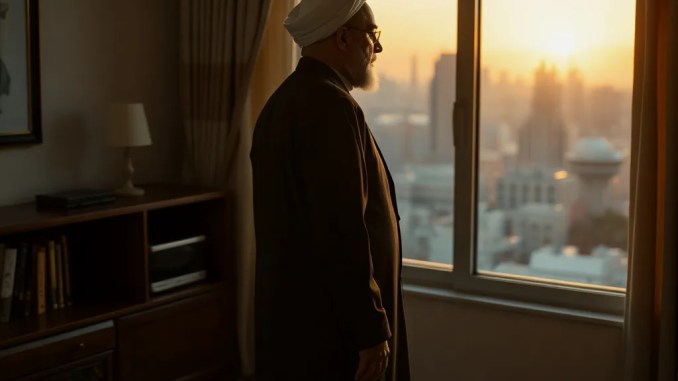
Context of the Statement and US Election Outcome
Iran’s Supreme Leader, Ayatollah Seyyed Ali Khamenei, framed his response to recent US midterm election results as a clarification: changes in Washington’s political composition will not alter Iran’s strategic calculations. He argued that shifting party control in the United States does not equate to a change in policy direction toward Tehran, and he dismissed expectations that electoral turnover would produce conciliatory behavior.
Khamenei’s Core Claim: No Policy Pivot After US Elections
Khamenei asserted that regardless of which US party gains influence, the fundamentals of American policy toward Iran—rooted in pressure and hostility—are unlikely to shift. He labeled hopes for rapid rapprochement or concessions “a grave misconception,” stressing that Washington’s institutional approach and geopolitical incentives create continuity in adversarial postures.
Warnings About Potential US Aggression and Iran’s Response
Addressing the possibility of renewed US military action, Khamenei warned that any fresh aggression would be met with a broader, more decisive Iranian response. He positioned Tehran’s deterrent posture as calibrated to escalate proportionally and beyond limited strikes, signaling both military preparedness and political resolve intended to raise the perceived cost of hostile action.
Message Conveyed Through Strait of Hormuz Dynamics
Khamenei used recent incidents in the Persian Gulf and the Strait of Hormuz to underline his point: regional developments have recent US perceptions of invulnerability. He argued these events demonstrate how regimes that rely on foreign backing are inherently fragile, and he presented Iran’s activities in the maritime chokepoint as concrete leverage that reshapes deterrence equations.
Non-Negotiable Stance on “Surrender” and National Dignity
He described acceptance of unconditional demands from the United States as unacceptable, framing Washington as the “Great Satan” that seeks Iran’s unconditional capitulation. Khamenei emphasized that any acquiescence would betray the sacrifices of martyrs and the domestic sacrifices that have shaped the Islamic Republic’s trajectory. He warned that even limited concessions would invite further demands and embolden additional aggressive moves.
Strategic Logic Behind Tehran’s Threat Rhetoric
Iran’s rhetoric follows a layered strategic logic: deter external military action, maintain internal cohesion by invoking martyrdom and national pride, and exploit regional leverage points to impose costs on adversaries. Khamenei’s statements serve both as deterrence signaling to foreign capitals and as a tool to cement domestic consensus among political and military elites.
Practical Implications for Regional Security and Diplomacy
If Tehran follows through on its calibrated escalation posture, regional security dynamics could shift in predictable ways: increased naval harassment in chokepoints, intensified support to allied non-state actors as asymmetric counters, and hardened Negotiation stances in any parallel diplomatic tracks. Policymakers should therefore anticipate a combination of kinetic and non-kinetic measures rather than isolated military strikes.
Examples and Historical Parallels
Historically, Iran has combined maritime pressure with proxy activity and political messaging to achieve strategic aims. Examples include episodes of tanker seizures, targeting of naval assets, and stepped-up backing for allied groups in neighboring theaters. Khamenei’s current pronouncements echo patterns from past cycles—publicized threats, calibrated actions, and pauses that allow adversaries to reassess costs.
What to Watch Next: Indicators of Escalation or De-Escalation
Key indicators to monitor include: operational tempo in the Strait of Hormuz (reported seizures or interdictions), shifts in missile or drone deployments near borders, changes in Iranian state media and military communiqués, and diplomatic moves from third-party mediators. Rapid increases across multiple indicators would suggest a pivot from rhetoric to action.
Conclusion: A Consistent Deterrence Posture
Khamenei’s remarks articulate a clear, consistent deterrence posture: reject unconditional surrender, signal willingness to escalate broadly in response to aggression, and leverage regional capabilities to impose strategic costs. For regional actors and external powers, the message implies that any miscalculation could prompt multifaceted Iranian responses rather than limited, easily contained reprisals.






Be the first to comment