
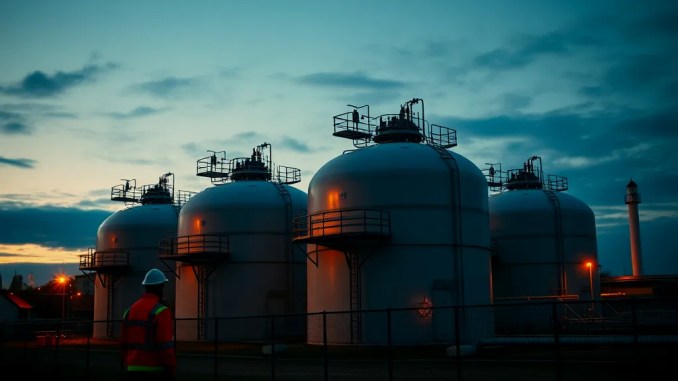
EU Gas Storage Drops to Lowest Levels Since 2011
EU-wide storage filled to just 74% by 20 October. That fall in inventories reflects faster-than-expected withdrawals after a warm summer ended and utilities began refilling supplies at a slower pace. Storage shortfalls are concentrated in central and eastern member states where pipeline flows and access to liquefied natural gas (LNG) terminals are limited. Example: countries with fewer port terminals hit peak drawdowns earlier and now face compressed refill windows.
Supply Disruptions and Geopolitical Shocks Driving Price Spikes
Regional and global chokepoints pushed European gas and oil prices sharply higher. A prolonged closure near the Strait of Hormuz removed roughly 20% of globally traded hydrocarbon throughput for months, tightening markets. Brent crude rose toward $110 per barrel while European wholesale gas rose above €100/MWh for the first time since 2022, with reported gas price increases up to 140% in some benchmark series since the conflict began. These price moves were magnified by lower storage, rerouted shipping, and spikes in freight and insurance costs.
Four Policy Options the EU Debated to Manage the Crisis
At the Luxembourg ministerial on 29 October, ministers discussed four practical levers. 1) Voluntary consumption curbs — coordinated, time-bound demand reductions in industry and buildings to stretch supplies. 2) Temporarily lowering the storage target from 90% to 80% — freeing gas for immediate use while recognizing refilling challenges. 3) Rapidly scaling LNG imports — prioritizing capacity hiring, regasification slot coordination, and shorter-term contracts. 4) Joint purchasing mechanisms — using collective buying power to smooth market volatility and secure long-term supply contracts. Each option alters market incentives differently; for example, voluntary cuts preserve market flexibility but provide uncertain savings, while joint procurement stabilizes demand but requires political alignment.
Household Measures: Smart Meters and Direct Cost Relief
Targeted household policies can reduce consumption and blunt price pain. The ministers proposed installing smart meters in half of homes by 2030 to enable dynamic pricing and targeted efficiency programs. Practical steps that deliver near-term results include subsidized insulation for vulnerable households, replacing electric storage heaters with efficient heat pumps where grid capacity allows, and brief demand-shift campaigns (eg, moving high-load activities to off-peak hours). Case example: a focused insulation and thermostat set-point program in a northern region reduced peak winter demand by 6–8% the following season.
No Binding Agreement: Where Member States Split
Ministers left without a binding, union-wide decision on compulsory cuts. Divergent national priorities — energy-intensive economies reluctant to accept mandatory curbs, and import-dependent states seeking stronger coordination — blocked consensus on legally binding measures. Disagreements also persist on harmonizing energy taxes and implementing joint purchase rules. As a result, ministers agreed to continue technical work and aim for clearer alignment on grid fees and market functioning by December, but no immediate legally enforceable plan was adopted.
How the Commission Sees EU Resilience and Remaining Risks
The European Commission highlights improved resilience compared to pre-2022, but acknowledges meaningful risks. Diversification of supplies, new LNG flows, and demand-side measures have reduced single-source dependency. Still, low storage levels plus rapid price inflation mean that cold snaps or further supply disruptions could quickly strain retail markets and industrial producers. Stress scenarios run by transmission system operators show that a prolonged cold period combined with delayed LNG deliveries could force rationing in the most exposed regions.
Practical Steps for Governments and Utilities to Reduce Winter Risk
Actionable, near-term measures can mitigate the worst outcomes. Recommended steps: (1) Deploy targeted demand-reduction programs in industry with subsidies for fuel switching; (2) coordinate LNG regas capacity allocation across ports to maximize throughput; (3) fast-track critical grid maintenance to avoid bottlenecks; (4) provide emergency liquidity support for utilities facing margin calls from high spot prices; (5) implement temporary, means-tested bill relief to protect vulnerable households while maintaining market signals for conservation. A step-by-step short plan: identify top 10% of consumers by usage and offer efficiency audits within three weeks; secure additional regas slots within one month; activate rapid procurement lines for strategic gas purchases within six weeks.
What Consumers Can Do Now
Households can lower winter exposure with immediate, low-cost actions. Actions that materially cut consumption: lower thermostat setpoints by 1°C (about 6% energy saving), draft-proof doors and windows, install programmable thermostats, and shift laundry and dishwashing to off-peak hours. For renters, request building-level efficiency checks and join local bulk-buy programs for LED lighting and smart thermostats to reduce costs.









Be the first to comment