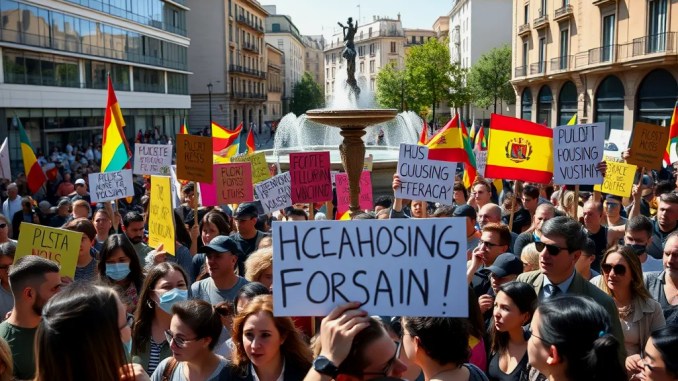
The streets of Spain teemed with energy and urgency this past Saturday as thousands of citizens across nearly 50 cities took to the sidewalks to protest the escalating housing crisis. This unprecedented wave of demonstrations directly confronts soaring property prices, widespread evictions, and the government’s failure to implement effective solutions, signaling a turning point in the nation’s social and political landscape. Why Now? The widespread protests stem from a perfect storm of economic pressures, legislative setbacks, and personal stories that resonate deeply with everyday Spaniards. Over recent years, housing affordability has plummeted due to relentless increases in property costs and rental rates, leaving many unable to secure stable living arrangements. ### The Heart of the Protest: Madrid’s Confrontation with Housing Inequality Madrid, controlling over half of the protest turnout with approximately 70,000 participants, became the epicenter of action. The gathering at Puerta del Sol transformed into a vibrant resistance hub. Protesters demanded urgent government intervention, citing the city’s skyrocketing rents and aggressive property acquisitions by investors as top concerns. In the midst of chanting slogans demanding “housing as a human right,” tensions escalated when a radical faction of prosecutors, giving some Nazi salutes, clashed with the authorities. Police responded swiftly with force, including the use of plastic bullets and tear gas, leading to the detention of three individuals and a sharp debate over the response tactics used. This event underscores the volatile mix of political dissatisfaction and social unrest, which broad segments of the population feel ignored. ### Personal Stories Amplify the Movement One of the most compelling moments came from the story of an 87-year-old woman who faced eviction from her home in Madrid. Each case symbolized the human toll of the housing crisis, galvanizing public sentiment. Such stories, along with the government’s recent rejection of proposed housing reforms in parliament, have fueled outrage and demand for immediate action. ### The Government’s Response and Political Implications The Spanish government’s legislative failures—particularly the rejection of initiatives aimed at capping rent increases and providing more affordable housing—have left many feeling betrayed. Prime Minister Pedro Sanchez faces mounting pressure to reconsider policies, as public sentiment shifts sharply against inaction. Speculation about early elections has gained traction, with political analysts suggesting that the unrest might force Sanchez to call for snap elections to seek a fresh mandate. The protests could serve as a catalyst for significant electoral change, especially if public dissatisfaction continues to grow. ### Regional Flashpoints: Valencia and Beyond Although Madrid led the protests, regions like Valencia experienced their own eruptions of civil unrest. Clashes between police and prosecutors broke out at the Art and Science City complex, where activists attempted to occupy key cultural sites to highlight their plight. The police used tear gas and rubber bullets to disperse crowds, highlighting the growing willingness of Spaniards to confront authorities directly. Similarly, protests in Barcelona were marred by heavy rainfall, leading to cancellations, but the underlying issues remain unresolved across Catalonia and other regions. ### Why Are Housing Issues Now Front and Center? Several factors coalesced to bring housing front and center: – Market dynamics: Property prices have increased by double digits annually in many urban centers, far outpacing wage growth. – Legislative inertia: Recent legislative attempts to curb rent hikes and increase affordable housing options have failed, leading to disillusionment. – Societal impact: The personal toll seen in stories like that of the Madrid octogenarian has humanized the crisis, making it impossible for leaders to ignore. – Historical context: Spain’s post-Franco housing boom created disparities that now threaten social cohesion as inequality widens. ### What Can Be Done? Practical Solutions for Immediate Relief Addressing the crisis requires multifaceted strategies: – Implement rent controls that prevent exorbitant hikes, especially in high-demand urban areas. – Increase investment in social housing projects to directly provide affordable options. – Protect tenants’ rights through stricter eviction regulations and legal safeguards. – Tax policy reforms that discourage speculative property acquisitions, diverting investment into affordable housing. – Community engagement to incorporate local voices into planning processes. ### Long-term Vision: Building Sustainable Housing Policies Achieving lasting change involves redefining urban housing policies. Spain needs to develop a comprehensive framework that balances market needs with social justice. Key elements should include: – Active government-led development programs. – Incentives for private sector participation in affordable housing. – Zoning law reforms that facilitate dense, mixed-use developments. – Regular monitoring and data collection to adapt policies dynamically. In conclusion, Spain’s recent conflicts highlight a systemic crisis that demands urgent action. The intertwining of personal stories, political failures, and social unrest signals that the country’s housing issues are not just about buildings but about people’s fundamental rights. Moving forward, policymakers must listen intently and act decisively—otherwise, the protests may only grow louder. ## FAQs Q1: What caused the recent surge in Spain’s housing protests? A1: The surge resulted from skyrocketing property prices, rising rent, evictions like that of an elderly woman, and the government’s failure to pass effective housing reforms. Q2: Are housing protests common in Spain? A2: While the protests have occurred before, the scale and intensity of recent demonstrations mark a significant escalation, reflecting a broader economic and social crisis. Q3: What policies could solve Spain’s housing crisis? A3: Implementing rent caps, increasing social housing, protecting tenants’ rights, reforming tax laws to discourage speculation, and fostering community involvement are essential steps. Q4: Could early elections resolve the housing crisis? A4: Early elections might shift political priorities, but sustainable solutions require comprehensive policy reforms, not just electoral changes. Q5: How does the housing crisis impact Spain’s economy and social fabric? A5: It exacerbates inequality, fuels social unrest, hampers economic mobility, and threatens long-term social cohesion.