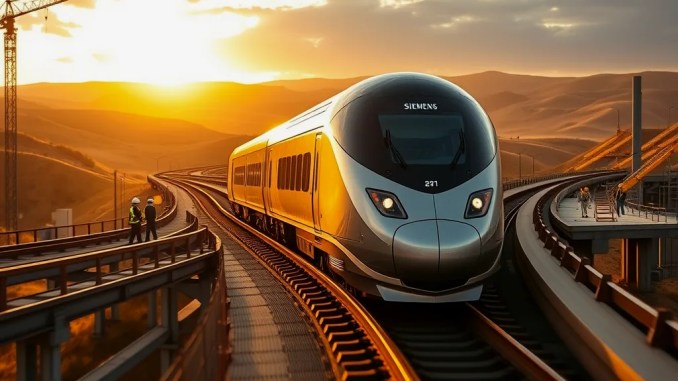
Overview of the Siemens–California High-Speed Train Agreement
The California High-Speed Rail Authority (CHSRA) plans to authorize a contract with Siemens Mobility that could reach up to $772.1 million. The deal covers design, manufacturing in Germany, delivery, state-side testing, and a 10-year maintenance package for three high-speed train sets. An additional allocation of $63.7 million is proposed to cover import duties and customs tariffs.
What the $772.1M Ceiling Includes
The contract ceiling breaks down into three principal components: $281.7 million for manufacturing, delivery and commissioning of the three train sets; $284.1 million for entry-into-service activities plus full service support, spare parts and a 10-year maintenance commitment; and up to $206.3 million for variable adjustments such as inflation, exchange-rate movements and other contingencies. The separate $63.7 million account addresses potential import taxes and customs fees, estimated by officials to reach roughly 20% of the trains’ cost.
Why Production in Germany, and What Happens in California
CHSRA will require final design, manufacture and factory testing to occur in Germany. After factory acceptance, the train sets will ship to California for final integration tests and dynamic on-track validation on CHSRA infrastructure. This two-stage approach reduces initial delivery risk while allowing California-based commissioning and regulatory checks under FRA Tier III and state testing protocols.
How This Affects the Program Budget
Approving the Siemens contract would trigger a reallocation across the program and raise the baseline capital by about $195.9 million, increasing the program total toward approximately $35.86 billion. That increase reflects the transfer of certain lifecycle service costs (previously treated as operating expense) into capital accounts to secure guaranteed long-term maintenance and spare-parts provisioning within the procurement package.
Procurement History and Competitive Context
The procurement began with a shortlist that included Alstom and Siemens. Only Siemens ultimately submitted a responsive bid. CHSRA exercised its right to request a best and final offer and selected Siemens as offering best value. Earlier solicitations in April 2024 envisioned six train sets (two prototypes and four production units), a driving simulator, and a 30-year maintenance framework; the current award reduces the initial order to three sets while preserving options for up to 19 additional units.
Key Contract Changes Since 2024
Major shifts from the original solicitation include:
– Reduced initial quantity: from six train sets down to three.
– Maintenance term: scaled to a 10-year baseline with five-year optional extensions that could extend service support up to 30 years subject to board reauthorization.
– Buy America: the initial Buy America requirement for the first three train sets was removed, enabling foreign manufacture with subsequent US commissioning.
– Options expanded: the optional follow-on quantity rose to 19 additional train sets, not guaranteed but contractually available.
Schedule: From Factory Tests to Central Valley Dynamic Runs
The procurement sets notice a target for dynamic on-track readiness by February 2030; CHSRA presentations cite spring 2030 as the likely window for testing on Authority-owned track. Trains must demonstrate speeds up to 220 mph and meet FRA Tier III safety requirements. Commissioning will follow a staged sequence: factory acceptance in Germany, maritime transport and customs clearance, systems integration and compatibility checks in California, static and dynamic testing on the Central Valley corridor, and final entry into service.
Six-Stage Delivery and Activation Plan
If authorized, CHSRA will execute the contract through six Notice to Proceed (NTP) stages, from initial design (NTP 0) through revenue service start (NTP 5). Each NTP unlocks specific workstreams and payment milestones—design validation, manufacture, delivery logistics, installation and integration, testing and commissioning, and ongoing maintenance. This structure enables defined acceptance criteria for each phase and provides governance controls for optional procurements and contract extensions.
Customs, Duties, and Funding Mechanisms
CHSRA proposes to set aside $63.7 million for customs duties, which can be paid either directly to US government entities or via customs brokers. Officials estimate duties could amount to around 20% of the train set cost, depending on tariff classifications and valuation methods. The funding mechanism for the overall contract includes reallocation of program funds and use of emissions-reduction program dollars where legal and appropriate.
Stakeholder Impacts and Local Opportunities
The contract provisions emphasize local subcontracting opportunities and require outreach to small businesses for eligible scopes of work, particularly during final assembly, systems integration and in-service support phases in California. Siemens is expected to supply on-site assistance for systems harmonization and testing, which creates roles for local technicians, testing engineers and specialized contractors during the commissioning period.
Risk Controls and Contingencies
CHSRA accounted for cost escalation, currency risk and tax exposure via the variable component of the contract ceiling and the separate customs budget. The six-stage NTP model limits upfront exposure by tying progressive payments to discrete deliverables. Optional train orders and long-term maintenance extensions require separate board approvals, preserving budgetary and programmatic oversight.
Practical Example: How Testing and Commissioning Will Run
Step-by-step, the program will follow these practical stages:
1. Factory Acceptance (Germany): Functional systems tests, safety certification and static testing to verify train-set compliance with contract specs.
2. Transport and Customs: Sea freight to California, customs clearance funded from the $63.7M reserve when applicable.
3. Systems Integration: On-site installation of US-specific hardware, software harmonization with CHSRA signaling and wayside systems.
4. Static Tests (California): Stationary checks, onboard systems verification, and emergency system drills.
5. Dynamic Tests (Central Valley): Progressive speed-up trials culminating in sustained runs up to 220 mph under FRA oversight.
6. Entry into Service: Final regulatory approvals and phased start of passenger operations aligned with Merced–Bakersfield early operations targets.
What This Means for California Riders and Timelines
The immediate award covers only three train sets, so early service capacity will remain limited to the Merced–Bakersfield early operations segment envisioned for the early 2030s. If CHSRA exercises options for additional train sets, fleet size and frequency can scale quickly. The German build plus California commissioning model shortens technical risk while aligning with US safety oversight.
Search-Optimized Q&A (People Also Ask Style)
Q: Why are the trains built in Germany instead of the US?
The procurement removed Buy America for the initial three sets, allowing Siemens to use its German factories to meet delivery timelines and technical risk profiles; Subsequent final integration and testing occur in California to meet FRA and CHSRA requirements.
Q: When will on-track testing occur?
CHSRA targets spring 2030 for dynamic testing on Authority-owned Central Valley track with progressive performance trials leading to entry into service by the early 2030s for the Merced–Bakersfield segment.
Q: How much does the 10-year maintenance package cover?
The maintenance portion of the ceiling ($284.1M) covers entry-into-service support, spare parts provisioning, preventative and corrective maintenance for 10 years and options for five-year extensions up to a total of 30 years with board approval.
Q: Could tariffs significantly increase costs?
Yes—CHSRA estimates customs duties could reach roughly 20% of the train cost, which is why it set aside $63.7M to absorb tariff exposure and preserve the program budget.
Concluding Perspective
The proposed Siemens contract delivers a pragmatic path to fielding California’s first three modern high-speed train sets while managing cost, technical and schedule risks through Staged acceptance, a substantial maintenance package, and a standalone customs buffer. The structure leaves room to expand fleet size via options while keeping program governance tight through NTP stages and separate board approvals for long-term extensions.