
Donation Agreement Signed in Kyiv
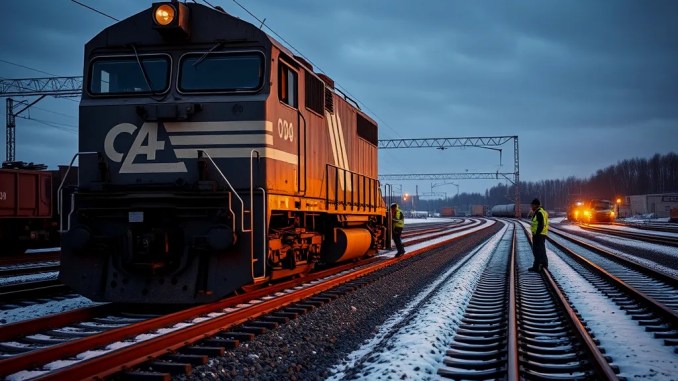
Finland has committed to donate ten Dv12 diesel locomotives and spare parts to Ukraine. The agreement was signed during the Ukraine–Finland Business Forum on October 22, when Finnish Prime Minister Petteri Orpo and Ukrainian Prime Minister Serhii Koretskyi formalized the transfer. VR Group’s extraordinary general meeting approved transfer of ownership first to the Finnish state, then as a donation to Ukrzaliznytsia. Finland estimates the equipment’s value at roughly €2.1 million.
What Models Are Being Sent and When
The locomotives are Dv12 class units, produced between 1963 and 1984 and currently still operable though slated for retirement from VR service. Finland has not published the exact production years or individual configurations of the ten units destined for Ukraine, nor a definitive delivery schedule.
Key Technical Specifications of Dv12 Locomotives
The Dv12 platform is known for reliable diesel operation independent of overhead electrification, making it well suited to regions with damaged or incomplete electric infrastructure. Core specifications published by VR for the class include:
• Engine power: 1,000 kW
• Top speed: 85 or 125 km/h (model-dependent)
• Weight: ~66 tons
• Axle load: 16.5 tons
• Length: ~14 m
• Typical use: both freight and passenger services
How Ukraine Will Use the Locomotives
Ukrzaliznytsia plans to deploy diesel units where electric supply is unreliable or damaged. Diesel locomotives can sustain passenger evacuation trains, humanitarian cargo runs, industrial freight, and export flows during power outages or when overhead catenary is unavailable. Officials pointed to diesel units as strategic assets during energy-targeted attacks because they require no external electrification.
Ukraine’s Locomotive Shortage: Numbers and Operational Impact
Since the large-scale invasion, Ukrzaliznytsia reports roughly 600 locomotives damaged or destroyed, with over 300 of those being diesel units. The losses include 533 state-owned and 75 privately owned locomotives. Repairing heavily damaged machines is time-consuming and costly; some units are irrecoverable. Second-hand acquisitions, including donations, therefore directly affect the network’s ability to keep freight corridors and evacuation capacity operational.
How Donated Dv12s Complement Other International Support
Finland is the first country to donate diesel locomotives to Ukraine in this programmatic way. Slovakia recently agreed to transfer three electric locomotives. Separately, Ukraine reached a principal agreement with the RELINC initiative under the International Bank for Reconstruction and Development for a $100 million URTF grant to buy second‑hand locomotives from foreign markets. Together, these moves diversify traction types in the fleet and accelerate fleet replenishment.
Operational Considerations: Preparing, Transporting, and Commissioning
Moving from retired-but-operational locomotives from Finland to Ukraine requires a sequence of steps Ukraine’s rail authority and Finnish partners will coordinate:
1. Technical inspection and refurbishment. Even operational units need targeted checks: braking systems, fuel systems, controls, and safety equipment must meet Ukrzaliznytsia standards.
2. Spare parts and documentation transfer. The donation includes parts packages; full technical manuals, wiring diagrams, and maintenance schedules must accompany each unit.
3. Cross-border logistics. Routes will be chosen to minimize handling: rail transport through Baltic/Poland corridors or combined rail-truck movements where gauge or routing requires it.
4. Acceptance tests and crew training. Ukrainian drivers and technicians must run acceptance trials, then receive hands-on training if controls or auxiliary systems differ from standard Ukrainian practice.
5. Integration into service and monitoring. Initial duty cycles should use conservative power and load profiles while maintenance teams collect performance data to schedule preventive interventions.
Practical Examples Where Dv12s Add Immediate Value
Example scenarios show why the donation matters:
• Evacuation corridors during blackouts: Diesel traction can operate when substations or overhead lines are disabled, keeping evacuation and emergency trains moving.
• Humanitarian logistics: Small-block diesel locomotives can run branch lines into front-line or damaged areas where electrification is absent or unreliable, moving food, medical supplies, and shelter materials.
• Industrial supply and export continuity: Diesel machines help maintain freight spurs to ports and border transshipment points when electric traction is limited.
Limitations and Next Steps Ukraine Should Consider
Donated Dv12 units bring immediate capacity but also require planning:
• Fuel logistics: Diesel supply chains must be secured and prioritized for critical routes.
• Spare-parts pipeline: Sustained operations need predictable resupply; Finland’s spare parts package is helpful but not a permanent solution.
• Standardization challenges: Integration of foreign units complicates maintenance scheduling unless technical harmonization occurs or dedicated depots are assigned.
• Lifecycle and refurbishment budgeting: Older locomotives may need medium-term overhauls; budgeting should account for these predictable interventions.
Broader Political and Humanitarian Context
Finland paired the locomotive donation with winter support measures: €5 million for the Ukrainian Energy Guarantee Fund, delivery of heating containers, and €2 million in humanitarian aid. Officials framed the aid package as targeted support for transport and energy resilience ahead of winter, reinforcing logistics capacity while addressing civilian needs.
What to Watch Next
Key follow-ups to monitor for stakeholders and analysts:
• Delivery schedule and serial data: Publication of the exact years build and technical configurations for the ten Dv12 units.
• Routes and handover protocols: Announcements on whether the locomotives will move under their own power or be transported on flatcars/trucks.
• Operational deployment: Locations and services where Ukrzaliznytsia assigns the new units (regional freight, intercity, or emergency duty).
• Maintenance partnerships: Any bilateral agreements for training, long-term spare part supply, or workshop modernization tied to the donation.
Conclusion: Immediate Boost, Strategic Necessity
The Finnish donation of ten Dv12 diesel locomotives provides immediate operational flexibility for Ukraine’s rail network at relatively low entry cost. While not a permanent fleet solution, the locomotives fill critical short-term gaps—especially where electric infrastructure is compromised—and complement broader international funding and transfers aimed at restoring and sustaining Ukraine’s rail capacity.

Be the first to comment