
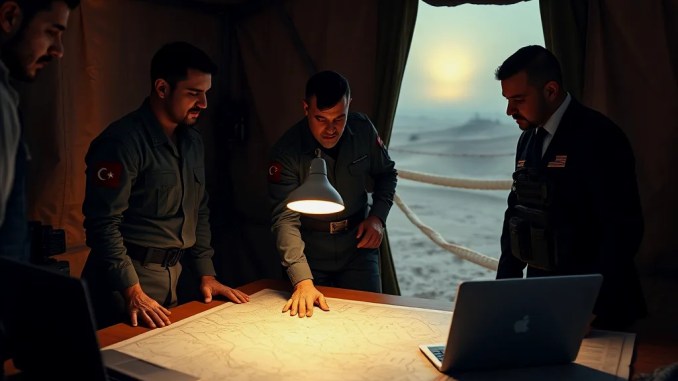
Overview of the Mecca Joint Defense Agreement and parliamentary step
The Mecca Joint Defense Agreement, signed in August by Turkey, Saudi Arabia and Pakistan, has arrived at the Turkish Grand National Assembly for ratification. The submission triggers a legal and political process: parliamentary committees will assess obligations, potential force contributions and whether subsequent authorizations for deployment are required. The bill currently sits in committee review, meaning no troop deployment has yet occurred.
What the agreement obliges the signatories to do
Under its first two articles, the treaty commits parties to use necessary means to protect each other’s territorial integrity, sovereignty and internationally recognized borders. If one party suffers an armed attack or military aggression, other parties must promptly provide support by using existing mutual assistance mechanisms. The text explicitly links this collective response framework to the right of individual and collective self-defense under Article 51 of the UN Charter, while leaving the scope and nature of support to be decided case-by-case by the parties after assessing needs.
How this differs from automatic NATO-style deployments
Although similar in spirit to NATO’s Article 5, the Mecca pact stops short of automatic, pre-defined troop deployments. The agreement requires the affected parties to determine the appropriate form of assistance after evaluating the specific attack scenario. Consequently, the treaty provides a political commitment to mutual defense without mandating immediate, identical military responses for every incident.
What Turkey is expected to contribute
Turkish officials and media reporting indicate Ankara’s likely early contributions will focus on technical military support rather than frontline combat deployments. Expected contributions include:
• Air defense systems: integration of radar, command-and-control links and missile batteries to protect critical sites.
• Electronic warfare and signals intelligence: sharing EW capabilities, intercepts and analysis to improve situational awareness.
• Defense material and maintenance: spare parts, systems sustainment and logistics planning to accelerate allied readiness.
Officials emphasized that any Turkish military personnel sent initially would likely serve in technical, advisory or specialist roles and would not participate in direct attack operations unless Turkish constitutional and parliamentary approvals changed that posture.
What the Turkish parliamentary process requires before troops leave
Turkish Constitution provisions (Article 92) give the Grand National Assembly parliamentary authority over deployment of the Turkish Armed Forces abroad. Practically this means:
Step-by-step process
1) Committee review: The treaty’s ratification bill moves to the Foreign Affairs Committee as primary and the National Defense Committee as secondary, where deputies analyze legal and strategic implications.
2) Plenary approval: If committees recommend it, the bill goes to the full assembly for a vote to ratify the treaty.
3) Separate authorization (authorization) for deployment: Even after ratification, Turkish law and past practice require a separate parliamentary authorization for sending troops overseas for specific missions or durations. That memorandum would detail force size, mission type and rules of engagement.
Until a memorandum is tabled and approved, any movement of Turkish forces into Saudi territory remains contingent and political rather than operational.
Intelligence-sharing, logistics and defense industry cooperation in the pact
The explicitly agreement covers non-combat cooperation areas that can produce immediate effects without troop movement:
• Intelligence exchange: standardized reporting channels, joint analysis cells and platform-level data links to share air and maritime surveillance.
• Logistics and basing coordination: pre-positioning of supplies, access to ports and airfields, and mutual logistical planning to speed crisis responses.
• Defense industry collaboration: joint procurement, co-production projects and maintenance agreements to bolster interoperability and reduce sustainment gaps.
These measures allow rapid capacity-building and tangible support while minimizing political friction tied to combat troops abroad.
Practical examples of likely Turkish technical contributions
Three realistic scenarios illustrate how Turkey might help without frontline combat:
Scenario A — Air defense augmentation: Turkey deploys mobile radar units and a team of air defense technicians to integrate Saudi sensors with Turkish command nodes, shortening detect-to-engage timelines.
Scenario B — Electronic warfare support: EW specialists install jamming arrays and provide training to Saudi operators to protect critical infrastructure from precision strikes or UAV threats.
Scenario C — Logistics surge: Turkish logistics detachments coordinate warehousing, transport and maintenance for allied assets arriving at Saudi ports, improving sustainment in high-tempo operations.
Risks, legal constraints and political calculations
Key constraints shape how the treaty could be implemented:
• Constitutional limits: Any combat deployment requires explicitary authorization under law.
• NATO and international law interoperability: Turkey must ensure its actions align with NATO commitments and UN obligations to avoid alliance friction or legal conflicts.
• Domestic politics: Parliamentary debate will weigh public opinion, bilateral relations and regional risk of escalation when deciding on deployment authorizations.
Timing and what to watch next
Watch these signals to track whether Turkey moves from commitment to concrete deployments:
• Committee reports and timelines: publication of Foreign Affairs and National Defense Committee findings indicate legal hurdles and political appetite.
• Government statements on tezkere: official announcements about drafting or tabling a separate parliamentary deployment authorization.
• Operational indicators: arrival of technical teams, air-defense equipment shipments, or logistics pre-positioning to Saudi bases.
Who benefits and who bears risks
Saudi Arabia gains rapid access to allied technical capabilities and a political guarantee of support; Pakistan adds a formal security partnership with two regional powers; Turkey advances defense-industry ties and strategic influence. Risks concentrate on escalation potential, domestic political backlash in Turkey if forces deploy for combat roles, and the diplomatic balancing act Turkey must maintain with other regional and NATO partners.
Quick answers to likely People Also Ask queries
Does the agreement allow automatic troop deployment? No. The treaty commits to support but leaves precise measures to be determined after consultation; Turkey also requires a separate parliamentary authorization to send troops abroad.
Has Turkey already sent soldiers to Saudi Arabia? No confirmed combat deployments have occurred. Reports indicate planning for technical personnel and equipment, but parliamentary approvals and operational orders remain necessary.
Could Turkish troops engage in offensive operations under this pact? Only if Turkish prosecutors approve a motion authorizing such missions. Current public statements frame Turkey’s intended role as defensive and technical rather than offensive.
Bottom line
The Mekke Joint Defense Agreement creates a flexible framework for mutual assistance among Turkey, Saudi Arabia and Pakistan that prioritizes technical cooperation, intelligence-sharing and logistics. It commits signatories to aid one another if attacked but defers detailed force decisions to later consultations and, in Turkey’s case, to parliamentary approvals before any combat deployments can occur.








Be the first to comment