
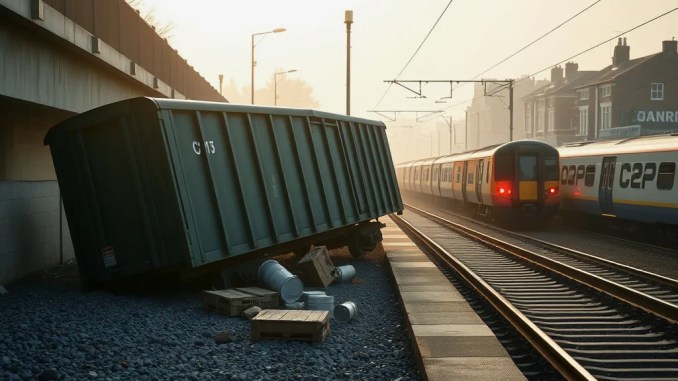
The GB Railfreight container train partially derailed near Barking on 23 October, damaging approximately 1.2 kilometers of track and forcing c2c to suspend services at multiple stations while engineers and investigators work to remove the damaged wagons and repair the infrastructure.
What happened at Barking and which tracks were affected
At about 13:10 on 23 October the freight train that had departed London Gateway left the rails near Barking. No passengers were on board and no injuries were reported. The derailment directly damaged the track alignment and some sleepers across a corridor roughly 1.2 kilometers long. Platforms 7 and 8 at Barking were taken out of use immediately because the underfoot structure and rails required inspection and, in places, replacement.
Who is working on the recovery and how the investigation is organized
GB Railfreight and GBR Anglia mobilized engineering teams to lift derailed wagons and stabilize the site. They are coordinating with the Rail Accident Investigation Branch (RAIB) so evidence can be preserved while recovery proceeds. GBR Anglia’s operations lead described the recovery as complex: heavy lifting rigs must reach the site, track panels with ballast need removal, and power and signaling isolation must remain in place until engineers certify the repaired sections.
Why reopening the line will take time: damage, logistics and safety steps
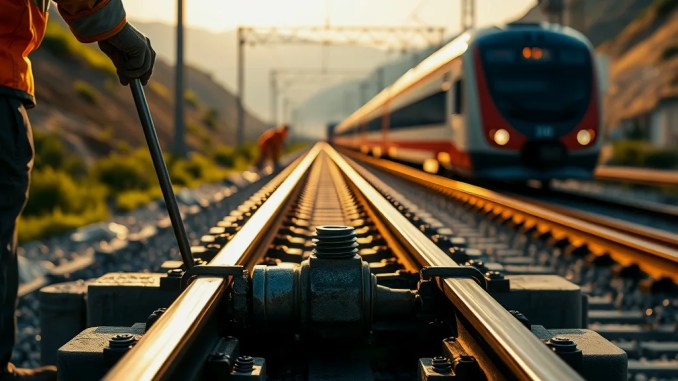
Repairing a freight-derailment site typically follows these steps: 1) secure the scene and complete RAIB initial survey; 2) remove derailed wagons using cranes and low-loaders; 3) excavate and assess ballast, sleepers and rail condition along the full damaged length; 4) replace sleepers and rails, tamp ballast and reinstate drainage; 5) test track geometry and signaling; 6) progressively reopen sections under engineering possession before restoring scheduled services. Given the estimated 1.2 km of damaged track here, each step involves significant plant, materials and time — especially if multiple sleepers, long rail panels or signaling cabling require replacement.
Which c2c services and stations are suspended
From 26 October until further notice c2c trains will not call at Dagenham Dock, Rainham and Purfleet. National Rail warns of severe restrictions on the Barking–Grays corridor, and current public advisories anticipated disruption at least through 29 October. The reduced availability also affects connecting services: some London Overground runs (notably on the Gospel Oak to South Tottenham section) operate an altered timetable and the South Tottenham–Barking Riverside link remains suspended.
How passengers can travel now: replacement buses and ticket acceptance
Transport operators put replacement bus services in place to bridge affected stations. A shuttle bus runs between Upminster and Grays roughly every 30 minutes and calls at Rainham and Purfleet. c2c tickets are being accepted on designated TfL buses and on certain Greater Anglia or District Line services where operators agreed inter-availability.
Practical routing examples:
Dagenham Dock: use local TfL buses towards Barking or Dagenham Heathway; specified buses accept c2c tickets.
Rainham: board the Upminster–Grays shuttle (approx every 30 minutes) or use the Rainham–Romford bus route where ticket acceptance is published.
Purfleet: catch the Upminster–Grays replacement bus that stops at Purfleet.
Grays-bound travellers: if c2c cannot run toward Barking, passengers should use the Purfleet or Rainham shuttle and connect via alternative Anglia or National Rail services where possible.
Which alternative rail routes and services are recommended
National advised that Greater Anglia services between London Liverpool Street and Southend Victoria provide a viable rail alternative for some journeys that would otherwise use the c2c corridor. The District Line between Barking and Upminster also remains an option for east–west local movements. Passengers should consult live journey planners: rail replacement buses add dwell and transfer times so journey planning apps will show fastest combinations with the least walking and interchange.
How long the repairs might take and what affects the schedule
Forecasts changed as engineers assessed the damage. Initially operators expected disruption for the rest of the day and possibly the weekend; Later updates extended the anticipated impact into the following week. As of the latest public notice, operators warned that disruption would last at least until 29 October. The actual reopening date depends on three variables: the time needed to remove wagons, the extent of underlying ballast and sleeper replacements, and any signaling or earthworks repairs discovered during excavation.
Incident context: previous derailments and scale of repairs required
Barking-area freight derailments have occurred before. In January 2020 a derailment near Wanstead Park damaged a multi-kilometer corridor and required replacement of dozens of rail panels, thousands of sleepers and thousands of tonnes of ballast. That historical example shows the scale of material and machine resources needed when long track lengths are affected; the present incident, at an estimated 1.2 km of damaged track, may require a similar sequence of bulk material deliveries and heavy-plant timetabling, albeit on a smaller scale.
How to stay updated and minimize travel disruption
Passengers should check c2c, National Rail and local operator live updates before travelling. Use official apps or station departure screens to confirm whether replacement buses are running and which alternate routes accept rail tickets. Allow extra time for journeys, expect crowding on shuttles, and consider postponing non-essential travel along the Barking–Grays corridor while recovery work continues.





Be the first to comment