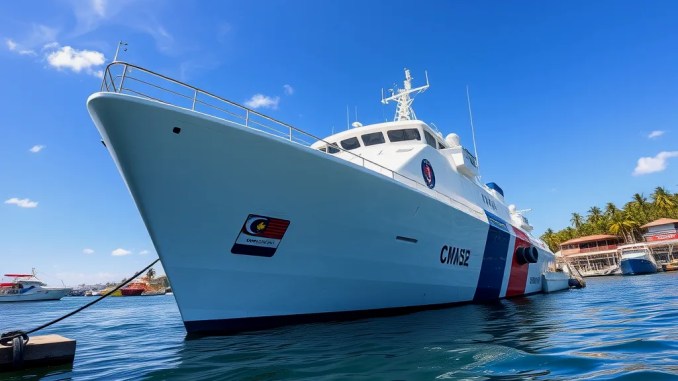
Once-in-a-Generation Naval Innovation: The MPMS-1 Transforming Coastal Security
In a remarkable leap forward for international maritime security, Malaysia has taken bold steps to modernize its coastline defense capabilities through the commissioning of the MPMS-1, a 99-meter long multi-purpose patrol vessel. Developed collaboratively with Turkey’s DESAN Tersanesi, this vessel aims to redefine offshore security, delivering unmatched operational versatility, extended deployment range, and cutting-edge technology. The vessel’s recent christening at Kocaeli signifies not just a milestone in regional defense, but a strategic game-changer designed to safeguard Malaysia’s vast and increasingly complex maritime domain.
Design and Capabilities: What Sets MPMS-1 Apart from Conventional Patrol Ships
The MPMS-1 integrates state-of-the-art design principles for advanced maritime operations. Its high endurance, capable of continuous 30-day patrols, ensures Malaysian security personnel can maintain a persistent maritime presence without frequent resupply. Key features include:
- Versatile Weapon Systems: Equipped with a 30mm remote-controlled gun, the vessel is prepared for fast response and engagement during piracy or illegal fishing incidents.
- Unmanned Aerial Vehicle (UAV) Integration: Two HAVELSAN BozBey drones can perform reconnaissance, surveillance, and target acquisition, significantly expanding operational reach without increasing crew size.
- Rapid Interception Motors: Four high-speed response boats enable swift boarding and pursuit of vessels involved in illegal activities.
- Command and Control Systems: Advanced sensors and radars, including France’s Thales SMART-L, facilitate long-range tracking and real-time situational awareness of vast maritime areas.
- Support for Special Operations: Helipad and auxiliary facilities allow helicopter deployment, elevating the vessel’s intercept and rescue capabilities.
Operational Scope and Missions: A Multifaceted Tool to Tackle Maritime Challenges
The vessel’s design prioritizes a comprehensive operational scope tailored to Malaysia’s maritime security challenges, which include piracy, illegal fishing, smuggling, and territorial disputes. With the ability to operate in the contentious South China Sea and surrounding waters, the MPMS-1 aims to:
- Secure Exclusive Economic Zone (EEZ) Boundaries: Facilitate surveillance and enforcement, deterring illegal fishing and resource exploitation.
- Disrupt Smuggling and Human Trafficking: Agency cooperation involves interdiction of suspected vessels, leveraging advanced tracking systems and rapid response units.
- Support Search and Rescue Operations: Provide critical aid in emergencies with onboard medical facilities and helicopter support.
- Conduct Diplomatic Maritime Demonstrations: Serve as a flagship at international naval forums and exhibitions, showcasing Malaysia’s technological prowess.
Strategic Impact: Elevating Malaysia’s Naval Arsenal and Regional Security
By commissioning the MPMS-1, Malaysia is positioning itself at the forefront of maritime security in Southeast Asia. The vessel’s capabilities extend beyond national borders, serving as a strategic asset that strengthens regional stability. The project fosters international collaboration—demonstrated by Malaysia’s partnership with Turkey—and signals a shift towards self-reliance with locally-supported technological solutions.
Moreover, this vessel complements Malaysia’s existing fleet, offering increased operational flexibility, extended deployment range, and enhanced technological integration. Such advancements enable Malaysia to respond swiftly to evolving threats, defend vital maritime routes, and uphold sovereignty amid regional territorial disputes.
Upcoming Deployment and Future Developments
The MPMS-1 is scheduled for operational readiness in early 2027, with a series of testing phases and crew training to ensure optimal performance. Alongside the vessel, Malaysia plans to develop a dense surveillance network, including additional patrol ships, shore-based radars, and unmanned systems. The vessel will participate in international security exercises, notably at the upcoming LIMA’27 defense exhibition in Langkawi, showcasing Malaysia’s maritime capabilities to global partners.
Significantly, Malaysia’s collaboration with Turkey extends beyond this vessel—initiating plans for an additional patrol ship, MPMS-2, with enhanced features such as autonomous systems and modular weapon configurations. This strategic expansion aims to create a formidable maritime defense framework capable of adapting to future threats.
Investment in Marine Infrastructure: Building a Resilient Defense Ecosystem
Complementing the vessel’s deployment, Malaysia invests heavily in its marine infrastructure. The proposed Malacca Strait shipyard infrastructure, developed in partnership with DESAN, will serve as a regional hub for constructing, maintaining, and upgrading naval and commercial vessels. This facility ensures a rapid response capability, modernizes the maintenance cycle, and boosts Malaysia’s maritime industrial ecosystem.
Symbolic Gesture and Diplomatic Significance
The launching ceremony involved a traditional ship christening with a symbolic gesture—breaking a bottle of seawater collected from the Malacca Strait. This act intertwined cultural significance with diplomatic symbolism, emphasizing Malaysia’s long-term commitment to regional maritime security and peaceful sovereignty.
Conclusion
The introduction of the MPMS-1 signals a strategic seismic shift in Malaysia’s maritime security landscape. The vessel’s multi-mission capabilities, cutting-edge technology, and regional diplomatic impact make it a formidable asset against evolving maritime threats. Combined with investments ongoing in infrastructure and regional partnerships, Malaysia is not only elevating its tactical capabilities but also asserting itself as a regional leader in maritime defense innovation. As the vessel sets sail for operational duties, it marks the beginning of a new era in safeguarding Southeast Asia’s vital maritime corridors.
Frequently Asked Questions (FAQs)
- What is the primary role of the MPMS-1? The MPMS-1 serves as a multi-purpose patrol vessel designed to conduct maritime surveillance, interdiction, search and rescue, and diplomatic missions.
- When will the MPMS-1 become fully operational? The vessel is scheduled for commissioning in early 2027 after completing testing phases.
- What makes the MPMS-1 technologically advanced? Its integration of UAVs, advanced sensors, long-range radars, and modular weapon systems enhances its operational versatility and situational awareness.
- How does Malaysia plan to expand its maritime defense infrastructure? Through building dedicated shipyards, shore-based command centers, and deploying a network of radars and unmanned systems across strategic maritime zones.
- What is the significance of Malaysia’s partnership with Turkey? The collaboration accelerates Malaysia’s defense modernization, fosters joint technology development, and enhances regional security cooperation.