
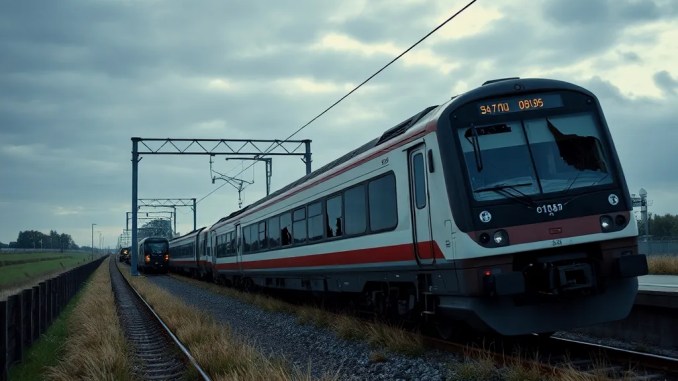
Incident overview: train collision with unidentified object in Funen
Location: Near Langeskov, Funen region, Denmark. What happened: A passenger train hit an object of unknown origin while in motion, sustaining significant damage. Authorities temporarily halted rail traffic to examine the scene. Casualties: No dead or injured passengers or crew were reported.
Immediate response and safety measures
Rail operators stopped services on the affected section to allow police and technical teams to access the train and track safely. Investigators photographed and documented the carriage damage, secured the site to preserve evidence, and inspected the immediate track area for debris, mechanical failure signs, and any remains of the struck object. Emergency protocols prioritized passenger evacuation and accounting for all onboard; staff verified identities and health status of everyone on the train before allowing them to leave the scene.
What police said and early findings
Funen Police communicated that the collision did not involve a person or an animal. The report states the train driver alerted authorities after the impact. At the time of the initial announcements, the precise nature—size, material, origin—of the object remained undetermined. Investigators planned forensic examination of the object remnants (if found), examination of CCTV and onboard recorder data, and interviews with the driver and crew to reconstruct the moments before impact.
How investigators determine what was struck
Forensic teams typically follow a step-by-step method: 1) secure and photograph the entire scene; 2) collect physical fragments and send them to a materials lab for composition analysis; 3) retrieve black-box or event recorder data to identify speed, braking, and alarms; 4) review nearby CCTV, level-crossing logs, and witness statements for time-correlated evidence; 5) inspect track, signaling, and overhead equipment for infrastructure failure that could explain debris on the line. Combining material analysis with timeline reconstruction narrows whether the object was natural, discarded, or deliberately placed.
Typical causes of similar rail impacts and why each matters
Common categories include: 1) Road or field debris: blown or dropped objects that roll onto tracks; 2) Infrastructure failure: broken overhead lines, fastening failures, or track components detaching; 3) Deliberate placement: malicious objects placed on tracks; 4) Wildlife or livestock: animals entering the right-of-way. Determining the category affects follow-up: accidental debris prompts maintenance and local reporting, infrastructure issues trigger inspections and possible design changes, and deliberate placement leads to criminal investigation and increased patrols.
Passenger experience and operational impacts
Passengers experienced a service disruption and an on-site evacuation process that rail staff managed. Operators issued temporary cancellations and rerouted services while repairs and inspections proceeded. Even without injuries, such incidents can create cascading delays across the regional timetable; operators calculate recovery windows based on damage severity, access time for heavy recovery equipment, and safety clearance.
What to expect next in the investigation
Short-term steps include lab results on fragments (if recovered), final incident report from Funen Police, and a safety bulletin from the rail operator summarizing findings and immediate corrective actions. Medium-term outcomes may include infrastructure repairs, timetable adjustments, and—if a deliberate act is suspected—criminal investigations and public warnings. Long-term responses, after root-cause confirmation, might involve engineering changes, better fencing, or new detection systems at vulnerable sections.
Practical advice for nearby residents and rail users
If you live near rail lines, report unusual items on or near tracks to local authorities promptly rather than attempting removal. Rail travelers should follow crew instructions during incidents, register for operator travel alerts for real-time updates, and retain proof of purchase if you plan to seek a fare refund after significant delays. Authorities appreciate accurate witness statements with time and location details to assist investigations.
Why this incident matters beyond the immediate disruption
Even without casualties, collisions with unknown objects highlight vulnerabilities in track protection and incident detection. Each event offers data that can improve inspection routines, inform fencing and lighting investments, and refine emergency response training. Transparent reporting and timely technical analysis reduce future risk and improve public trust in rail safety.






Be the first to comment