
Starbase city commission to consider tax break and economic development deal on December 9
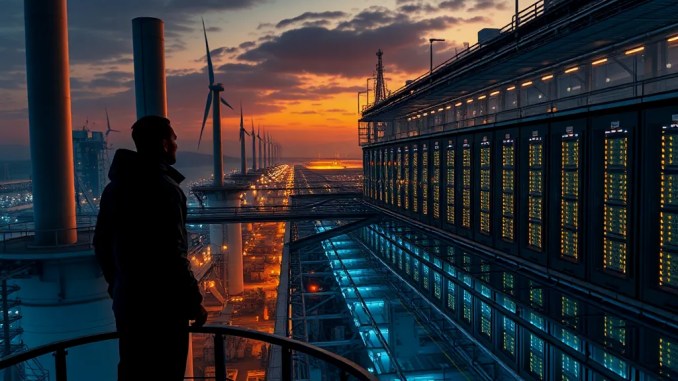
SpaceX announced plans to build a natural-gas fired power plant and a supercomputer facility at its Starbase site. The project will be privately owned and operated by the company. City documents show the Starbase City Commission will review a proposed property tax abatement and an associated economic development agreement at its public meeting on December 9.
Projected $24 billion capital outlay in initial phase
The company projects approximately $24 billion in capital spending for the initial phase. That figure covers construction of power generation equipment, data center shells, high-voltage switchgear, connectivity infrastructure, and site preparation. Officials describe the investment as multi‑stage: the initial phase establishes base capacity while later phases could expand generation or computational capacity based on demand and technological shifts.
Why a natural gas plant plus supercomputer is being proposed
SpaceX is pairing a gas-fired plant with a supercomputing campus to ensure resilient, low-latency power and compute for ongoing rocket design, simulation, and launches. A colocated power plant reduces transmission risk for mission-critical compute loads and allows precise control over capacity and maintenance scheduling. For compute-heavy aerospace workflows—computational fluid dynamics, full-system simulations, and neural-network training—consistent power and nearby cooling infrastructure cut latency and operational risk.
How the proposed tax abatement and economic deal work
The proposed property tax abatement would reduce SpaceX’s assessed tax burden on improvements for a defined period, accelerating cashflow during heavy capital expenditure years. The accompanying economic development agreement typically ties the abatement to performance commitments: minimum investment thresholds, job creation or retention targets, and local procurement or training provisions. City staff will present estimated fiscal impacts—foregone tax revenue versus projected payroll, sales, and secondary economic activity—at the December 9 hearing.
Local economic and fiscal impacts to expect
Direct impacts include construction employment, trade-contractor revenues, and long‑term technical jobs for operations and data center maintenance. Secondary effects commonly cover increased demand for housing, food service, and logistics. Fiscal models for similar projects show short-term reductions in property tax receipts during abatement windows but net positive outcomes over 10–20 years when payroll and sales taxes, permit fees, and multiplier effects are included. The commission’s materials should include an independent fiscal analysis or assumptions the city used to estimate long-term returns.
Technical and environmental considerations the commission will evaluate
Commissioners will likely examine grid interconnection studies, emissions controls, water and cooling demands for the supercomputer, noise and visual impacts, and emergency response plans. Natural gas plants can range from simple-cycle turbines to highly efficient combined-cycle configurations; the chosen technology will affect emissions profiles and operational flexibility. The city should require detailed environmental assessments and commissioning tests to ensure compliance with local and federal standards.
Steps the city commission can require before approval
The commission can attach conditions to any abatement or agreement:
1. Phased investment triggers: release tax incentives only when pre-defined construction milestones and capital expenditures are met.
2. Local hiring and training commitments: require apprenticeship programs or partnerships with area community colleges for technician pipelines.
3. Environmental performance guarantees: set emissions limits, waste‑water treatment requirements, and monitoring obligations.
4. Community benefit provisions: require public access to workforce development funding, infrastructure improvements, or a defined percentage of energy reserved for local needs.
Questions likely to appear in ‘People also ask’ and how to answer them
What does a property tax abatement mean for residents? It reduces the tax revenue the city collects from the new improvements for a period; Residents may see fewer immediate tax-based services funded, but the goal is long-term economic growth that expands the tax base.
Will the plant increase local pollution? Emissions depend on the plant type and controls. Modern combined-cycle units with emissions controls can be relatively efficient, but combustion still emits CO2 and NOx; the city should require mitigation measures and transparent monitoring.
How many jobs will the project create? Construction will create short-term contractor and skilled-trade jobs; Permanent positions include plant operators, data center engineers, security, and facilities staff. Exact numbers should be in the developer’s economic impact study submitted to the commission.
Practical examples and comparable projects
Comparable large-scale data center plus generation projects include instances where cloud providers colocated on-site generation to guarantee uptime—Amazon Web Services has procured dedicated generation for regions, and some hyperscaler campuses use onsite gas turbines for resiliency. Lessons from those projects show the importance of transparent environmental commitments, staged approvals, and community workforce agreements to distribute benefits locally.
What to watch for at the December 9 meeting
Key items: the city’s fiscal analysis, the draft economic development agreement text, community input during public comment, environmental review timeline, and any proposed conditions tying incentives to job or investment milestones. If commissioners request more information, they can continue the hearing to allow deeper technical review.









Be the first to comment