
Overview of the $2 Billion Commitment and Its Purpose
The Defense Logistics Agency (DLA) pledged $2 billion for fiscal 2026 purchases to strengthen the United States National Defense Stockpile. The acquisition program aims to secure strategic and critical raw materials that commercial markets cannot reliably supply during national emergencies. The funds are intended to back domestic supply chains, expand onshore processing and recycling capacity, and create inventory buffers for defense, industrial, and essential civilian needs.
Which materials were targeted and where they are stored
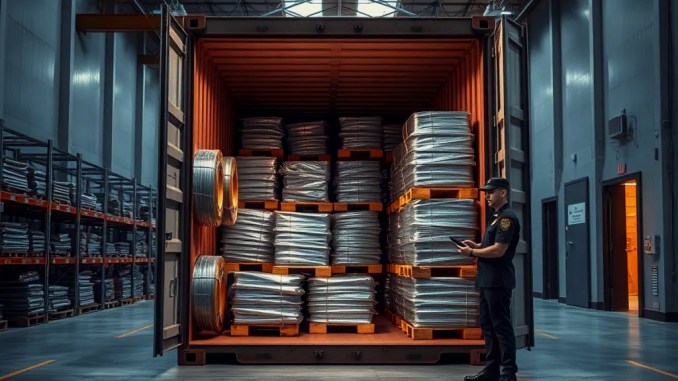
DLA identified a broad set of materials including tin, ferromanganese, germanium, vanadium pentoxide, aluminum of high purity, tungsten, antimony, cobalt, tantalum and molybdenum-based alloys Photographs released with the announcement show approximately 35,000 metric tons of tin stored in Hammond, Indiana, and ferromanganese and germanium ingots at a Point Pleasant, West Virginia, facility. The agency also noted that many of these materials can come from primary mining, but also from recycling, reclamation, refining and downstream processing—an important distinction when planning resilient domestic supply chains.
How the DLA guarantees demand to domestic producers
DLA uses long‑duration, indefinite-delivery/indefinite-quantity (IDIQ) contracts and purchase guarantees to give producers demand certainty. Eric Mata, DLA Strategic Materials Director, explained that these contracts reduce market risk for companies considering new plants or capacity expansions. Example: Elmet Technologies received an IDIQ contract for tungsten ore, concentrates and sodium tungstate with a $150 million guaranteed minimum and a $2 billion ceiling—while the Defense Department separately committed $450 million to expand tungsten production. These layered commitments provide capital buyers and plant financiers with clearer forecasts of future offtake.
Where the $2 billion sits within congressional appropriations
Congress added funds to multiple accounts in 2025 that underpin the DLA program. The One Big Beautiful Bill Act (July 2025) placed $2 billion into the National Defense Stockpile Transaction Fund and $5 billion into an Industrial Base Fund targeted at critical minerals—creating a combined $7 billion infusion for securing supply chains. DLA did not disclose how much of its $2 billion fiscal‑year purchase pledge will come directly from the newly authorized balances versus prior account balances (which were roughly $958 million before the law).
Key procurement examples and contract structures
Significant contract awards illustrate how DLA is executing the program. Notable actions include:
– Tungsten procurement: An Elmet Technologies agreement covers tungsten ore, concentrates and sodium tungstate through August 2031 under an IDIQ structure with a $150 million guaranteed floor and $2 billion ceiling, enabling DLA to place multiple orders over the contract term. The DLA also added a roughly $36 million award for molybdenum and tungsten alloys and wires.
– Antimony and other metals: An earlier September 2025 agreement with United States Antimony Corp. Set a ceiling of $245 million for antimony metal ingots. Financial press previously reported DLA planning purchases up to $1 billion for critical minerals including cobalt, tantalum and scandium—underscoring a multi‑metal portfolio approach.
Why onshore processing, recycling, and refining matter
Relying only on mined raw ore leaves the supply chain vulnerable; Onshore processing and recycling provide multiple pathways to secure material flows. Examples of resilience strategies built into DLA planning:
– Diversified sourcing: Combine primary mining, recycled feedstock, and refined imports to reduce single-source failures.
– Domestic value capture: Invest in refining and smelting capacity so higher‑value intermediate and finished forms remain onshore for critical defense uses.
– Circular economy leverage: Scale collection and recycling of end‑of‑life electronics and industrial scrap to recover germanium, cobalt, tantalum and others—helping fill shortfalls faster than greenfield mines and easing permitting barriers.
When the stockpile can be accessed and governance rules
Materials held in the National Defense Stockpile are reserved for national emergencies. According to DLA statements, the stockpile is not for routine commercial use; it is released only under specific circumstances such as a declared war or by order of the Under Secretary of Defense for Acquisition and Sustainment (historically referenced through deputy-level decision authority). This governance preserves inventory for acute defense or infrastructure crises rather than day‑to‑day industry requirements.
How the DLA addresses program transparency and reporting gaps
Audits and oversight have previously highlighted data gaps that complicate planning for material shortfalls. A 2024 Government Accountability Office (GAO) report found that the Pentagon lacked sufficient data to anticipate potential supply gaps for roughly half of the materials it was deemed critical. DLA’s expanded purchasing and stockpiling partly responds to that vulnerability by building buffer stocks while agencies improve monitoring, but the agency has not publicly mapped which specific purchases fulfill GAO‑identified shortfall risks or how new inventory levels change national risk profiles.
Practical implications for industry and defense planners
Manufacturers, recyclers and financiers should see six immediate effects.
1) Investment signals: Contract guarantees reduce market risk and can unlock private financing for new plants and recycling facilities.
2) Procurement timelines: IDIQ models allow staggered deliveries that better match ramp-up curves for new capacity rather than single large lump-sum purchases.
3) Business opportunities: Companies that can provide high-purity intermediate materials, refining services, or reclaim electronic scrap become preferred suppliers.
4) Contract complexity: Firms must meet technical specifications for defense-grade materials and demonstrate chain-of-custody and compliance for recycled inputs.
5) Regional supply clusters: Concentrated investments (refineries, recyclers, storage hubs) will likely create regional industrial clusters, with logistics and workforce implications.
6) Price signal moderation: Government purchasing can stabilize prices during early‑stage market development but may distort commercial signals if not time‑bound and transparent.
Step‑by‑step: How a manufacturer can qualify as a DLA supplier
Companies seeking to supply the stockpile should follow a practical sequence:
Step 1: Understand specifications — Acquire the DLA material specifications and standards quality for the commodity (purity, form, packaging, and testing protocols).
Step 2: Register and certify — Complete government vendor registration systems (such as SAM.gov) and obtain required quality management certifications and export‑control compliance documentation.
Step 3: Demonstrate capacity — Provide audited production and quality data, pilot-scale test results for recycled feedstock, and evidence of secure supply chains for feed materials.
Step 4: Negotiate IDIQ terms — Work with contracting officers on guaranteed minimums, pricing bands, delivery schedules, and options for scaling production.
Step 5: Invest in traceability — Implement chain‑of‑custody systems and third‑party material assays so deliveries can meet defense audit requirements.
Step 6: Maintain performance — Meet delivery schedules, quality tests and compliance audits to retain contract awards and position for follow‑on orders.
Risks and unanswered questions
Despite the commitment, important questions remain that matter to policymakers and industry.
– Funding provenance: How much of the $2 billion pledge will be allocated from newly appropriated funds versus existing balances?
– Inventory transparency: Which exact quantities and purity grades now sit in the stockpile and how do they map to critical defense use cases?
– Market effects: Will guaranteed purchases crowd out private investment in some regions while underwriting uneconomic projects in others?
– Environmental and permitting hurdles: Can ramped recycling and refining avoid the long delays that often accompany new plant permits?
What to watch next
Monitor contract award notices, DLA‑published inventory updates, GAO follow‑ups and congressional reporting to see program outcomes. Key indicators of success will include clear mappings of purchased volumes to critical defense needs, measurable increases in domestic processing capacity, demonstrated use of recycled material in defense supply chains, and public reports that link purchases to a shrinking list of GAO‑identified supply vulnerabilities.









Be the first to comment