
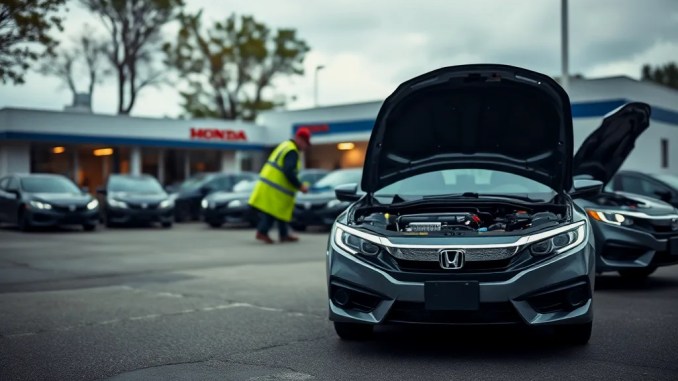
What caused Honda’s massive electric power steering recall?
Honda identified a software fault in the electric power steering control module that can force the system into a protection mode and interrupt steering assist. When protection mode activates, the electric assist drops out and the driver must apply substantially more physical effort to turn the wheel. Investigations by American Honda Motor Co. and reporting filed with the NHTSA indicate the fault arises under specific runtime and sensor conditions that the software misinterprets as a fault state, triggering the safety cutoff.
Which models and model years are affected?
The recall covers 2021–2025 Acura TLX, 2022–2024 Acura MDX, and 2023–2025 Honda Pilot models, totaling 635,808 vehicles in the United States. Honda and NHTSA recall notices list exact VIN ranges so owners and dealers can confirm eligibility; Owners should check the NHTSA recall database or their vehicle’s VIN lookup to verify whether their car is included.
How likely is loss of steering assist to cause a crash?
Loss of electric assist does not remove steering capability, but it increases the physical torque required to steer—especially at low speeds and during maneuvers requiring rapid corrections. Real-world risk depends on driver strength, posture, and situational demands: while a healthy adult may compensate, older or physically limited drivers could struggle, and sudden loss during evasive maneuvers at speed raises crash risk. NHTSA cited the potential for increased crash or injury risk, which is why Honda issued the recall rather than a software advisory.
What will Honda do to fix recalled vehicles?
Honda will provide a software update to the electric power steering control module. The update modifies the fault-detection thresholds and recovery logic so that the system does not erroneously enter protection mode under the conditions that previously caused assist loss. Dealers will apply the update free of charge; Owners will be notified by mail with instructions to schedule an appointment. In limited cases where additional hardware diagnostics are required, dealers will perform any needed repairs at no cost.
Step-by-step: how owners should respond immediately
1. Check recall status: Use your 17-character VIN on NHTSA.gov or Honda’s recall lookup to confirm inclusion.
2. Watch for notification: Honda will mail recall letters with repair instructions and a claim number.
3. Schedule service: Contact your local Honda/Acura dealer to book the free software update.
4. Drive with caution until repaired: Anticipate stiffer steering effort—avoid high-angle maneuvers at speed and increase following distances.
5. Report issues: If you experience sudden steering assist loss, contact Honda customer service and report the event to NHTSA (ODI) including date, time, and driving conditions.
How this recall compares to Honda’s earlier July Odyssey recall
On July 8, 2026, Honda issued a separate recall for over 325,000 Odyssey vehicles (2018–2020 model years) due to rearview camera failures caused by water intrusion That defect prevented backup-camera images from displaying, increasing rear-collision risk. The electric steering recall differs in root cause (software control logic vs. water ingress), affected systems (steering assist etc. camera), and driver impact profile, but both highlight the automaker’s increased recall activity around driver-assist electronics.
How dealers and owners can verify the remedy was applied
After service, owners should receive a repair order showing the software update claim code and date. To verify independently, owners can:
– Confirm the vehicle’s open recall status on NHTSA.gov shows “completed” for the electric power steering recall.
– Request the dealer’s repair order and claim number and keep it with vehicle records.
– Note any post-repair steering behavior—if assist loss persists, report back to the dealer immediately for follow-up diagnostics.
Practical tips to reduce risk before repair
Adjusting driving behavior reduces exposure until the remedy is applied: increase following distance, slow more gradually, avoid sudden lane changes or high-angle steering at highway speeds, and, if possible, have a second person drive when performing tight maneuvers like parking. Keep the owner’s phone number for roadside assistance handy if steering effort suddenly increases to a level that makes continued driving unsafe.








Be the first to comment