
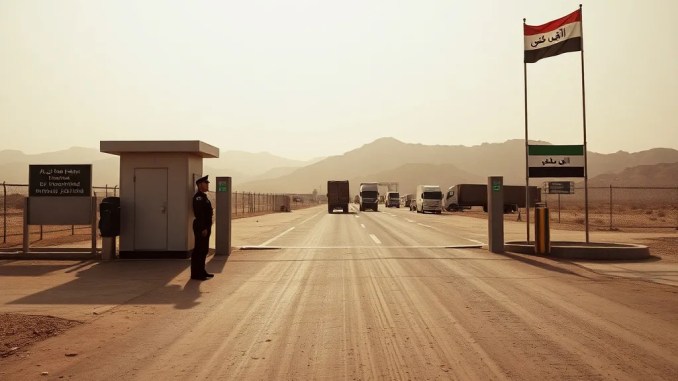
Shayb Border Crossing Reopens After Technical Preparations
Iraq reopened the Shayb border crossing with Iran at 08:00 on Tuesday, November 10, following completion of required technical preparations and procedural checks. Border authorities coordinated inspections, safety upgrades, and staff rotations to restore both passenger flow and commercial freight movement. The reopening resumed scheduled passenger crossings and the transfer of commercial cargo, minimizing backlog at alternative crossings.
Why the Closure Happened and What Was Fixed
On October 21 the Shayb crossing was closed to carry out targeted upgrades: electrical system tests, checkpoint software updates, lane reconfiguration for cargo processing, and reinforcement of customs inspection protocols. Teams completed a sequence of tasks: diagnose, repair, validate, and certify. Diagnostic logs identified two faulty scanners and one automated gate controller; technicians replaced hardware, recalibrated inspection equipment, and ran full-load simulations to confirm throughput capacity before the official reopening.
Immediate Effects on Trade and Passenger Movement
Reopening restored an important artery for cross-border trade and daily travelers. Commercial operators reported reduced detours and shorter transit times compared with rerouting through longer crossings. Freight firms estimate time savings of several hours per trip and reduced fuel costs by avoiding alternative land routes. Passenger services resumed regular schedules for buses and private vehicles, with checkpoints operating on updated queuing procedures to speed processing while maintaining security checks.
Mendeli Crossing: Planned Temporary Closure and Expected Works
The Mendeli border crossing will close temporarily from 08:00 on Friday, November 13, for technical maintenance and upgrades. Authorities cited planned maintenance rather than an emergency shut-down. Work scope includes pavement repairs on heavy-load lanes, replacement of aged weigh-in-motion sensors, and firmware updates for vehicle-plate recognition systems. These targeted interventions aim to reduce long-term downtime by addressing wear-prone components.
Practical Steps for Travelers and Transporters
1) Check official schedules: Consult the Iraqi Border Ports Authority and carrier notices for live updates. 2) Allow margin time: Add 2–4 hours to itineraries during transition periods to account for redirected loads. 3) Prepare documentation: Ensure customs paperwork, commercial invoices, and vehicle permits are current to expedite processing at reopened or alternate crossings. 4) Use alternative crossings strategically: If Mendeli closes during your planned transit, route via the next nearest border gate and coordinate with freight forwarders for consolidated shipments to reduce costs.
How Authorities Managed Communication and Flow
Officials issued advance notices through the Iraqi News Agency and border communications channels. They implemented phased reopening: limited passenger lanes opened first to validate procedures, followed by scheduled commercial lanes once calibration metrics met benchmarks. Real-time radio and digital alerts guided truckers to temporary holding zones to keep traffic moving and prevent bottlenecks near checkpoints.
Timeline and What to Expect Next
Shayb: Closed October 21; reopened November 10 after completion of repairs and system validation. Mendeli: Closing scheduled November 13 for maintenance; no firm reopening date announced. Authorities typically announce reopening once systems pass operational tests; stakeholders should monitor official channels for confirmations and technical reports summarizing completed works.
Example: Freight Operator Response
A regional freight operator redirected two weekly Iran-bound convoys from Shayb to an alternate crossing during the closure. After Shayb reopened, the operator measured a 15% reduction in transit time and a 10% reduction in fuel costs for the restored route, attributing savings to shorter distance and fewer customs-stage delays. The operator also staged maintenance on its own vehicles to align with border reopening, avoiding unexpected holds.
Key Takeaways for Cross-Border Operations
Maintain flexible routing plans and real-time communication with port authorities. • Prioritize up-to-date documentation and digital manifests to speed inspections. • Expect staggered reintroductions of services: passenger lanes frequently reopen before full commercial throughput. • Track official advisories for definitive reopening dates and technical clearance reports.









Be the first to comment