
Overview of the GJ-11 (Xuanlong) and recent public release
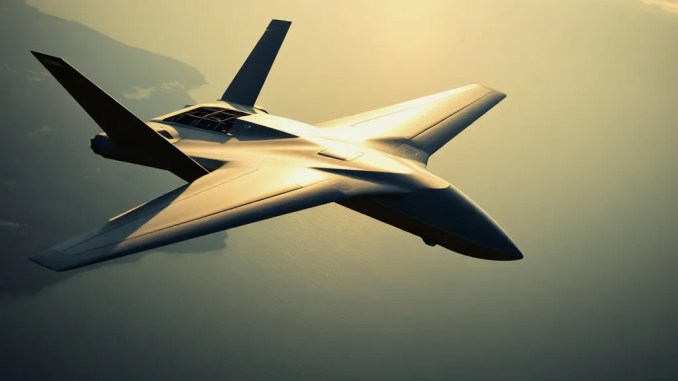
The People’s Liberation Army released new footage showing the GJ-11 “Xuanlong,” a flying-wing unmanned combat aerial vehicle (UCAV) designed for low observability and strike missions. The video highlights structural features—such as a flattened aft fuselage, embedded exhaust nozzle, retractable landing gear, and internal weapons bays—engineered to shrink radar cross-section (RCS). PLA statements claim the GJ-11 completed its first live weapons firing test successfully and reached a stage where it can perform support and strike roles in contested airspace.
Key stealth design elements and their operational effects
The GJ-11 uses a combination of shaping, materials, and internal carriage to reduce detectability. Key features visible in released footage include:
Shaping: The flying-wing layout eliminates vertical tails and reduces backscatter from junctions. A flattened rear fuselage and smoothly faired wing roots minimize discontinuities that generate radar returns.
Embedded exhaust: A shielded, low-profile nozzle reduces infrared and radar signatures. Close-coupled exhaust with a carefully contoured surface lowers hot-spot visibility to thermal sensors and reduces RCS contribution from the engine area.
Internal weapons bays: Internal bays carry multiple weapon types and doors that flush with the belly when closed. Carrying ordnance internally avoids the large RCS penalties that external pylons would impose and supports surprise in strike engagements.
Radar-absorbent treatments: Reports mention RAM coatings and possibly composite materials. RAM reduces energy reflected back to radar, improving the platform’s probability of penetrating layered air defenses when combined with shaping.
What missions GJ-11 is optimized for
The platform’s design and claimed capabilities align with several mission sets:
Stand-off or stand-in strike: Internal weapons and low RCS enable both suppressed-escort strikes inside defended airspace and strikes from standoff ranges using precision munitions.
SEAD/DEAD support: By carrying anti-radiation and precision-guided weapons internally, the GJ-11 can participate in suppression or destruction of enemy air defenses, either autonomously or as part of coordinated packages.
Loyal wingman / force-multiplying roles: The GJ-11 can fly in formation with manned fighters, extending sensor reach, acting as a decoy, or absorbing risk in high-threat zones while human pilots retain higher-level control or decision authority.
Confirmed tests and demonstrated integrations
The PLA released footage and commentary asserting a successful live-weapons test in which the GJ-11 struck designated designated targets Additional clips show the UCAV operating alongside J-20 and J-16D aircraft in formation flights, indicating interoperability experiments that combine stealthy manned platforms, electronic-attack assets, and armed UCAVs. Transportability via cargo aircraft and operation with ground-based control stations expand deployment options for forward basing and expeditionary employment.
Operational trade-offs and technical challenges
Flying-wing UCAVs achieve low RCS and high payload fraction but introduce engineering trade-offs:
Control and stability: Tailless designs require advanced flight controls and redundant systems to maintain agility and safe handling across flight regimes.
Engine integration: Embedded exhaust reduces signature but complicates thermal management and maintenance access, potentially increasing logistics burdens.
Sensors and datalinks: Low observability constraints antenna placement and limits passive/active sensor aperture sizes. Designers must balance signature management against the need for reliable links, especially in contested electronic environments.
How GJ-11 fits into modern joint air operations
Integrating GJ-11-class UCAVs into combined-arms air campaigns changes tactics at multiple levels:
Distributed lethality: Multiple low-cost UCAVs can disperse strike risk across a larger force, saturating air defenses or creating multiple dilemmas for an adversary’s command-and-control.
Sensor-shooter separation: UCAVs can carry weapons while other platforms—manned fighters, electronic warfare aircraft, or ISR assets—provide targeting data, enabling flexible sensor-shooter pairings that complicate enemy targeting.
Attritable force concepts: If fielded at scale, attritable UCAVs like the GJ-11 relieve pressure on expensive manned platforms by taking on the highest-risk tasks, though cost and production scale will determine actual attritability.
Variants and future developments: GJ-21 carrier-capable derivative
Open reporting notes work on a carrier-capable derivative—often referred to as GJ-21—engineered for catapult or ramp launches and arrested recoveries. Navalizing a flying-wing UCAV requires additional design changes: strengthened landing gear and airframe, foldable control surfaces for hangar stowage, corrosion-resistant treatments, and tailored avionics for carrier approach and deck operations. A successful GJ-21 would extend strike and reconnaissance reach from maritime platforms and complicated adversary naval air-defense planning.
Practical examples and likely employment scenarios
Example 1: A mixed package launches from regional bases: J-20s escort while J-16D suppresses EW nodes; Multiple GJ-11s penetrate defended corridors using low-observable profiles and deliver internal precision munitions against integrated air-defense nodes.
Example 2: Carrier task group sails into contested littoral waters with a GJ-21 complement conducting ISR and precision strike against shore-based radar and missile sites, enabling manned strike aircraft to operate from safer standoff distances.
What to watch next: indicators of operational readiness
Signals that would confirm maturation of the GJ-11 family include:
– Repeated live-fire demonstrations with varied munition types and ranges.
– Public displays of serial-production aircraft or officially listed unit assignments.
– Demonstrated autonomous tasking and resilient datalink performance in contested-EMCON (emissions control) scenarios.
– Carrier-arrested recoveries or catapult launches for any GJ-21 prototypes.
Concluding operational assessment
The GJ-11 appears to blend flying-wing stealth with internal weapons carriage and compatibility for cooperative operations with modern Chinese fighter and EW aircraft. If the PLA scales production and integrates robust sensors and datalinks, the platform could become a persistent tool for shaping air-defense environments and supporting both strike and SEAD missions. The ultimate impact will depend on numbers, logistics, electronic resilience, and the ability to operate inside advanced integrated air-defense systems under real combat conditions.







Be the first to comment