
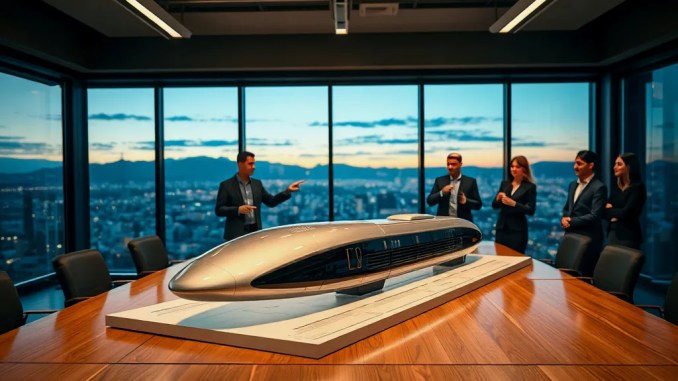
Taisei-Led Joint Venture Begins Main Works for Nagoya Maglev Station
The Taisei Corporation–led joint venture signed a contract with JR Central on 8 October 2026 to build the main underground structure, perform foundation strengthening and carry out excavation for the Nagoya Maglev (Chuo Shinkansen) station in Nakamura ward. Work will start on 9 October 2026 and run through 31 December 2032. The agreement covers heavy civil, structural and rail-related construction scopes that put the new station roughly 1 kilometer below the existing Tokaido Shinkansen and conventional railway corridors.
What the Contract Includes: Scope, Partners and Site Conditions
The joint venture includes Taisei Corporation, JR Tokai Construction and CN Construction. Their responsibilities include: foundation improvement and soil stabilization; temporary and permanent retaining systems; excavation sequencing and stepped benching; construction of the station box, intermediate decks and roof slabs; interface works to transfer loads to new structural systems; and coordination with adjacent rail operations. Project drawings show the station box occupying an underground footprint approximately 900 meters long, 60 meters wide and 30 meters deep, sitting beneath live rail assets and complex utility corridors.
How the JV Will Sequence Excavation and Support Works
The JV will follow a staged sequence to manage risk under railway operations: first, install temporary support systems and ground improvement elements to protect existing tunnels and track beds; second, excavate in controlled lifts with diaphragm or secant wall perimeter retention; third, construct intermediate transfer slabs and permanent structural elements while monitoring settlement in real time; and fourth, complete platform decks, mechanical-structural interfaces and waterproofing layers before final reinstatement. This stepwise approach reduces settlement risk and permits targeted mitigation when anomalies appear.
Why Nagoya’s Package Is the Third ‘Middle-East’ Section and Its Relationship to Earlier Packages
This contract represents the third construction package for the Nagoya Maglev station’s Middle-East zone. Earlier packages delivered temporary support systems and the primary diaphragm walls and main columns. The new works extend those deliverables by building the station’s main structural core and completing earth-retaining and load-transfer systems. Documents published in 2021 indicated seven discrete construction packages for Nagoya—covering Middle-East, Middle-West, Higashiyama Line, West and East sectors—with the current award forming a critical mid-sequence link that joins previously completed temporary measures to the permanent station box.
Design and Safety Measures for an Underground Station Beneath Active Railways
Designers accounted for three principal hazards: ground loss and settlement that could affect adjacent lines, groundwater inflow and long-term waterproofing, and load redistribution during transfer of support systems. Measures specified in the contract and drawings include continuous settlement monitoring with automated alarms, staged dewatering combined with diaphragm wall seepage cutoff, robust jointing and membranes at deck interfaces, and redundant temporary supports that allow load transfers in small increments. The project team will implement predefined contingency actions—such as grouting, compensation injections and ramped backfilling—to address unexpected voids or anomalous movements.
Timeline, Delays and Realistic Completion Outlook
The JV’s works run to the end of 2032, but JR Central has warned that station completion may extend into 2033 or later due to complex land acquisitions, underground additional obstructions and waterproofing needs. Two previously planned construction phases have already experienced cumulative delay potential of up to 3.5 years in affected zones. For the Middle-East section, initial diaphragm wall works planned for fiscal 2023 shifted toward fiscal 2026–2027 as teams encountered tougher subsurface conditions; the new contract fills the subsequent construction window but does not eliminate downstream schedule risk. JR Central states this station work will be finished ahead of certain Shizuoka-area tasks and, according to their public briefings, should not alter Shinagawa–Nagoya opening milestones—though the company is updating the opening timeline through late 2026.
Cost Increases and Land Acquisition Status
Project-wide estimates changed materially: JR Central raised the Shinagawa–Nagoya segment cost estimate from ¥7.04 trillion (announced earlier) to ¥11 trillion as of 29 October 2025. Drivers cited include rising construction unit costs, difficult geotechnical conditions necessitating specialized methods, and expanded technical specifications for subterranean structures. As of September 2026, land-acquisition agreements covered about 85% of affected parcels around the Nagoya site; remaining negotiations and potential legal proceedings remain a source of project risk and possible future cost adjustments.
Operational Interfaces and How Disruption Will Be Minimized
Minimizing disruption to Tokaido Shinkansen and conventional services will require continuous coordination: night and low-traffic window works for tie-ins; protective slab-and-shield systems over live tracks; redundant monitoring of track geometry and vibration; and pre-approved contingency work packs to allow rapid response if settlement thresholds are exceeded. The contract mandates interface protocols with rail operators and regulator-approved mitigation thresholds to allow construction to proceed while protecting passenger operations.
Practical Implications for Residents and Businesses During Construction
Local stakeholders should expect phased traffic adjustments, temporary construction access restrictions, and periods of night-time activity for tie-in works. JR Central scheduled community briefings on 8–9 November 2026 to explain timing and mitigation measures. Examples of planned mitigations include local noise barriers, dust-suppression water sprays, and pre- and post-construction building condition surveys to protect adjacent structures and to provide data for compensation claims if damage occurs.
What to Watch Next: Key Risk Triggers and Decision Points
Monitor these indicators to track project trajectory: (1) final resolution of remaining land acquisitions (the project declines to be bound until 100% of critical parcels are secured); (2) geotechnical findings during early-stage excavation—unexpected cavities or utilities will force design changes; (3) waterproofing test performance during deck construction—failures will require redesign and schedule buffers; and (4) procurement or labor-market shocks that could further raise costs. Each of these triggers correlates strongly with schedule slippage and cost escalation.
Takeaway: A Major Underground Build with Manageable but Real Risks
The Taisei-led JV award advances Nagoya’s Maglev station from temporary supports and perimeter walls toward a finished station box and platform decks. The program uses industry-standard staged excavation, active monitoring and contingency mitigation to limit impacts on live rail operations. However, remaining land-acquisition work, challenging ground conditions and complex waterproofing introduce realistic potential for further delay and cost growth. Stakeholders should track early excavation reports, waterproofing acceptance tests and land-acquisition milestones to assess whether the 2032 contract finish will translate into a 2033 or later commercial opening.







Be the first to comment