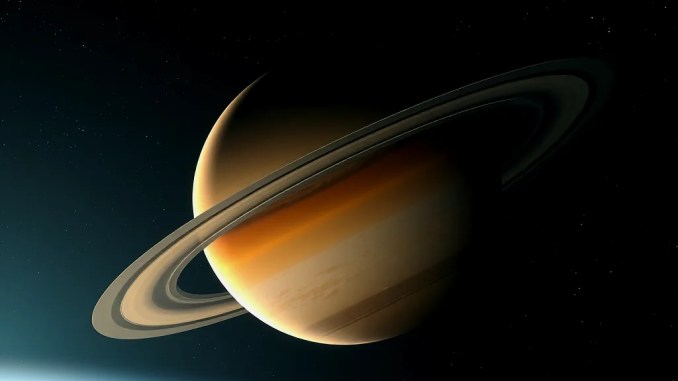
Imagine gazing into the night sky and realizing that Saturn, one of the most spectacular planets in our solar system, is positioned in such a way that it offers a rare, breathtaking view of its iconic rings. Tonight’s opposition presents a unique astronomical event that provides a perfect opportunity to observe Saturn with incredible clarity. With the right preparation and understanding, amateur astronomers or curious skywatchers can capture stunning images, see the Cassini division, and appreciate the grandeur of this celestial masterpiece. This guide will walk you step-by-step through why tonight matters, how to find Saturn, the equipment needed, and tips to maximize your observation experience. ## The Significance of Saturn’s Opposition Saturn reaches opposition when Earth is directly between the planet and the Sun. During this alignment, Saturn appears brighter and larger than at any other time in its orbit. This occurs because the Sun’s rays illuminate Saturn fully, akin to a full moon, making features like the rings more prominent, and the planetary disk more luminous. Tonight is especially critical because opposition happens infrequently, roughly once every 378 days. For a brief window, Saturn looms larger in our sky—up to 20% bigger and 50% brighter—giving astronomers a rare chance to observe intricate details that are usually hidden or faint. It also minimizes atmospheric distortion because Saturn appears higher in the sky. ## How to Locate Saturn in the Sky Finding Saturn involves understanding its position relative to prominent constellations and using star charts. Here’s a step-by-step approach: – Identify the Right Time: Depending on your geographic location, Saturn becomes visible shortly after sunset or during late night hours. Use local astronomical apps or almanacs to determine optimal viewing times. – Use Star Maps or Astronomy Apps: Terrain-based apps can help you pinpoint Saturn’s location in real-time. Look for the constellation Sagittarius or Capricornus, where Saturn usually resides during its opposition. – Find Bright Stars for Reference: Use prominent stars nearby to confirm Saturn’s position. Saturn appears as a steady, bright point of light, distinguishable from twinkling stars. – Confirm with Telescopic Help: If you use binoculars with at least 10x magnification, you can refine your target and distinguish Saturn from nearby stars. ## Essential Equipment for Observing Saturn You don’t need a professional-grade telescope to enjoy Saturn’s rings, but investing in decent equipment significantly improves your experience. | Equipment | Benefits | Tips | |—|—|—| | 10×50 Binoculars | Easily locate Saturn, view its disk | Use a tripod to stabilize; aim during clear, steady nights | | 60-90mm Refractor Telescope | Resolve rings and divisions like Cassini | Use moderate magnification (100-150x); ensure good collimation | | Computerized Mount or Tracking System | Keep Saturn centered as Earth rotates | Essential for prolonged observations and astrophotography | | Smartphone Camera & Adapter | Capture high-quality images | Use stacking apps for detailed photos | ## How to Maximize Your Observation Achieving a stunning view of Saturn involves more than just pointing your equipment upward. Follow these scientific tips: – Choose the Right Conditions: Clear skies with low humidity, minimal atmospheric turbulence (seeing), and no moonlight create optimal viewing conditions. – Adjust for Seeing: Calmer atmospheres enable higher magnification without distortion. Check local weather and sky reports. – Use Appropriate Filters: Red or infrared filters can enhance contrast, revealing ring divisions and surface features more distinctly. – Calibrate Your Equipment: Proper focus calibration is vital. Use a macro or digital focus aid if available. – Support Your Telescope: Use sturdy tripods or mounts to reduce vibration and shake. ## Creating the Perfect Observation Session Plan your session to last at least 30 minutes. Early in your session, set up equipment, allow your eyes to adjust to darkness for 15-20 minutes, and familiarize yourself with star charts. Then, locate Saturn, and begin with low magnification to establish the planet’s position before zooming in for more detail. Keep a journal or take notes on the viewing conditions, date, time, and what features you observe. Over successive nights, track the planet’s movement or features like the Cassini division—the dark gap between Saturn’s rings—on the planet’s limb. ## Common Challenges and How to Overcome Them – Cloud Cover: Check local weather forecasts; Use apps that forecast sky clarity. – Light Pollution: Observe from remote areas or higher elevations. Use light shields or covers to block extraneous lights. – Atmospheric Turbulence: If the sky is turbulent, lower your magnification and wait for steadier moments. – Equipment Limitations: If your optics aren’t powerful enough, consider borrowing higher-end gear or participating in local astronomy clubs. ## What to Expect from Your Observation With optimal conditions, your binoculars or small telescope can reveal the main disk of Saturn and its rings. A larger telescope may show the Cassini division—a thin dark line within the rings. You might also detect some of the brightest moons like Titan, Rhea, and Dione. However, don’t expect to see minute surface details like storm patterns or individual ring particles. These require much larger, professional-grade telescopes. But even with basic gear, observing Saturn’s elegant rings and understanding their immense scale remains a mesmerizing experience. ## Significance of Tonight’s Observation Capturing Saturn during opposition lets you witness the planet’s majestic rings in unmatched detail, enriching your appreciation of our solar system’s complexity. It offers a direct connection to celestial dynamics, planetary motion, and the grandeur of the cosmos. Whether you’re an amateur astronomer, educator, or casual skywatcher, this event promises a rare glimpse into a distant world simultaneously closest to us and most spectacular in appearance. ## Frequently Asked Questions Q: Can I see Saturn’s rings with binoculars? A: Yes, a good pair of binoculars (10×50 or higher) allows you to distinguish Saturn’s disk and the rings’ outline, especially during opposition. Q: What is the best time to observe Saturn tonight? A: Just after sunset or during late night hours when Saturn is highest in the sky provides the clearest view. Q: How do I photograph Saturn effectively? A: Use a smartphone or DSLR camera with a telephoto lens or adapter. Record video and employ stacking software to combine frames with better clarity. Q: How can I improve my observation if the sky is turbulent? A: Reduce magnification, wait for periods of better seeing, and avoid observing near the horizon where turbulence is worse. Q: Will Saturn look different tomorrow? A: The planet’s position and its rings’ appearance change slightly over nights; Keep observing to notice these subtle shifts. This moment in the sky offers an unparalleled chance to connect with the universe. Prepare your gear, choose your perfect night, and witness Saturn’s splendor that has fascinated humanity for centuries.