
GSM-R Tests Completed: What This Means for 250 km/h Operations
PKP Polskie Linie Kolejiowe (PKP PLK) finished GSM‑R digital railway radio tests on the Central Rail Line (CMK), removing a key technical barrier to regular running 250 km/h services. The completed tests validate voice and data links between trains and control centers across the 224 km Grodzisk Mazowiecki–Zawiercie corridor, ensuring reliable train-to-ground communications required for high-speed operation.
GSM‑R availability directly affects signaling and operational safety: without it, ETCS Level 2 cannot reliably transmit movement authorities to trains. With GSM‑R validated, PKP PLK will proceed to on‑line ETCS Level 2 testing on track sections, which must demonstrate safe continuous communication of movement authorities, train integrity monitoring and fallback behaviors under degraded conditions.
ETCS Level 2 Trials: Steps, Criteria and Timeline
ETCS Level 2 testing follows a structured sequence:
1. Static integration tests — verify on‑board and trackside equipment interoperability in controlled settings.
2. Dynamic line trials — run trains under representative traffic using ETCS Level 2 to prove braking curves, speed profiles and supervision in live conditions.
3. Safety validation — demonstrate safe handling of degraded communications, fallback to ETCS Level 1 or national systems where appropriate, and system recovery procedures.
4. Certification and authorization — independent assessment by notified bodies and final authorization by the Polish Office of Rail Transport (UTK) for the trackside control‑command subsystem.
PKP PLK has not published firm dates for completion; the authority’s authorization will hinge on test outcomes and documentation from suppliers and integrators. Successful ETCS trials will trigger formal commissioning steps and operational rule updates for 250 km/h service.
Why GSM‑R Was the Critical Path
GSM‑R provides the bearer for ETCS Level 2 signaling messages. Before GSM‑R acceptance, the project could not validate continuous, low‑latency exchange of track messages and train reports. The Infrastructure Ministry explicitly linked the 250 km/h start date to GSM‑R readiness; once GSM‑R reached operational performance thresholds, remaining work focused on ETCS contracts, certification and operational approvals.
How the 250 km/h Speed Will Be Applied Along CMK
The Infrastructure Ministry’s plan targets introducing 250 km/h in the 2027/2028 timetable across roughly 180 km of CMK split into two sections:
Section A: km 21.370–168.631 (about 147.261 km)
Section B: km 171.369–204.937 (about 33.568 km)
Certain track elements such as points at Psary and Góra Włodowska only hold 200 km/h certification, so those exact locations will remain limited to lower speeds. Elsewhere, permanent speed limits will remain between 110–200 km/h depending on geometry and local constraints.
Planned Speed Profile and Exceptions
The planned speed allocations outside the 250 km/h stretches remain specific and segment‑based:
110 km/h: km 222.400–224.915
160 km/h: km 1.087–1.813 and km 220.450–222.400
200 km/h: km 1.813–21.370, 168.631–171.369, 204.937–220.450
Project teams must certify switches, transition curves and catenary dynamic interaction for each segment before raising limits That certification often requires detailed track geometry surveys, thermal profile analysis for long welded rail and overhead line dynamics at 250 km/h.
Operational Benefits: Travel Time Reductions and Examples
Raising line speed to 250 km/h will shorten journeys markedly. PKP PLK projects a Pendolino could traverse Grodzisk Mazowiecki–Zawiercie (224 km) in 57 minutes. Representative schedule improvements include:
Warsaw Central – Kraków Główny: from 2h47m to 1h56m (≈51 min saved)
Warsaw Central – Katowice: from 2h34m to 1h54m (≈40 min saved)
Warsaw Central – Zawiercie: from 1h48m to 1h23m (≈25 min saved)
Warsaw Central – Sosnowiec Główny: from 2h14m to 1h45m (≈29 min saved)
These times assume uninterrupted high‑speed running on certified sections and optimized stop patterns. Realized savings will depend on routings, dwell times and timetable co‑ordination with regional and freight services.
Rolling Stock and Infrastructure Readiness
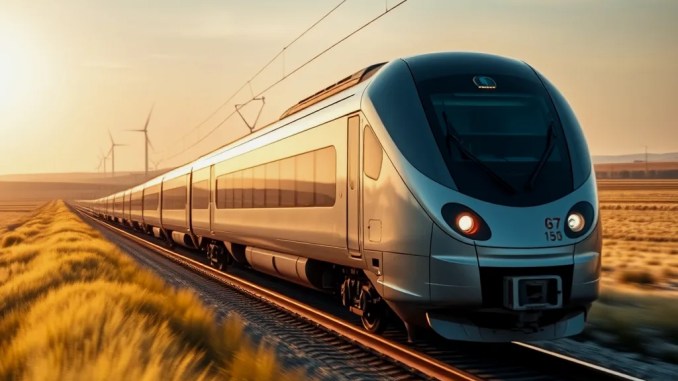
Poland’s ED250 Pendolino sets are already cleared by PKP Intercity to operate at 250 km/h when infrastructure and signaling authorizations permit. Infrastructure readiness includes:
– Continuously welded rail and appropriate rail fastening systems for high dynamic loads
– Overhead contact line tensioning and droppers sized for higher pantograph interaction forces
– Turnouts rated for required speeds or speed‑restriction arrangements at turns
Where turnouts remain certified to 200 km/h, operational rules will impose speed transitions and approach profiles to preserve safety and passenger comfort.
What Comes Next: Tests, Certification and Service Introduction
Next steps are clear and sequential: complete ETCS Level 2 field tests; gather independent safety evidence; secure UTK authorization for the line‑side CCS (control‑command subsystem); publish new operational rules and update timetables for the 2027/2028 service pattern. Operators will then run pilot high‑speed services under monitoring before full commercial implementation.
Practical Implications for Passengers and Freight
Passengers gain faster intercity links and improved competitiveness with air and car travel for Warsaw–southern Poland routes. Freight operations must adapt timetables and pathing to preserve capacity—higher passenger speeds can compress available freight slots, so infrastructure managers will need to rebalance traffic windows, possibly using temporal separation or upgraded passing loops.
Key Takeaways and Data Snapshot
Snapshot: CMK length: 224 km; GSM‑R tests: completed; Next: ETCS Level 2 field trials; Target commercial 250 km/h introduction: 2027/2028 timetable on ~180 km split into two stretches; Projected time savings: up to ~51 minutes Warsaw–Kraków.
Achieving scheduled high‑speed benefits depends on rigorous ETCS validation, UTK authorization and certifying remaining infrastructure elements such as high‑speed turnouts and overhead line systems.





Be the first to comment