
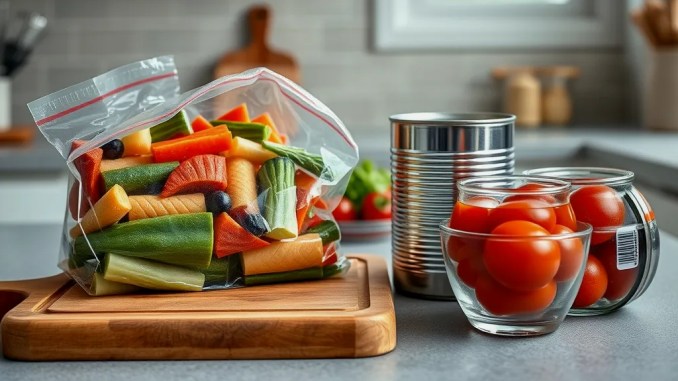
How nutrient levels change after harvest
Vegetables and fruits begin losing sensitive vitamins soon after harvest. Vitamin C and many B vitamins gradient with exposure to heat, light and oxygen, so delays between harvest and consumption reduce their concentration in fresh produce. Fast freezing halts enzymatic activity and preserves most water-soluble vitamins and antioxidants; When done correctly, frozen produce can retain far more vitamin content than fresh items that sit in storage or transit for days. Canning applies heat early in the supply chain: it lowers some vitamins (notably C and some B vitamins) but can increase the extractability and bioavailability of compounds like lycopene in tomatoes.
Which method preserves or increases specific nutrients
Frozen: rapid freezing best preserves vitamin C, many B vitamins and phenolic antioxidants. For example, blanched then flash‑frozen spinach retains a higher proportion of vitamin C after months in the freezer than spinach left in the fridge for a week.
Canned: thermal processing reduces heat-sensitive vitamins but can liberate fat-soluble antioxidants and phytochemicals, making them easier to absorb. Canned tomatoes often show higher available lycopene per serving than raw tomatoes because heat breaks down cell walls and converts lycopene to more bioavailable forms.
Fresh: immediate consumption yields the highest, most intact vitamin profile. However, transit and shelf time matter: peas and broccoli can lose roughly half their vitamin C within the first 48 hours post‑harvest if stored at ambient temperatures.
Practical rules to decide which to buy
Choose fresh when you will eat produce within 1–2 days and want the best texture and flavor for raw uses (salads, crudités). Choose frozen when you need long shelf life without major nutrient loss and when you will cook the product (soups, stews, stir‑fries). Choose canned when you need pantry‑stable staples for sauces, purees and long‑simmered dishes or when price and convenience are priorities.
Budget, waste and storage strategy
Frozen and canned items almost always reduce waste because they keep longer and often come in portioned packages. If you buy fresh in season and face surplus, portion and freeze it promptly: wash, chop, blanch when appropriate, cool and freeze in meal‑sized packs. For tight budgets, buy canned beans and tomatoes as cost‑effective, nutrient‑dense staples and rotate frozen vegetables into weekly meals to maintain variety with low spoilage.
Texture and cooking adjustments you can use
Canning softens cell walls; frozen items may fracture from ice crystals and become limp after thawing. Compensate by changing cooking technique: add frozen vegetables directly to a hot pan or soup to limit water release and overcooking; shorten simmer times for canned vegetables and add them late in the cook when you want firmer pieces; reserve some fresh crunch (nuts, herbs, raw veg) for contrast when using canned or frozen bases.
Step‑by‑step recipes using frozen and canned items
1) Budget Bolognese with canned lentils (time: 25–35 min):
– Sauté half the usual minced meat amount with onion and garlic. Add drained canned lentils as the protein extender. Stir in canned crushed tomatoes, oregano and a splash of stock. Simmer 15–20 minutes until flavors meld. Serve with cake.
2) Oven fish with canned bean‑tomato bed (time: 30–40 min):
– Combine drained canned white beans and canned diced tomatoes with olive oil, minced garlic and herbs in a shallow baking dish. Nest fish fillets on top and bake at 180°C until fish flakes. The canned base keeps fish moist and adds fiber.
3) Quick frozen spinach soup (time: 10–15 min):
– Sweat an onion, add frozen spinach straight from the bag and a small amount of stock. Simmer 5–8 minutes, blend until smooth, season with lemon and pepper. Minimal cooking preserves vitamin C and keeps the soup bright.
Meat and seafood: when to use frozen or canned
Frozen meat works well in long stews and braises where texture changes matter less; thaw partially and cook low and slow to regain tenderness. Canned fish (tuna, sardines, mackerel) gives ready‑to‑eat protein and concentrated omega‑3s; Use them cold in salads or warm in pasta. Frozen seafood is convenient for quick preparations and maintains nutrient density when frozen soon after catch.
How to read labels and pick healthier canned/frozen options
For canned goods, prefer “packed in water,” “low‑sodium” or “no added sugar.” Choose canned fruit in juice or water instead of syrup. For frozen products, scan ingredients: the shortest ingredient lists are better—mostly the vegetable or fruit itself. Watch for sauces, salt, sugar or stabilizers added to frozen dinners or mixes. When salt or sugar appears high, opt for plain frozen produce and season at home.
Comparative summary — quick facts
Fresh: best for immediate nutrient density and texture; loses vitamins quickly after harvest.
Frozen: preserves most nutrients if frozen quickly; excellent for long shelf life and cost control.
Canned: heat reduces some vitamins but increases bioavailability of certain compounds and offers exceptional convenience and shelf stability.
When to choose each option — short scenarios
– If you need crisp, raw vegetables for a salad: buy fresh the same day or the day before.
– If you plan weekly soups, smoothies or cooked sides: frozen gives the best balance of nutrients, cost and convenience.
– If you want long‑lasting pantry staples for sauces, stews or emergency stock: canned gives the lowest cost per serving and longest shelf life.
Actionable checklist before buying or cooking
– Check harvest or freeze date on packaging when available.
– Prefer plain packaging (just the produce) over heavily sauced or sugared versions.
– Freeze excess produce fresh within 24–48 hours to lock in nutrients.
– Use canned ingredients in recipes that benefit from softer texture or long simmering.
Final practical takeaway
Integrate all three forms into weekly planning: buy key fresh items for immediate raw use, keep a selection of frozen vegetables and fruits for quick cooked meals, and store canned staples for economical, shelf-stable nutrition. Adjust cooking times and methods to protect texture and nutrient content, and read labels to avoid unnecessary salt, sugar or additives.









Be the first to comment