
Overview of the Test Run and Timeline
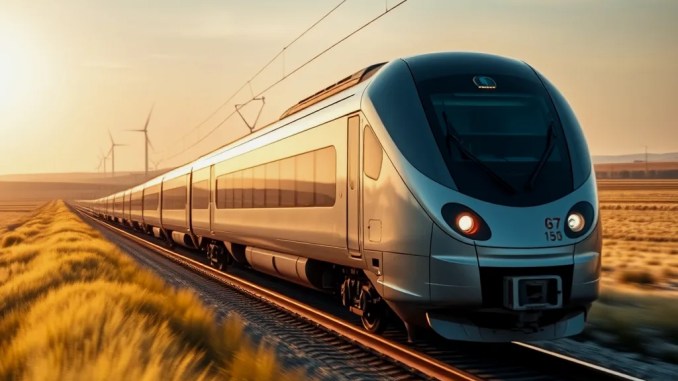
TÜRASAŞ engineers ran the first domestically developed high-speed train on the Ankara–Kırıkkale YHT line, reaching approximately 250 km/h during validation runs. Tests will continue through 2026 to complete more than 200 checks across hardware, software and safety systems; after certification, passenger service is targeted for the first quarter of 2027. The Ministry of Transport attended the demonstration and reviewed on-board data monitoring systems used to validate real-world performance.
How the Train Achieved Higher-than-Design Speed
The train’s design operating speed is 225 km/h, but controlled test protocols pushed the train to ~250 km/h to validate margins and system responses. Engineers performed step-by-step speed ramping under telemetry monitoring: initial low-speed dynamic checks, incremental speed runs verifying traction and braking, and final high-speed validation to observe thermal, aerodynamic and control-system behavior. Test telemetry captured vibration spectra, pantograph contact stability, and brake fade curves; this data confirmed safe operation above nominal speed and informed calibration updates.
Local Content and Key Domestic Contributors
The program reached roughly 65% local content across hardware and software. ASELSAN and TÜBİTAK provided subsystems including signaling interfaces, onboard electronics and parts of the train control software. Local suppliers manufactured bogies, carbody sections and interior components. By integrating domestic suppliers into the value chain, TÜRASAŞ shortened iteration loops for design fixes identified during testing and accelerated knowledge transfer to assembly lines in Sakarya, Eskişehir and Sivas.
Production Scaling and Factory Readiness in Sakarya
Sakarya’s dedicated high-speed train factory is preparing for serial production; two additional trainsets already entered the assembly line. The factory commissioning plan sequences pilot builds, process validation, and supplier quality audits so the plant can switch from low-rate to volume production with minimal rework. Opening is planned by year-end, enabling a ramp that aligns supply of trainsets with upcoming certification milestones.
Certification Path and Regulatory Steps to Revenue Service
To carry passengers the train must satisfy international and national certification standards for high-speed rail. The certification path includes: component-level qualification, subsystem integration tests, full train homologation runs, and documented operational procedures. TÜRASAŞ is compiling test reports, safety cases and maintenance manuals to submit to the national rail safety authority. Once the authority issues the certificate of fitness, operators can schedule revenue runs and operator training programs will transition pilots and crew to regular timetables.
Operational Deployment Strategy
Initial deployment plans prioritize the Çerkezköy–Kapıkule high-speed line under construction, with flexibility to assign sets to other Ankara-centric YHT corridors depending on timetable demand and fleet availability. Operational strategy covers fleet rotation, driver qualification, preventive maintenance intervals derived from test fatigue data, and contingency plans for mixed traffic on shared corridors.
Technical Improvements Adopted from Test Findings
Tests revealed areas for targeted improvement in both hardware and software. Examples include recalibrating traction control to smooth acceleration profiles at high speeds, adjusting bogie suspension damping to reduce lateral force peaks, and patching control-code routines to improve redundancy handling during transient events. TÜRASAŞ feeds corrections back to production so new sets roll off the line with validated fixes, reducing retrofit cycles.
Why Local Manufacturing Matters for Rail Capacity
Building trains locally reduces lead times for design changes and spare parts, strengthens local supplier ecosystems and keeps critical know-how within the country. Case studies from other rail programs show that local content above 50% typically shortens mean time to repair for depot-level maintenance and reduces lifecycle procurement costs. For Turkey, this capability supports faster network expansion and localized responses to service disruptions.
Passenger Experience and Interior Design Notes
The train’s interior focuses on regional passenger needs: ergonomic seats with modular layouts for short and medium-distance trips, integrated passenger information displays, and accessible boarding features. Onboard systems emphasize energy efficiency through regenerative braking and optimized HVAC control informed by test-run thermal profiles for different climatic zones traversed by Turkish routes.
What to Expect Before Public Service Begins
Between now and the first quarter of 2027 expect ongoing high-speed tests, documentary evidence submission for certification, phased staff training and pilot timetables. Authorities will publish safety approvals and initial service announcements once the final homologation is granted. Early operations will likely start with limited frequency and expand as operational experience accrues and additional sets complete production.








Be the first to comment