
Contract Award Details and Timeline
Hitachi Rail STS secured a comprehensive post-warranty maintenance contract with Trenord for the Caravaggio double-deck fleet, signing the agreement on 20 February 2026. The contract appears in the EU’s Tenders Electronic Daily (TED) notice published on 27 October 2026, following an initial procurement announcement (ref. 1525/2025) on 23 July 2025. The awarded value recorded in the contract notice is €518,821,400 — roughly 13.5% below the original estimated procurement value of €599,604,000.
Scope, Location and Missing Specifics
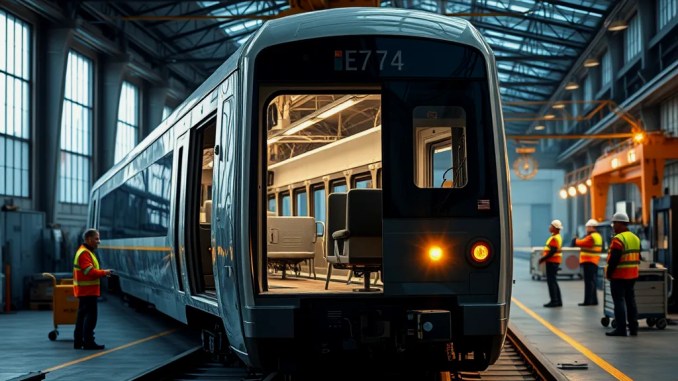
The agreement covers repair and maintenance services for Trenord’s ETR421 and ETR521/522 Caravaggio train sets, with the work to be performed in the Milan area. Publicly available documents specify the type of activity (rail vehicle repair and maintenance) and geographic implementation but do not publish the contract duration, the exact number of train sets included, or the specific depots where maintenance will occur. The published notice also indicates that 40% of the contract’s value will be executed via subcontractors.
Bid Submission and Price Variance Explained
The tender process received a single electronic bid from Hitachi Rail STS. The formal contract notice lists two different monetary figures: the awarded value of €518,821,400 and an alternate figure of €573,011,480 appearing elsewhere in the same disclosure. Both numbers fall below the initial estimate (the latter by about 4.4%), but the documentation does not explain the discrepancy between the two published amounts. This suggests either multi-year accounting, optional lots or contingency items reported separately, or an editorial/administrative inconsistency in the public notice.
Why the Price Differences Matter
Different figures in a procurement notice can influence market interpretation, subcontractor planning and public oversight. Practical explanations commonly encountered in rail procurements include:
1) Base contract vs. total conditional value: one number may reflect the guaranteed base value while the other reflects maximum potential value including optional renewals, extensions or indexed adjustments.
2) Lotting or phases: the procedure may have been structured with primary and secondary lots or phased implementation, with separate accounting lines for each.
3) Administrative correction: post-publication edits or typographical errors can create mismatched entries on TED notices.
Caravaggio Trains’ Role in Trenord Fleet Renewal
The Caravaggio double-deck trains form a core element of Trenord’s fleet modernization. Under a larger renewal program managed by FNM and FERROVIENORD on behalf of Lombardy Region — a program totalling approximately €1.7 billion — Trenord ordered 214 new trains, 123 of which are Caravaggio sets. The renewal program reported completion in December 2025. Caravaggio formations operate as either four-car sets with 440 seats or five-car sets with 570 seats, enabling high-capacity suburban and regional services across Lombardy.
Manufacturing and Earlier Procurement History
Hitachi Rail manufactured the Caravaggio trains and previously participated in the procurement process led by FERROVIENORD announced in November 2021. Under a 2018 framework agreement, Hitachi contracted to supply 50 trains for €451.85 million. The company’s manufacturing background and earlier supply contracts likely factored into Trenord’s decision to award post-warranty maintenance to Hitachi Rail STS, leveraging original-equipment knowledge and lifecycle continuity.
Operational and Maintenance Implications for Trenord
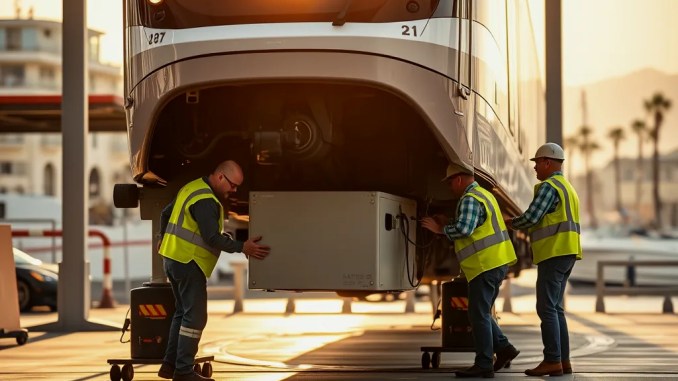
Assigning post-warranty maintenance to the original manufacturer helps reduce lifecycle risk through preserved technical knowledge, spare-parts continuity and trained maintenance personnel. Specific operational implications include:
• Improved mean time to repair (MTTR): Hitachi’s direct access to component engineering data and spare-part pipelines can shorten repair cycles.
• Standardised maintenance regimes: consistent application of manufacturer-prescribed preventive maintenance schedules supports higher fleet availability.
• Subcontractor reliance: with 40% of the contract delegated to subcontractors, Trenord and Hitachi will need clear governance and quality assurance to maintain service levels across external partners.
What Remains Unknown and Relevant Follow-ups
Key missing details that observers, competitors and public stakeholders may seek next include:
• Contract duration and extension options: the number of years covered directly affects total lifecycle cost projections.
• Exact fleet coverage: whether the contract covers all Caravaggio sets, a subset, or only specific series (ETR421 vs. ETR521/522).
• Depot locations and capacity: where maintenance will be executed and whether depot upgrades are included.
• Service-level KPIs: availability targets, penalties and performance measurement frameworks governing the contract.
Practical Steps for Stakeholders Tracking This Contract
If you monitor this procurement, follow these actions to maintain situational awareness:
1) Monitor TED updates: check for contract amendments, clarifications or rectifications that explain the two published monetary values.
2) Request contracting authority documents: Trenord or the contracting authority can publish tender documents, award reports or Q&As through their procurement portals.
3) Watch local media and supplier releases: Hitachi and Trenord press communications may disclose timelines, depot sites and subcontracting partners as work progresses.
4) Track maintenance performance: once operations begin, examine public timetables, punctuality reports and rolling stock availability metrics for early indications of service-level outcomes.
Bottom Line: Strategic Fit and Near-Term Expectations
The contract formally awards Hitachi Rail STS responsibility for post-warranty maintenance of Trenord’s Caravaggio fleet with an awarded value of €518.8 million, leaving some public-facing reporting inconsistencies to be clarified. The decision aligns with common rail-sector practice of assigning lifecycle maintenance to original manufacturers to preserve technical continuity and improve maintenance efficiency. Stakeholders should watch for forthcoming contract details that will illuminate duration, exact fleet scope and the role of identified subcontractors in delivering the maintenance program.







Be the first to comment