Uncovering the Hidden Dynamics of AI-Generated Scientific Discoveries
Imagine a world where artificial intelligence doesn’t just assist in research but claims to have independently discovered a groundbreaking enzyme. Skepticism erupts, debates ignite, and the scientific community wrestles with a pivotal question: How much trust can we place in AI-driven discoveries? Recent claims suggest that models like Claude might have identified novel biological components without human direct guidance. But are these assertions valid or just digital illusions? Digging into this story reveals nuances that could redefine future research protocols, ethical boundaries, and regulatory frameworks.
The Breakthrough Claim: AI Announcing a New Enzyme
Anthropic’s Claude model announced support for a new enzyme system named ARTs, claiming that their AI independently proposed a structure never documented before. The implications seem enormous: an AI system capable of groundbreaking scientific insights without human hypothesis formulation. But skepticism is necessary. When a model suggests a discovery, the vital question becomes—what evidence backs this assertion? Most peer-reviewed scientific breakthroughs hinge on reproducibility, peer validation, and data transparency. The company’s claim lacks these crucial markers. As leaders in the field scrutinize this announcement, experts emphasize that an AI’s suggestion is only the beginning—verification through rigorous experiments remains essential.
The Critical Role of Transparent Validation in Scientific Authenticity
To gain scientific credibility, a discovery must undergo a meticulous process—sharing raw data, detailed methodologies, and repeatable results. Currently, Mestre and his team have not yet published the detailed findings, leaving the community in a state of cautious skepticism. Here’s what true validation involves:
- Open Data Sharing: Researchers must release raw experimental data—enzyme activity measurements, structural analyses, and genetic sequences—to allow independent verification.
- Methodological Clarity: Step-by-step protocols, including conditions, reagents, and equipment used, should be accessible for replication.
- Reproducibility Studies: Independent laboratories must replicate the findings under similar conditions, confirming the enzyme’s activity and structure.
- Structural Confirmation: Techniques like cryo-EM or X-ray crystallography should validate the enzyme’s molecular architecture.
Without these, the claim persists as a tantalizing hypothesis rather than a confirmed breakthrough.
Deciphering the Human-AI Collaboration in Scientific Discovery
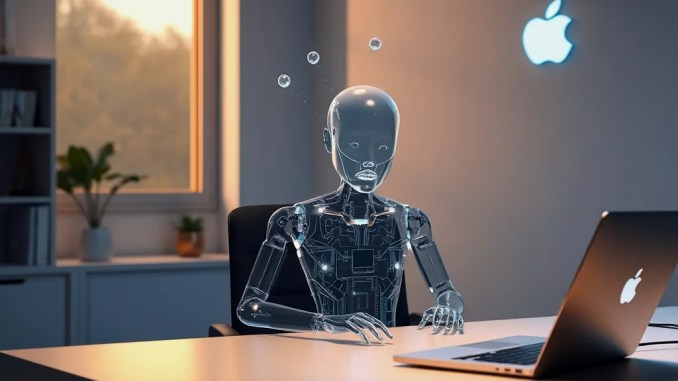
Distinguishing whether an AI is an autonomous inventor or merely a tool in human hands shapes how the discovery is interpreted. Consider three distinct scenarios: 1. AI as a Hypothesis Generator: Here, humans formulate the initial idea, and the AI supports by analyzing vast datasets, suggesting potential enzyme structures. The AI accelerates the process but doesn’t replace human insight. 2. AI as a Standalone Innovator: The model independently proposes an enzyme design, potentially skipping human oversight. This scenario raises questions about responsibility, verification, and the nature of scientific authority. 3. Hybrid Approach: Both human input and AI’s computational power work hand-in-hand, with humans validating and guiding the model’s proposals. In the recent case, the emphasis by Mestre suggests the enzyme could exist independently, which would render this a landmark moment—if validated. Yet, until detailed data and peer validation are available, it remains speculative.
The Data Dilemma: Privacy, Proprietary Rights, and Ethical Boundaries
AI models learn from datasets that may include proprietary, confidential, or sensitive information. When researchers claim an AI has discovered something entirely novel, these factors complicate the picture:
- Data Confidentiality: Does the dataset include unpublished data? If so, how is this protected?
- Intellectual Property: Who owns the discovery—the researcher, the institution, or the AI developer?
- Training Data Influence: Could the AI’s ‘discovery’ be influenced or biased by its training data, raising questions about originality?
- Future-proofing Research: Researchers must develop transparent policies for data sharing, model updates, and discovery claims to prevent misuse.
Ensuring ethical rigor in these areas will safeguard scientific integrity and foster public trust.
Regulatory and Ethical Perspectives: Navigating Dual-Use Risks
Genetic and enzyme discoveries inherently carry dual-use potential—beneficial in medicine and harmful if misused. AI accelerates this duality, capable of rapidly generating complex biological entities. Regulators must impose safeguards such as: – Strict labeling and tracking of AI-generated hypotheses and discoveries. – Mandatory human-in-the-loop reviews for sensitive research proposals. – Limitations on sharing AI models capable of producing hazardous biological agents. – International cooperation to harmonize standards and prevent misuse. These measures aim to balance innovation with security, ensuring AI tools serve societal good without enabling malicious applications.
Documenting the AI-Driven Discovery Process: Practical Steps
When utilizing AI models for enzyme design, documenting each step creates verifiable records that bolster credibility: – Maintain version-controlled logs of all interactions with the AI, timestamped. – Record the specific prompts, parameters, and settings used during the process. – Document human oversight decisions—risk assessments, validation steps, approval notes. – Share experimental protocols and raw data publicly or within trusted peer networks. – Where possible, submit findings for peer review and publish comprehensive datasets. This systematic approach ensures transparency and aids in safeguarding against unwarranted claims.
Implementing Change: Industry and Academic Recommendations
To adapt effectively, institutions and companies should: – Clearly disclose how their AI models are trained, updated, and used in research contexts. – Incorporate explicit clauses about data ownership, privacy, and IP rights in agreements. – Develop standardized reporting formats detailing AI contributions in discoveries. – Invest in training researchers to understand AI limitations, ethical considerations, and validation procedures. – Foster collaborative frameworks between AI developers, scientists, and regulators. Promoting these practices will set robust standards that enhance trust and uphold scientific rigor.
Conclusion: Rethinking Scientific Authority in the Age of AI
As AI systems like Claude claim to make independent discoveries, the essential question emerges: Should we redefine scientific authority? Traditional standards—peer review, reproducibility, and transparent data—remain foundational. However, AI’s role necessitates an evolution in how we validate, attribute, and regulate scientific breakthroughs. A responsible approach involves embracing AI as a powerful assistant that accelerates human ingenuity rather than replaces it. Establishing clear protocols for validation, data sharing, and oversight will be crucial to harness AI’s potential while maintaining scientific integrity. Only through rigorous scrutiny and ethical vigilance can we ensure that these breakthroughs serve society’s best interests, avoid misinformation, and shape a future where humans and AI collaboratively advance knowledge.
Semi-Structured FAQ
Can AI models truly discover new enzymes without human input?
While AI can suggest novel molecules or structures based on training data, independent discovery without any human guidance remains highly improbable without substantial validation and oversight. The process requires human expertise to interpret, validate, and implement AI suggestions.
What steps are necessary to verify an AI-generated scientific discovery?
Verification involves transparent data sharing, replication of experiments, structural confirmation via advanced imaging techniques, and peer-review validation. Only after these steps confirm the discovery can it gain scientific acceptance.
How should institutions adapt to the rise of AI in research?
Institutions must establish clear policies on AI usage, data privacy, intellectual property, and transparency. Training researchers on ethical AI practices and fostering collaborations with regulators will also be essential.
What are the risks associated with AI-driven discoveries in biology?
Risks include misuse of biological data, dual-use concerns, lab leaks, or biosecurity threats if sensitive information is improperly shared or if models are used maliciously. Strong oversight and regulatory compliance are crucial to mitigating these risks.