
Imagine a university where students solve problems faster with AI, but their deep understanding diminishes, and instructors struggle to gauge true mastery. As artificial intelligence (AI) rapidly transforms education, educators face urgent questions: How should we adapt assessment methods? Can we maintain academic integrity? What policies protect both students and institutions? AI tools, from chatbot tutors to complex coding assistants, are no longer just supplementary; They’re becoming integral to how students learn, perform, and demonstrate knowledge. To stay ahead of the curve, educational institutions must realize that AI’s integration is irreversible. The key is developing strategic approaches that harness AI’s strengths while safeguarding the core objectives of education. Let’s delve into the core impacts of AI on learning, illustrate effective strategies with real-world examples, and outline actionable policies to ensure AI elevates, not undermines, academic standards. Understanding the Impact of AI on Learning Behavior The proliferation of AI in education accelerates access to information, enabling students to seek instant solutions. Recent studies reveal that students are increasingly turning to AI for homework queries, with some institutions reporting up to a 60% increase in AI-assisted question-solving over two years. This shift incurs significant consequences: – *Surface learning overshadows deep understanding.* Students may memorize solutions without grasping underlying concepts. – *Generation of personalized answers diminishes critical thinking.* Overreliance on AI hampers the development of analytical skills. – *Originality suffers.* When students lean on AI, their ability to create unique insights declines. For example, engineering students might obtain AI-generated solutions for differential equations but lack the capacity to modify or adapt these solutions in unfamiliar contexts. Similarly, group projects face erosion of debate and diverse perspectives when members depend heavily on AI, reducing the depth and quality of collective learning. Reimagining Assessment in the Age of AI Traditional exams and homework assignments no longer suffice. Educators must innovate to evaluate genuine understanding: – Incorporate Process-Oriented Tasks: Rather than simply seeking the final answer, design problems that necessitate step-by-step reasoning, justifications, or explanation of thought processes. – Implement Continuous and Formative Assessments: Use regular low-stakes assessments, portfolios, or reflective journals, which are harder for AI to generate convincingly. – Use Oral Examinations and Live Demonstrations: These can reveal learners’ depth of understanding and spontaneous reasoning skills. – Design Open-Ended and Ethical Dilemmas: These demand nuanced judgment, critique, and personalized reasoning, contrasting with AI’s pattern-based generation. For instance, a physics instructor might ask students to derive a solution and then critique its assumptions, contrasting with AI that merely provides a solution. Leveraging AI as a Pedagogical Tool Instead of fearing AI, educators should embrace it as a catalyst for innovative teaching: – Structured AI-Assisted Drafting: Guide students to use AI as a first step in brainstorming, then refine and critique outputs personally. – Interactive Feedback Loops: Employ AI to provide immediate, personalized feedback on drafts, enabling iterative improvement. – Promoting Reflective Practice: Encourage students to compare AI suggestions with their solutions, fostering metacognition. – Designing AI-Supportive Group Activities: Use AI to generate initial ideas or prompts for discussion, then facilitate peer critique. An example could be using AI to generate multiple thesis statements in a writing class, then students select and develop the most compelling one, fostering creative thinking. Policy Development: Balancing Innovation and Integrity Institutions need clear, enforceable policies to govern AI use: – Transparency Policies: Require students to declare when and how they have used AI in assignments. – Guidelines for Appropriate Use: Clearly differentiate permissible AI assistance from plagiarism or unfair aid. – Assessment Revisions: Shift focus towards skills less easily replicated by AI, like synthesis, critique, and ethical reasoning. – Faculty Training Programs: Equip educators with AI literacy, assessment redesign strategies, and detection techniques. – Support Mechanisms: Offer workshops and resources to help students adapt their learning strategies in AI-rich environments. For example, a policy could mandate students submit a reflection on how they used AI tools during an assignment, ensuring intentional and responsible use. Real-World Examples and Pilot Programs Some universities have piloted AI-integrated curricula successfully: – Structured Writing Platforms: Students submit drafts and receive AI-driven feedback, focusing on development rather than final answers. – AI-Moderated Discussions: AI prompts guide online forums to promote critical debates, with instructors overseeing quality. – Project-Based Evaluations: Emphasize collaboration, process documentation, and iterative prototypes over static exams. These models demonstrate that AI can foster deeper engagement when embedded thoughtfully into the pedagogical design. Concluding Strategies for Forward-Thinking Education 1. Proactively Adapt: Recognize AI as a permanent part of the learning landscape. 2. Innovate Assessment: Redesign tasks that measure reasoning, originality, and application. 3. Train Educators: Provide ongoing professional development focused on AI literacy. 4. Develop Policies: Establish transparent guidelines balancing AI benefits and ethical considerations. 5. Foster a Culture of Reflection: Encourage students to critically evaluate AI contributions versus personal insight. The adaptation to AI-driven education isn’t optional; It’s a fundamental shift. Mastering the integration now can position educational institutions at the forefront of innovation, ensuring they prepare students not just for the jobs of tomorrow but for responsible citizenship in an AI-enabled world. Final Thought The AI revolution challenges us to rethink the essence of education. By actively shaping policies and practices, educators can harness AI’s potential while cultivating critical, independent thinkers. The time to act is now—embrace this change, redesign learning experiences, and elevate education into a new era of possibility.
Research Finds Artificial Intelligence Negatively Impacts Students’ Learning Experience

AMERICA
US Raises StormBreaker Munitions Support Contract to $950 Million
USAF Increases Lifecycle Support Contract for GBU-53/B StormBreaker The US Air Force raised the lifecycle support contract ceiling for Raytheon’s GBU-53/B StormBreaker from $600 million to $950 million, enabling additional orders and extended sustainment activities through December 31, 2030. This contract modification directs funding and support work to Raytheon’s Tucson, 🚄
Turkiye
Individual Ticket Sales for the Touristic Eastern Express Begin October 26
Sales start date and how to book individual tickets Individual tickets for the 2026–2027 winter season of the Touristic Eastern Express go on sale on 26 October at 13:55 via TCDD Taşımacılık sales channels. Buy directly from the official website or the station kiosks to secure two-person sleeper compartments; reservations 🚄
EUROPE
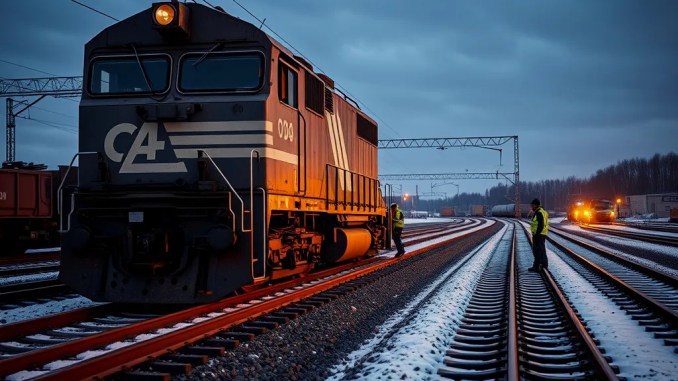
Finland to Donate 10 Diesel Locomotives to Ukraine
Donation Agreement Signed in Kyiv Finland has committed to donate ten Dv12 diesel locomotives and spare parts to Ukraine. The agreement was signed during the Ukraine–Finland Business Forum on October 22, when Finnish Prime Minister Petteri Orpo and Ukrainian Prime Minister Serhii Koretskyi formalized the transfer. VR Group’s extraordinary general 🚄
ASIA
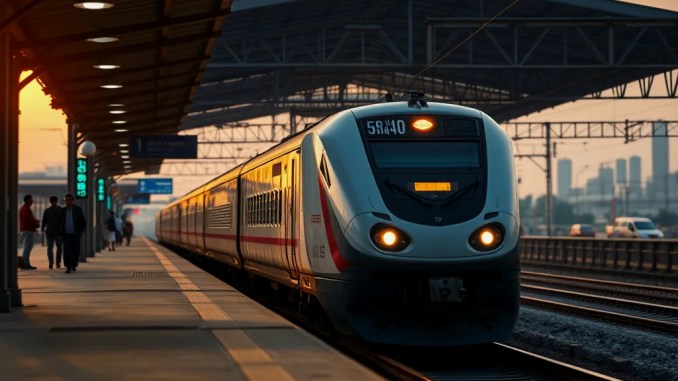
Bengaluru–Mumbai Vande Bharat Sleeper Train Launches on November 1
India will launch its second Vande Bharat Sleeper train on November 1, operating between Bengaluru and Mumbai with an expected journey time of about 16 hours. Officials aim to cut travel time substantially compared with existing services while offering modern, climate-controlled overnight accommodation for long-distance passengers. 823-bed, 16-coach composition and 🚄
EUROPE
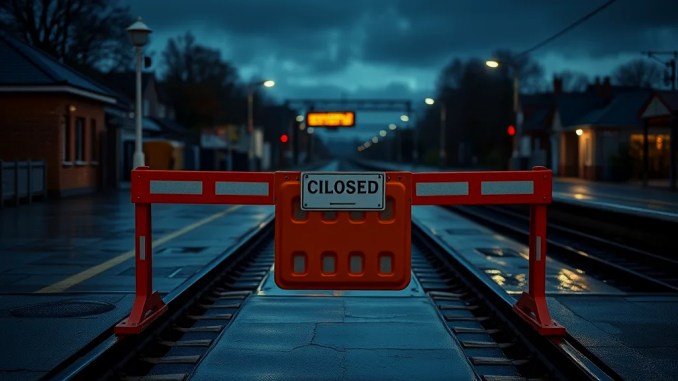
Redhill–Tonbridge Railway Line Closed for Five Days
Network Rail will close the Redhill–Tonbridge line between 28 October and 1 November to carry out urgent ground‑stabilization near Godstone. Engineers discovered movement beneath the ballast and will install 208 steel sheet piles along a 126‑metre embankment to halt further slippage. During the closure, replacement buses will operate and additional 🚄

EUROPE
Bewdley Express Trial Runs Carry Over 1,000 Passengers
Summary of the Bewdley Express trial and core results The Bewdley Express trial ran from 1 September to 22 October 2026, completing 96 scheduled passenger services between Bewdley and Kidderminster and carrying over 1,000 passengers. Operators timed morning departures to connect with West Midlands Railway services towards Birmingham Snow Hill 🚄
Spain
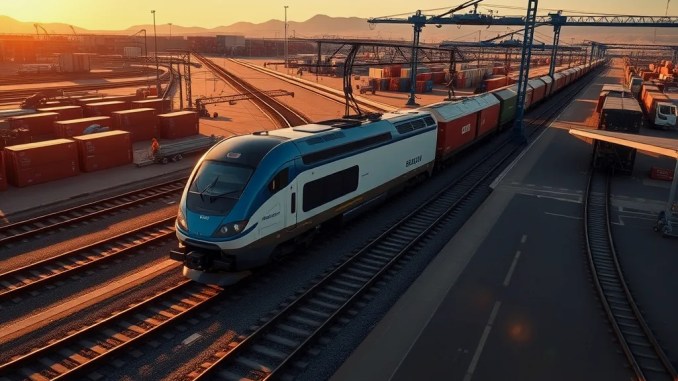
60,000-Unit Annual Target Set for Júndiz Railway Terminal in Spain
Overview of the Júndiz Concession and Ambitious Volume Targets The Júndiz terminal concession awarded by Adif mobilizes a public–private joint venture led by Medlog (40%) alongside Bilbao and Pasaia port authorities and regional partners to scale rail–sea intermodal flows The consortium will operate the 55,000 m² terminal under an initial 🚄
EUROPE
Flying Scotsman Celebrates Swanage Railway’s 50th Anniversary
Flying Scotsman’s Swanage Visit: What happened and why it matters Flying Scotsman arrived at Swanage on 21 October as the centerpiece of a 10-day public program running 23 October–1 November 2026. The locomotive will haul scheduled passenger trains on five days and be displayed at Swanage station for five days. 🚄

AMERICA
Landslide Near Albuquerque Forces Cancellation of Amtrak Southwest Chief Service
BNSF main line closed after flood-induced washout near Laguna On Oct. 24, floodwaters undermined the BNSF Gallup Subdivision main line west of Albuquerque near Laguna, forcing an immediate suspension of train movements on the affected track. Track crews mobilized to inspect a washout that BNSF initially described as a “flood-related 🚄

ASIA
Travel Insurance Expanded on Indian Railways
Overview of the Change and Its Immediate Impact Indian Railways will extend optional travel insurance to passengers who purchase reserved tickets at PRS (Passenger Reservation System) counters starting 27 October 2026. The move implements the Supreme Court order that found it unfair to limit insurance coverage only to IRCTC e-tickets. 🚄