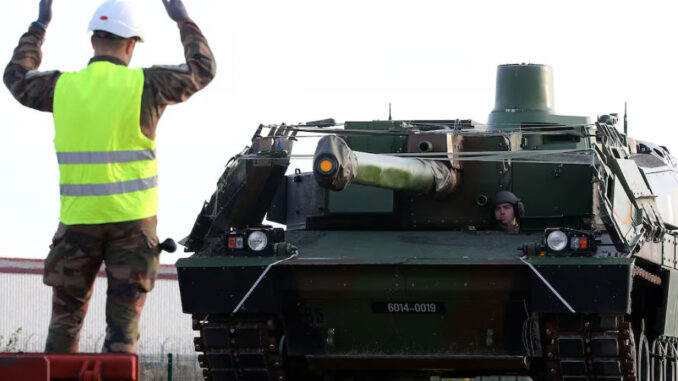
As the possibility of a major military deployment to NATO’s eastern flank looms due to Russia’s war in Ukraine, it has come to light that France is grappling with bureaucratic hurdles that could slow the flow of troops and tanks to the region. Brigadier General Fabrice Feola, commander of France’s Operations and Transportation Support Center, noted that current approval processes take “nearly dozens of days,” exceeding the European Union’s (EU) five-day target. This situation is negatively impacting the speed of military mobility, which is of critical importance in the event of a major conflict.
“A Mobilization of Resources on an Unprecedented Scale”
General Feola emphasized that a conflict on NATO’s eastern front could “mobilize resources on a scale not seen in years.” To ensure continuity in a projection of this scale and to optimize the support of allies—particularly the U.S. on the Atlantic coast—existing obstacles must be overcome.
According to a report published in February 2023, the EU had acknowledged that it had failed to meet the target of ensuring military border crossing procedures take no longer than five business days by the end of 2023. Feola noted that the new regulatory proposals the EU will introduce this year demonstrate its commitment to resolving these remaining obstacles to military mobility.
Infrastructure and U.S. Competition: A Dual Challenge in Transportation
Feola said that a major mobilization would create serious competition on the land transportation network, particularly in a scenario where U.S. forces would need to conduct a large-scale landing on the Atlantic coast and pass through France to reach the east. He added that this competition would require coordination at the international level to ensure the most efficient use of resources.
The general stated that Europe’s surface transportation network must also be better mapped “to return to the situation of the Cold War era.” There should be no doubt regarding the capacity of roads and railways to handle large flows of traffic.
The Importance of Rail and the Need for Simplification
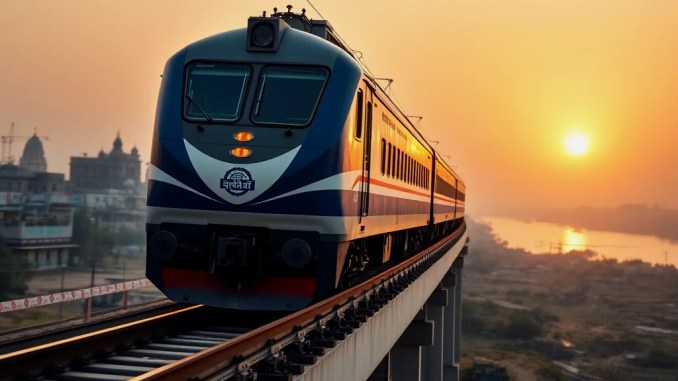
Following Russia’s invasion of Ukraine, the volume of military equipment transported across Europe has risen rapidly. In this context, the importance of rail transport —which moves heavy equipment such as tanks and ammunition over long distances in the most cost-effective and rapid manner—has increased exponentially. According to Feola, by 2024, France had increased the number of international military train trips—which was fewer than five per year before the invasion— to approximately 150. These trains include trips carrying equipment to Ukraine, as well as those providing support to the French battalion in Romania.
Feola noted that verifying route feasibility —such as determining whether a tunnel can accommodate a train carrying military equipment—is a very time-consuming process today. He said that France is working to identify corridors with tunnels, bridges, and roads that are large and sturdy enough to carry military vehicles and convoys, in preparation for new EU rules to be announced this year.
Feola stated that the solution lies in “establishing these corridors and rail lines to prevent excessive processing times.” Germany, the Netherlands, and Poland had previously signed a memorandum of understanding to establish a similar corridor aimed at resolving infrastructure bottlenecks and reducing bureaucracy in the cross-border transport of hazardous materials by 2024.
Call for a Coordination Authority
Feola said that steps such as shortening the authorization process and digitizing numerous customs documents could be taken to overcome bureaucratic obstacles, and emphasized that the current situation necessitates addressing these issues urgently.
French logistics officials are also calling for the establishment of a coordination authority for military mobility management in Europe. They note that this authority would ensure “that everything flows seamlessly from one country to another, from one corridor to another, with no gaps between routes.” In this context, with the focus of France’s operations shifting from Africa to Eastern Europe, he underscored that the country views railways as “an absolutely indispensable mode of transportation.”